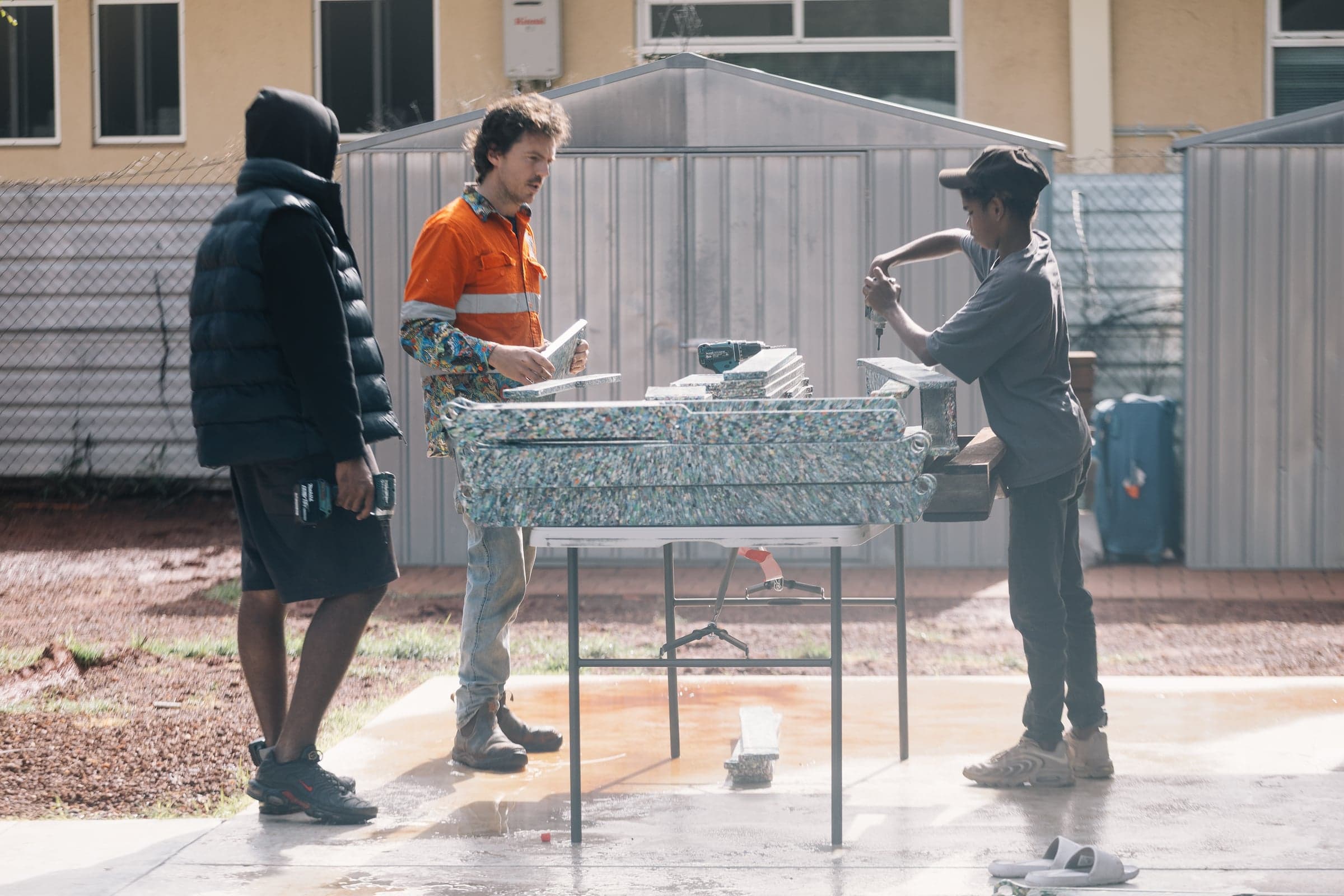
Participation
Start with people who know the place
The young person and the community organisation decide what support is needed to take part safely.
Impact Data
Three shifts in one breath, five outcome domains underneath. Every claim pairs a community voice with a counted number and an honest label.
Numbers drawn from our asset register and fleet data. Every target is accountable.
The full impact picture
One first-stock proposal. Two QBE facilities. Four outcomes. The future columns are conditional, cumulative scenarios.
Other proposed grants · first stock
400 beds targeted for four community organisations. Parts pressed in Queensland while local sites are agreed.
QBE request · local production
$300,000 for two facilities. A projected 400 additional local beds in their first operating year.
| Impact | Already recordedSeptember 2026 | First stockOther proposed grants | Two facilitiesQBE operating year 1 | Both streamsYear 1 cumulative | Both streamsYear 3 cumulative | Both streamsYear 5 cumulative |
|---|---|---|---|---|---|---|
| Health and sleep | 540 beds23 washers · 11 communities | +400 targetQueensland-made stock; placement to record | +400200 made locally per site | 800 newMade if both plans proceed | 3,680 newFirst stock + local production | 6,560 newFirst stock + local production |
| Paid work | 3,510 hHistorical estimate; not payroll | To measureLocal assembly hours and wages | 800 hDirect making hours modelled | 800 h+ stock assembly to measure | 6,560 h+ stock assembly to measure | 12,320 h+ stock assembly to measure |
| Recycling | 3.54 tHDPE design mass; not weighed diversion | +8 tDesign mass if all are Stretch Beds | +8 tDesign mass; weigh each batch | 16 t newDesign mass, not measured waste | 73.6 t newDesign mass, not measured waste | 131.2 t newDesign mass, not measured waste |
| Enterprise | 320 paid bedsFour buyers; historic trade | Up to $300kGross if all sell; community decides | Up to $300kGross if all sell; seller to agree | Up to $600kGross across both streams | Up to $2.76mGross across both streams | Up to $4.92mGross across both streams |
Count each bed once. The first stock is separate from facility output. Combined years assume it is completed by facility year 1 and both sites make 200 beds each in year 1, then 720 each year after. Timing and sites are not agreed.
Funding and evidence limit. The three exact bed requests total $299,250, enough for 399 beds at $750. The 400th needs another $750 or adjusted awards. No grant is awarded. Hours and plastic are modelled; sales assume every bed sells at $750 and are gross, not profit or committed orders.
How it works
Community decides what is needed. People learn by making it. Orders create paid work. The next decision stays local.
Participation
The young person and the community organisation decide what support is needed to take part safely.
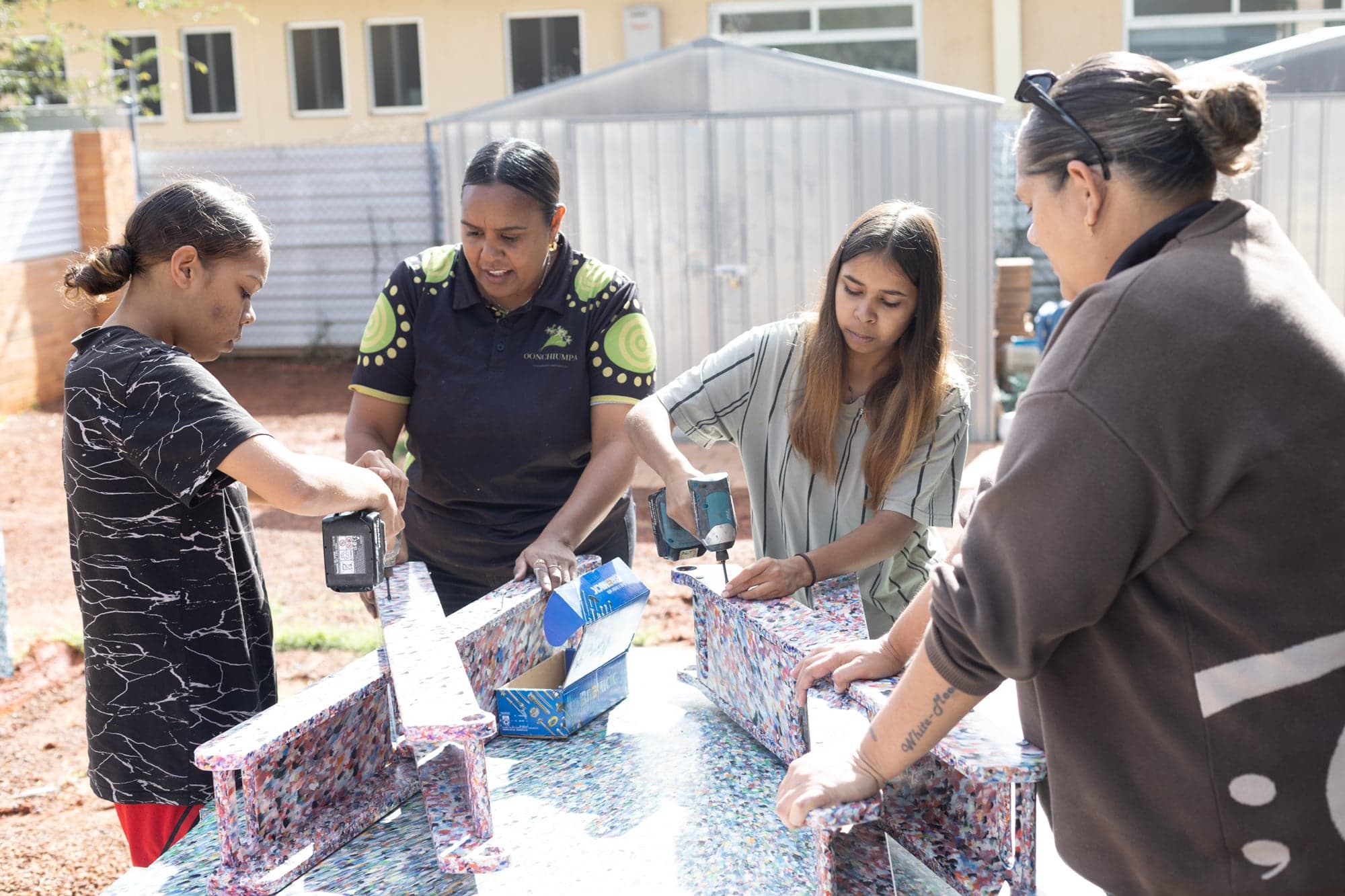
Practical work
People learn assembly, materials, quality checks, delivery and repair. We only count paid work when a wage record proves it.
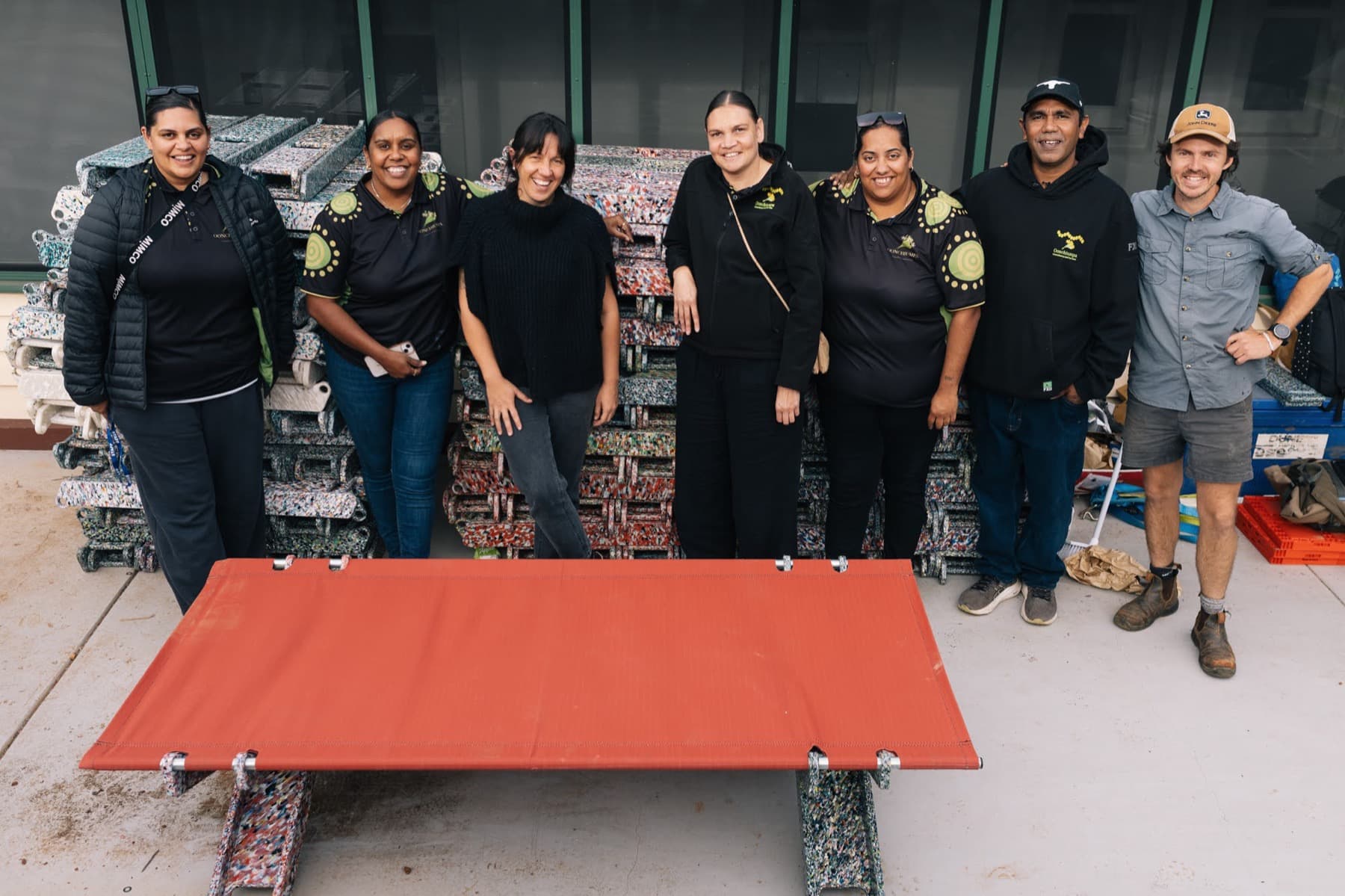
Paid work
Orders pay for making and delivery. Youth support is funded and counted separately.
The operating loop
Build the bed. Use it. Learn what worked. Let the community choose what happens next.
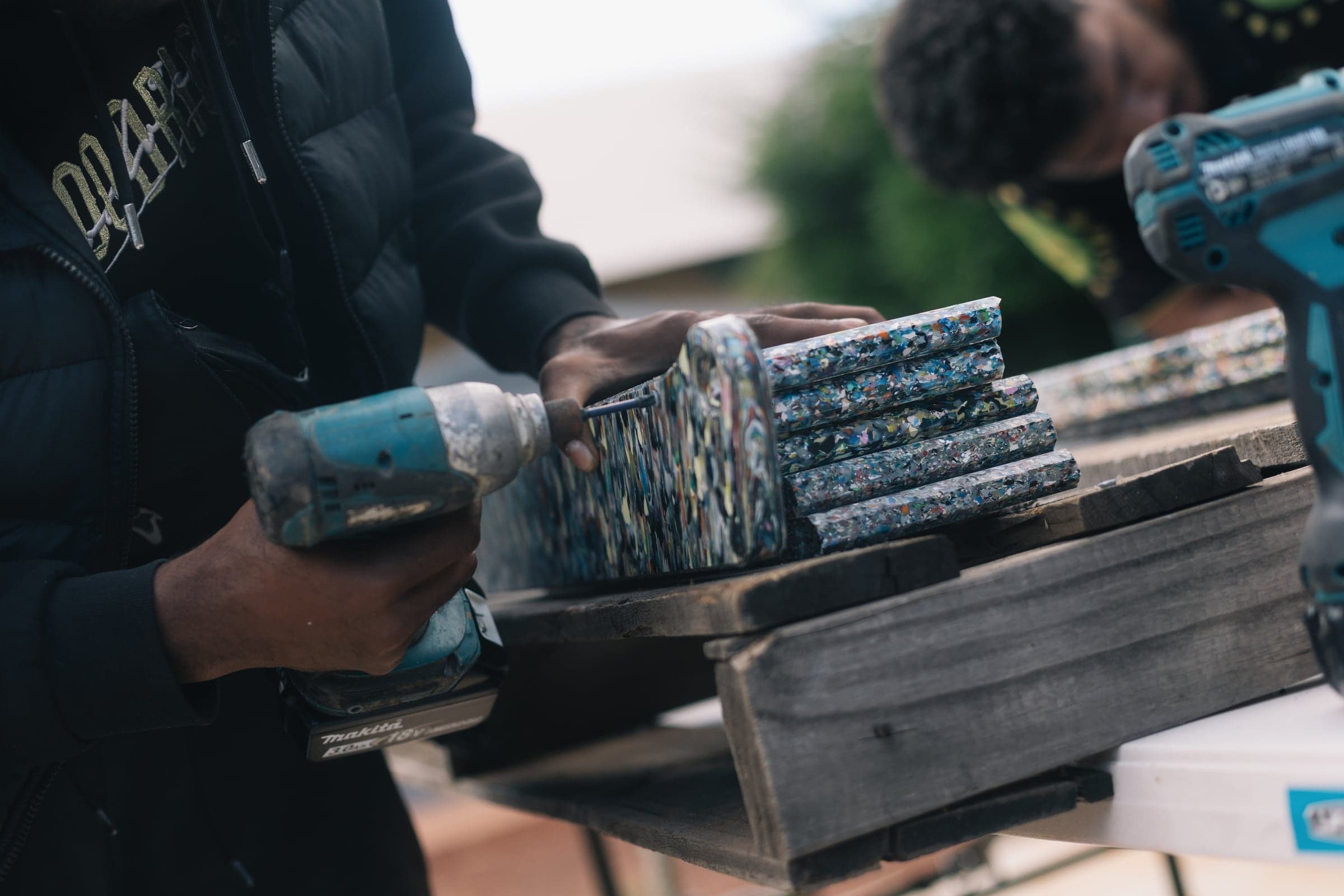
Step 1
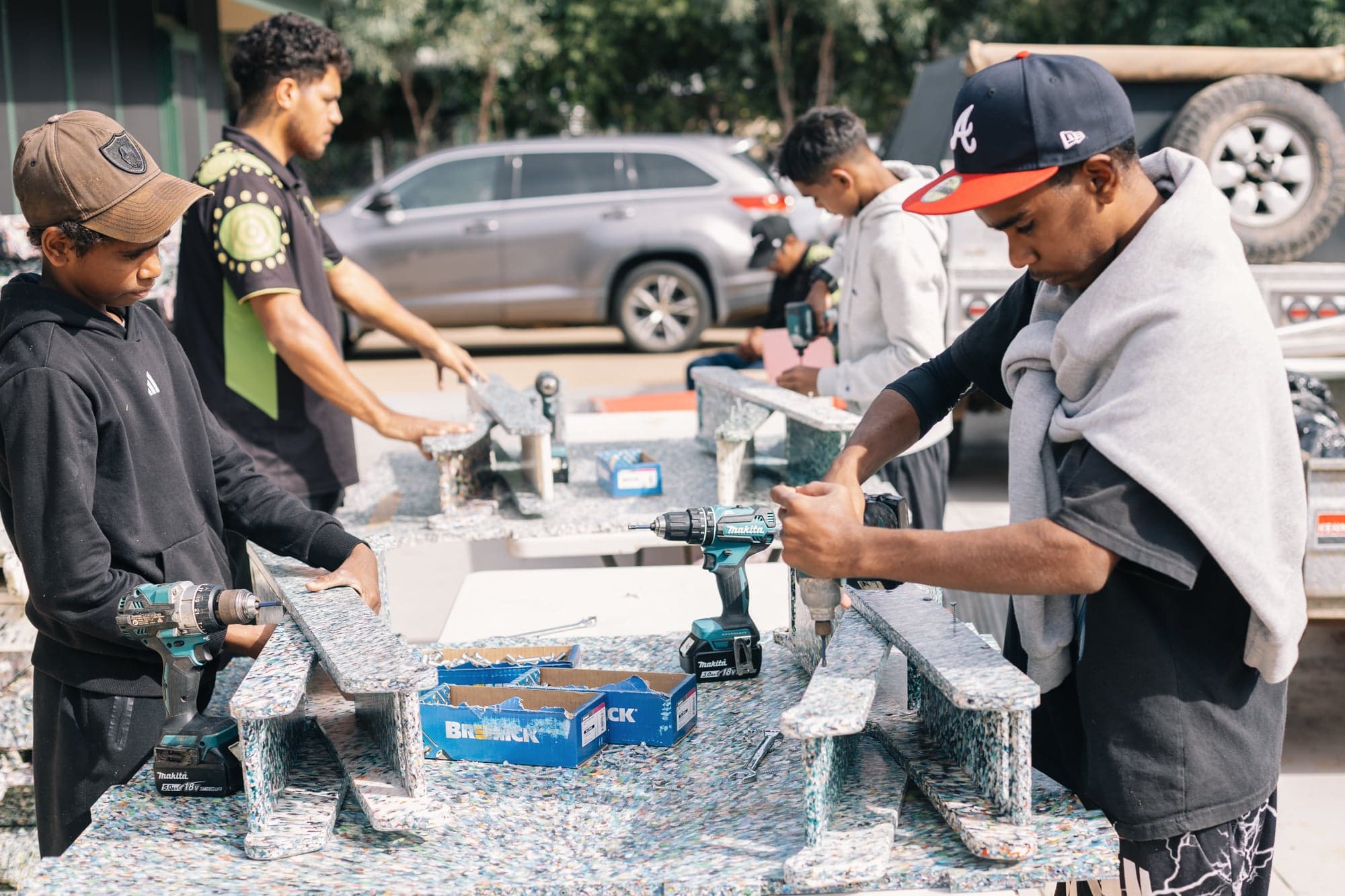
Cut, drill and check every part before the bed leaves the workshop.
Step 2
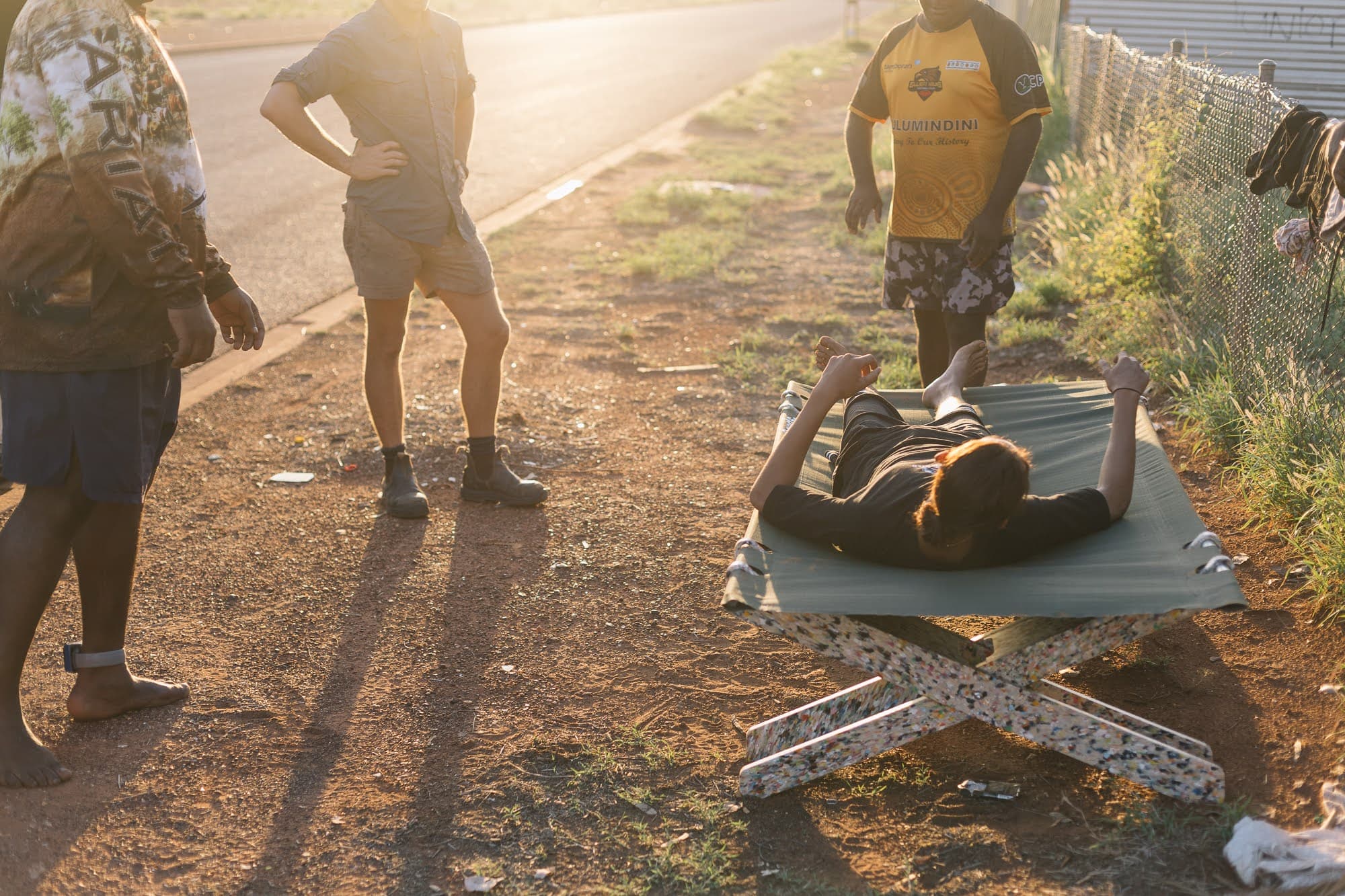
People assemble the bed, learn the work and record who was paid.
Step 3
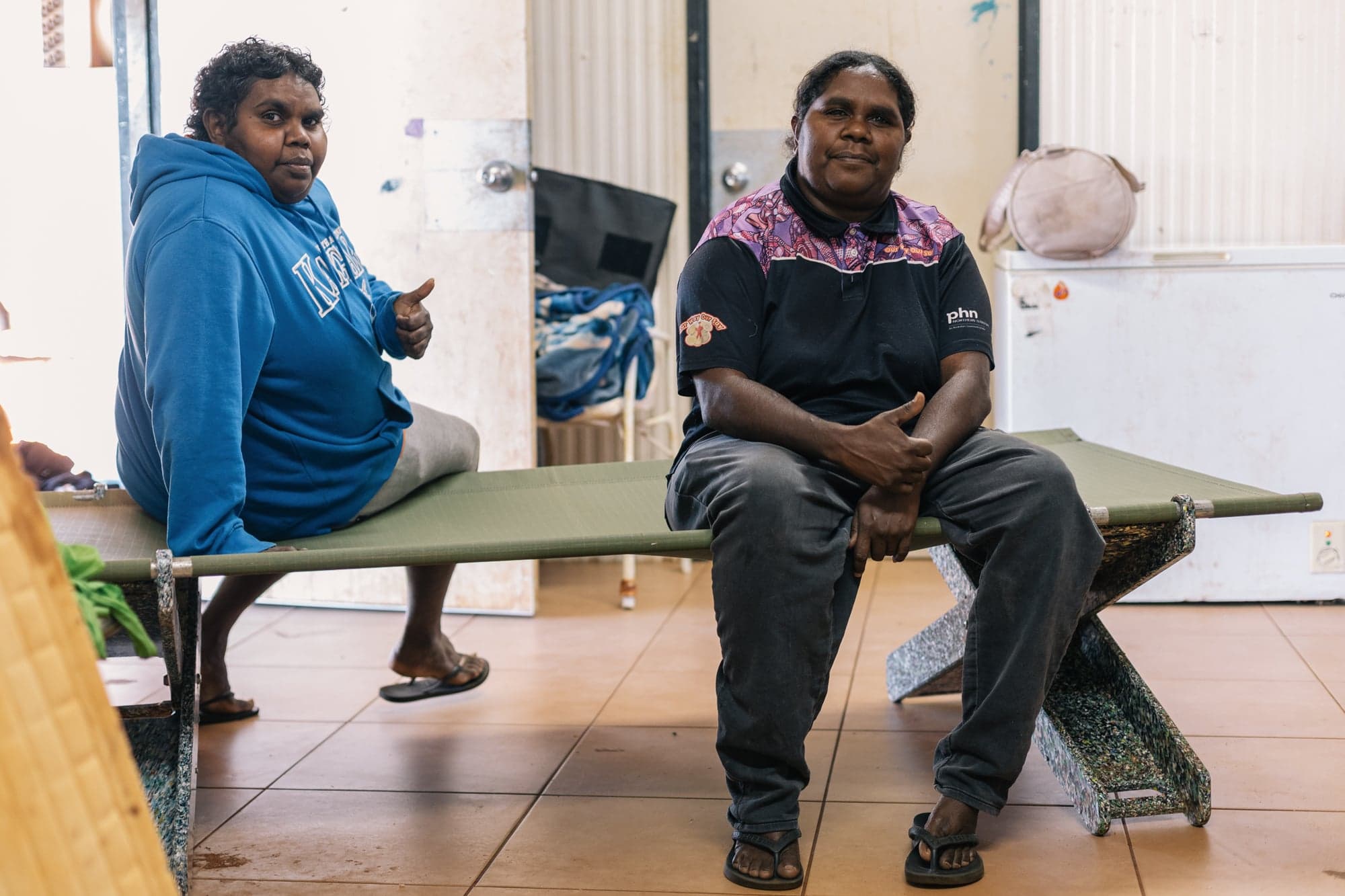
Each bed has a record. We return to ask what worked and what needs fixing.
Step 4
The community chooses whether the next dollar buys stock, pays for work or moves more making On Country.
Full theory of change
Problem
Remote homes face costly, short-lived goods. Safe beds, working washing machines and local repair are harder to access.
Inputs
Community leadership · recycled HDPE · steel and canvas · tools and machines · funding · buyers
Activities
Listen · design · make · deliver · track · learn · improve
Outputs
540 beds delivered · 11 communities · 23 washing machines in community · 3,540kg HDPE design mass, not weighed diversion · paid work tracked separately
Outcomes
Better rest · dignity and safety · community decisions · paid work · materials kept in use
Long-term shifts
Material shift · economic shift · story shift
The result we are working toward
More useful goods. More paid work. More decisions made on Country.
Young people
Count who took part, paid hours, wages, skills and the next work step.
Community business
Count buyer payments, local costs and what the community decided to do next.
Useful goods
Count what was made, where it went, repairs, materials and what households told us.
Each bed has a record. Back the next stage of local making, and follow what happens.
Catalysing Impact, powered by Social Impact Hub, in partnership with QBE Foundation.
By the numbers
540
Beds delivered
23
Washing machines
3.54t
HDPE design mass
11
Communities
About 12
Proposed ongoing jobs
$1013K
Invested
The top line
In one breath, the change is three shifts. The five domains beneath them carry the evidence: a community voice, a counted number, and an honest label, on the same beat.
Material shift
Waste plastic becomes a durable, washable, repairable good, made On Country.
Economic shift
The freight tax puts a basic good out of reach, so the bed is built to beat the true remote cost. Value, jobs and the making stay local, and the in-house cost-down moves Goods from grant-funded toward an enterprise communities can own.
Story shift
Communities name it (Pakkimjalki Kari, named in Warumungu), design it, and own the record of it, on their terms. This is Indigenous self-determination.
Five domains
Five outcome domains, each pairing a cleared community voice with a canon number from our asset register, fleet telemetry and community engagement. Every number carries an honest label and a target for Year 1, Year 3 and 2030.
Off-the-ground, washable sleep that supports the conditions needed to interrupt the scabies to rheumatic heart disease pathway. This is why a bed and a washing machine are health hardware, not furniture.
540
“Back pain and all that. You're gonna be moving around with problems. That's why good beds matter.”
Brian Russell, Tennant Creek
A bed is safety and belonging, and the freight tax is why a basic good is out of reach. A need, not charity.
11
“Hardly any people around the community have got beds. When they got family members over, there's not enough for everyone.”
Ivy, Palm Island
Designed in community, with the people who will use it, and owned by them. "Never been asked" becomes "named it, tested it, built what they asked for." Self-determination runs from the design through to who holds the data.
17
“We've never been asked what sort of house we'd like to live in.”
Linda Turner, Tennant Creek
The making moves On Country. Real jobs are created where the plastic, the people and the need are. Young people build the product and, over time, hold the work and the ownership. Jobs and ownership are labelled future or target, never as achieved.
12
“He couldn't stop thanking me. The smile on his face all the way back home. He got out showing his family the bag, and he's walking around everywhere with those shoes on, running everywhere.”
Fred Campbell, Xavier, after his first paid build (Oonchiumpa, Alice Springs)
Plastic becomes beds On Country. Value and capability stay local instead of leaving the community: a local enterprise that, over time, funds itself rather than the grant cycle.
3,540
“You have to bring them on the barge. You can't just take them on the boat. You have to pay for freight. It all adds up.”
Alfred Johnson, Palm Island, on why local manufacturing matters
The model in one person
Waste to product to skill to work to ownership, in one person. Mykel built the bed he slept on that night and kept going: seven beds by the end of the second day, out the back of the Oonchiumpa office in Alice Springs.
“I’ll be rocking up every day to make them.”
Mykel, asked whether he would make beds every day if the making moved closer to home
He turned the finished bed over in his hands, then explained it was made from bottle lids shredded and pressed into something strong enough to stand on. Fred, his Oonchiumpa support worker, watched him work, called him grandson, and said: “That could be a good employment for yourself too, grandson. Later on.”
“Comfortable as. Smooth, tight, hard, fancy.” Mykel, on the bed
Shared with consent. Mykel is a young person; his material is handled with Oonchiumpa and his guardian in the loop.
Two through-lines
Two lines connect the domains. They are the spine of the story, not a footnote to the product.
The economics are the impact
A basic good is out of reach in remote communities because of the freight tax and goods that fail in months. Goods answers with a durable, washable, repairable bed built to beat the true remote cost, made On Country so the value and the jobs stay local, with an in-house cost-down that carries the making, and in time the ownership of it, further into community hands.
Indigenous sovereignty
Self-determination runs through every layer: cultural (the washing machine named Pakkimjalki Kari in Warumungu), design (named and tested in community), data (consent travels with the story), and economic (jobs, then ownership of the making). Sovereignty is what the handover means in practice.
The economics through-line
The freight tax puts a basic good out of reach, so the bed is built to beat the true remote cost, not the sticker price. As the making moves On Country and in-sources, the direct cost per bed comes down and the value stays local. The current plan is for two community facilities with about six ongoing roles at each, or about 12 jobs in total. These are proposed jobs that depend on facility funding, orders and local agreements. Separately, 15 young people across three communities have already taken part in making beds. Participation is not presented as ongoing employment.
As the making moves On Country, more of each bed stays in community. What a bed costs, what stays and what we are raising live in one place: the road to ownership.
Foundations / philanthropic buyers funding beds for community distribution at scale
Evidence: 107 beds to Centrecorp, institutional buyer at scale (income_type=grant, not commercial sale)
Direct commercial sales to organisations distributing to communities
Evidence: PICC 40-bed order discussed; health orgs and NPY "always looking for beds"
Corporate engagement: team builds, NAIDOC week, Reconciliation Action Plan sponsorship
E-commerce sales: camping, emergency, beach use cases
Evidence: Community consultations suggest camping/emergency bed market; "cyclone beds" in NT
Community-led production and maker-channel sales as facilities transfer to community ownership
Evidence: Ebony + Jahvan Oui training for On-Country production at Palm Island
NT and QLD government procurement for remote communities (Supply Nation pathway)
Evidence: Conversations with NT government; QLD social procurement preference under $500K
Washing machines and future HDPE products from the same production line
Evidence: Pakkimjalki Kari washing machine prototype deployed; HDPE product catalogue in design
Why this is health hardware
This is why we treat a bed and a washing machine as health hardware, not furniture. Off-the-ground, washable sleep supports the conditions needed to interrupt the scabies to rheumatic heart disease pathway. We do not claim a bed prevents heart disease: that needs a partner clinical method.
Washing bedding regularly is hard
Without a working washing machine, families struggle to clean bedding and clothes
Bedding stays dirty
Unwashed sheets and blankets harbour scabies mites
Scabies infection
1 in 3 children in remote communities have scabies at any time
Group A Streptococcus
Scabies sores become infected with Strep A bacteria
Rheumatic fever and rheumatic heart disease
Repeated Strep A infections can trigger autoimmune heart damage
Community Enterprise Model
Not licensing. Transferring. Communities receive full training, manufacturing capability, and documentation. They keep 100% of what they make and sell.
Backed by




Community partner

Cultural Lead & Design in Community
100% Aboriginal-owned consultancy. Two years designing products in community, "around the fire." Paid at university-equivalent cultural consultation rates. Planning to host production facility in Alice Springs.
Active: delivering beds On Country together
Production & Youth Employment
New production site at Palm Island. PICC has existing funding to support at-risk youth through training programs. The WISE model in action: young people run production, learn manufacturing skills, earn wages.
Active: new production site, youth pathways
Grant-Funded Distribution Partner
Donor and institutional buyer at scale: 107 beds grant-funded for Utopia Homelands communities, all delivered (Ben, 11 September 2026). Demonstrates delivery at scale and provides evidence of institutional demand for funding applications.
107 beds funded and delivered: institutional partnership evidence
Elder Advisory & Design in Community
Elder Dianne named the washing machine "Pakkimjalki Kari" in Warumungu language. Norman Frank founded Wilya Janta for housing advocacy. Both shape product design through direct community feedback.
Ongoing: Elder-led product refinement
Recycling & Manufacturing
Taught ACT plastic recycling and helped build the containerised production plant. Training Palm Island team (Ebony & Jahvan Oui) in production skills for community manufacturing transfer.
Active: skills transfer ongoing
“When someone asks ‘Who makes these?’ the answer is ‘We do.’”
2030 Vision
Measurement & accountability
How we hold product data, community feedback, consent and practical change together.
Asset IDs record delivery. QR check-ins and follow-up histories are still being built out.
IoT-connected washing machines report wash cycles, energy use, and status where connectivity allows.
Community voices tracked with cultural safety protocols and dynamic consent.
Structured JSON endpoint for automated reporting and agent-based analysis.