How it works
The Stretch Bed
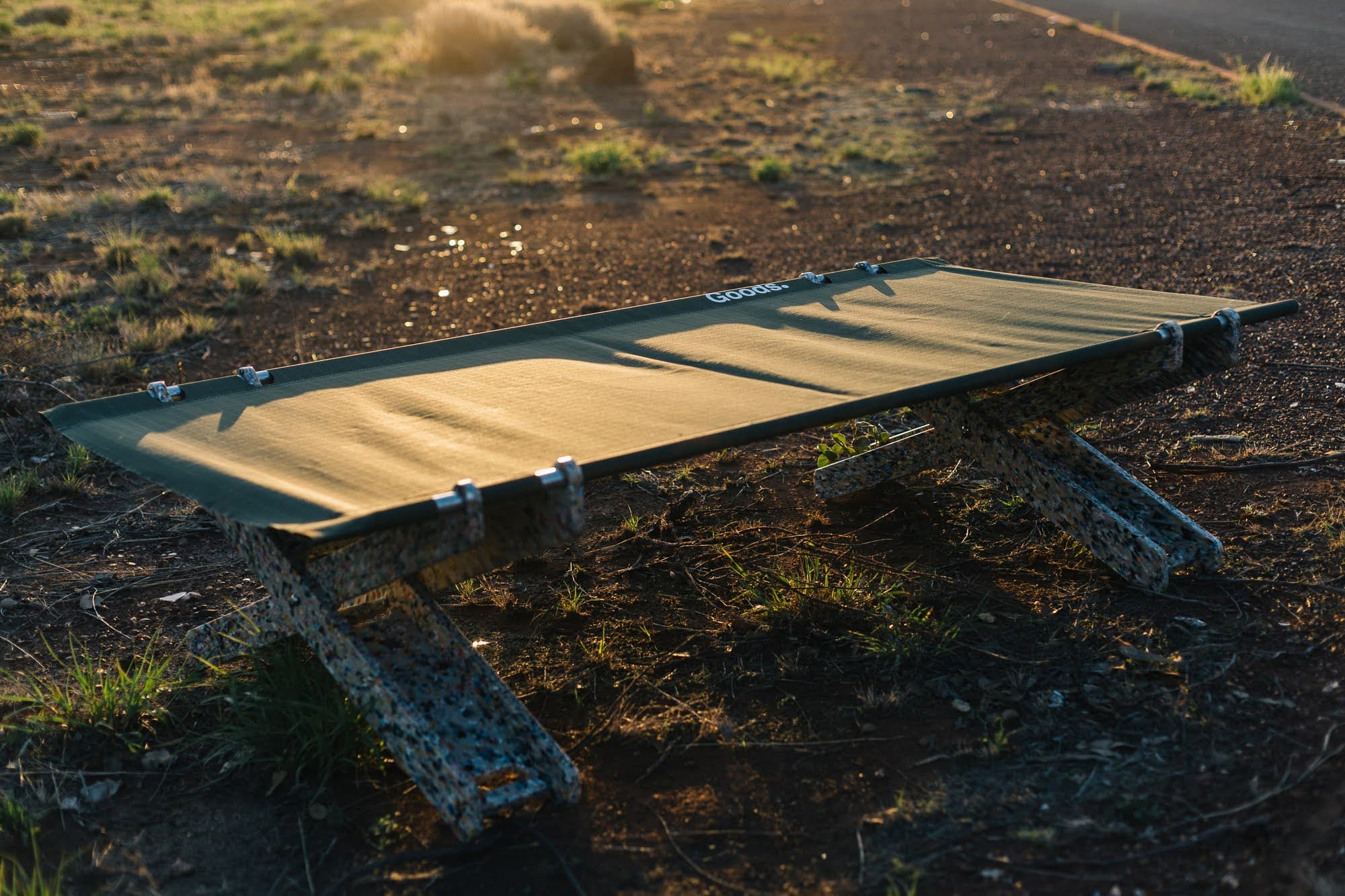
A flat-packable, washable bed made from recycled plastic, heavy-duty canvas, and galvanised steel. Sets up in about five minutes, no tools.
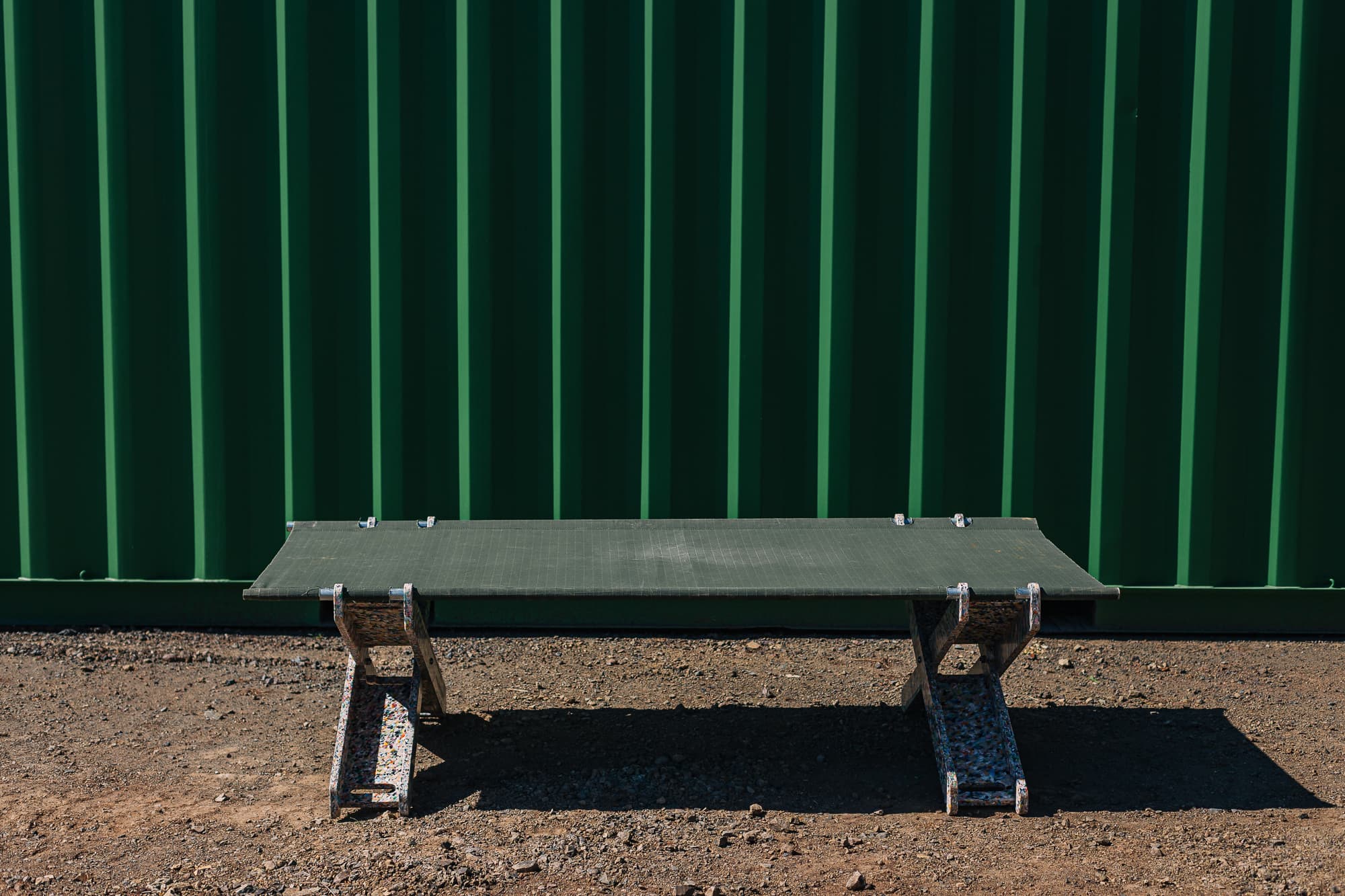
The whole bed, three parts
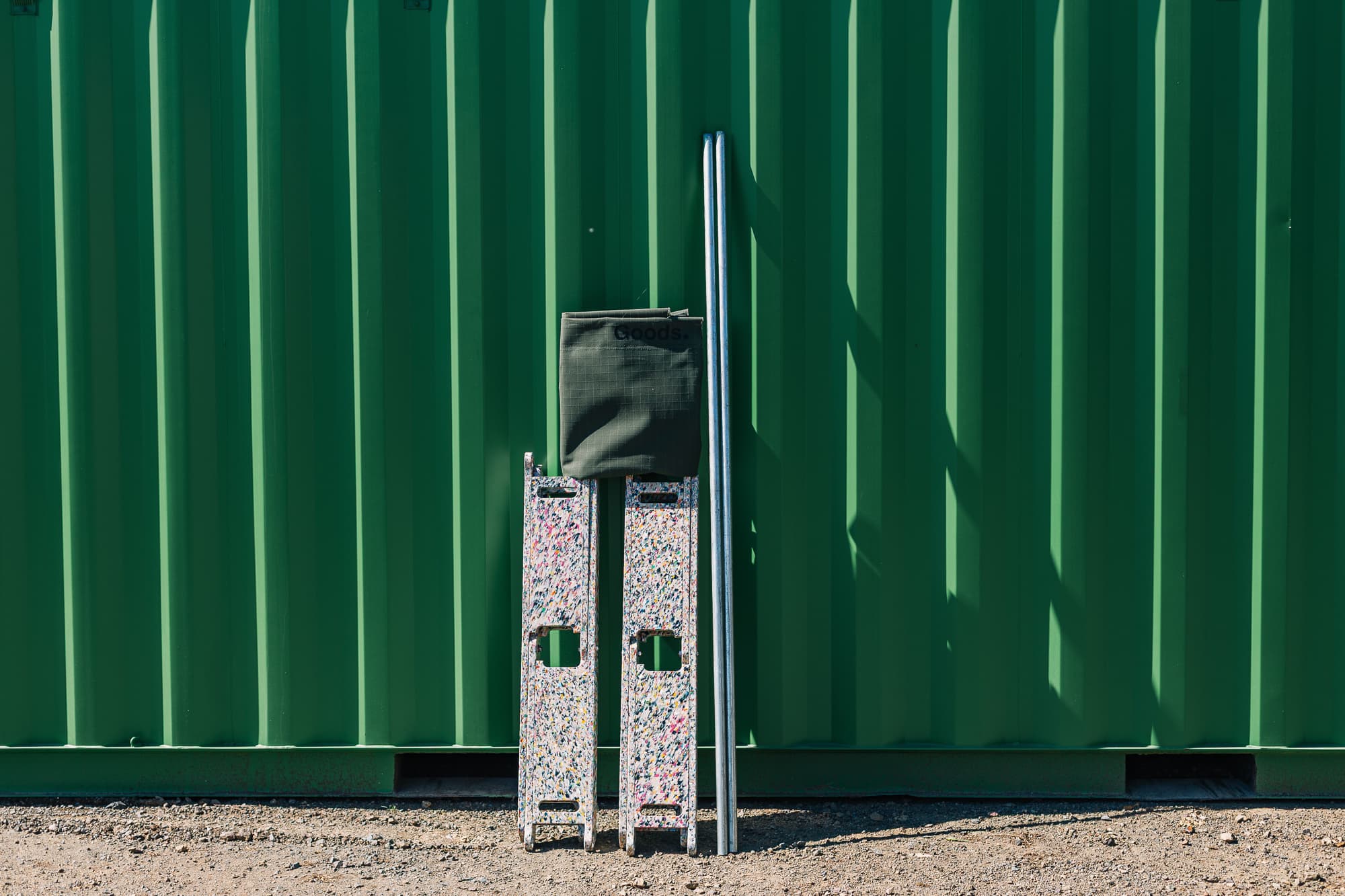
Three parts, no tools
The whole bed is three component types. Recycled plastic for the legs, galvanised steel for the poles, and heavy-duty canvas for the surface. Nothing to screw, nothing to lose.
Galvanised steel poles
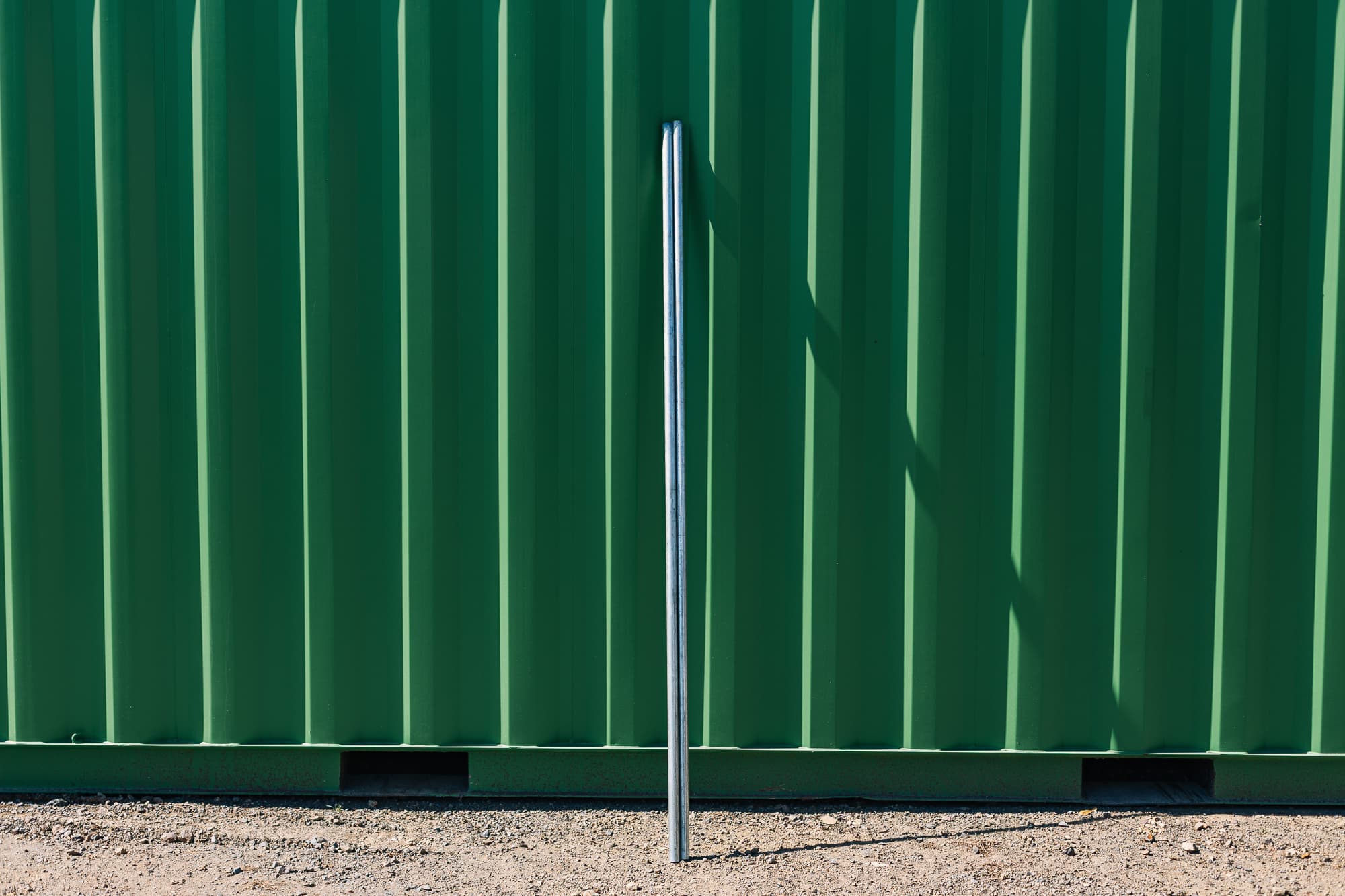
26.9mm OD × 2.6mm wall, 1950mm length. Rated for 200kg. They run the length of the bed and carry the load.
Heavy-duty canvas
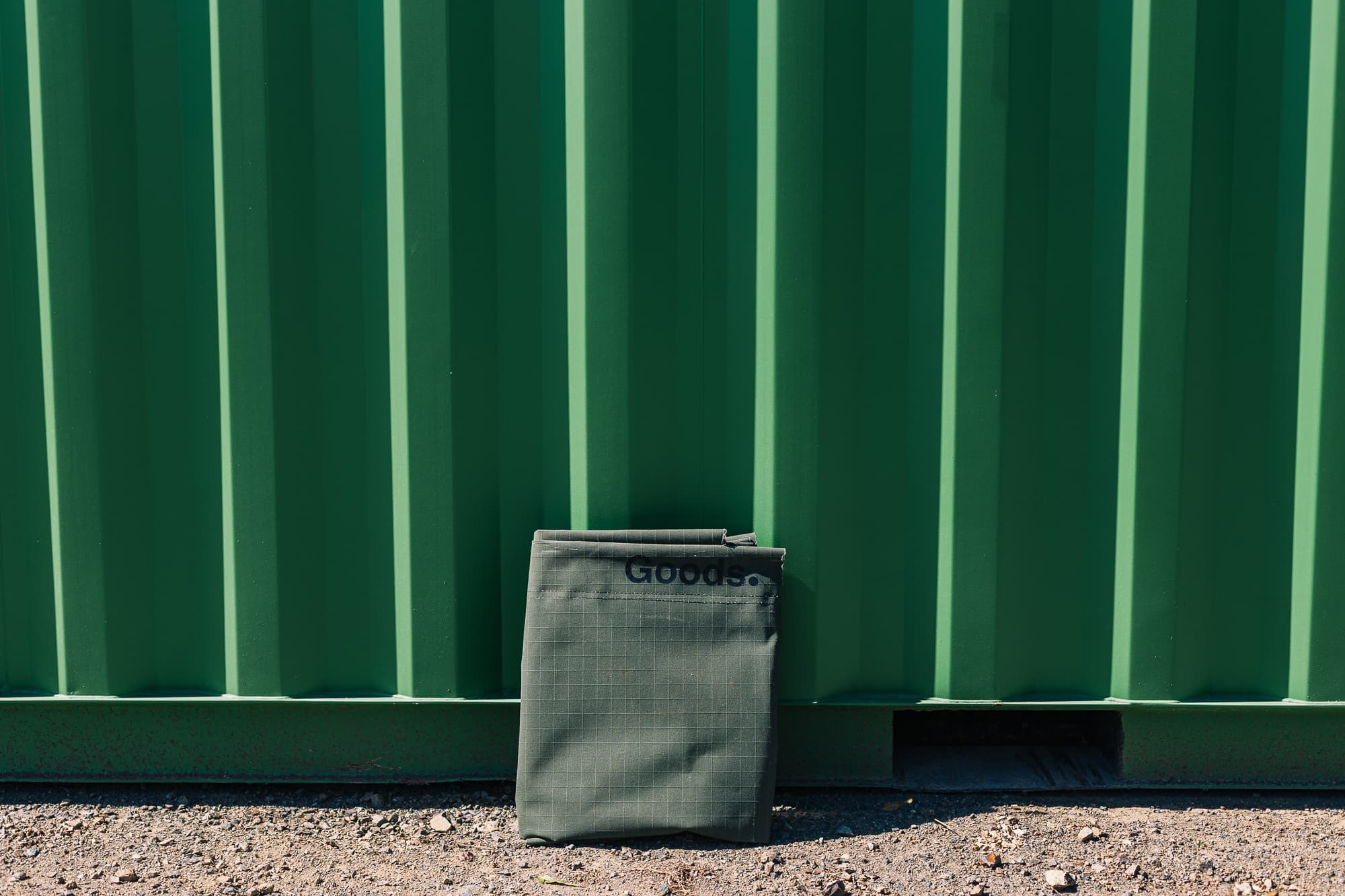
Australian canvas with sewn sleeves along both long edges. Fully washable, quick-drying. It is also the bracing: the bed will not stand without it.
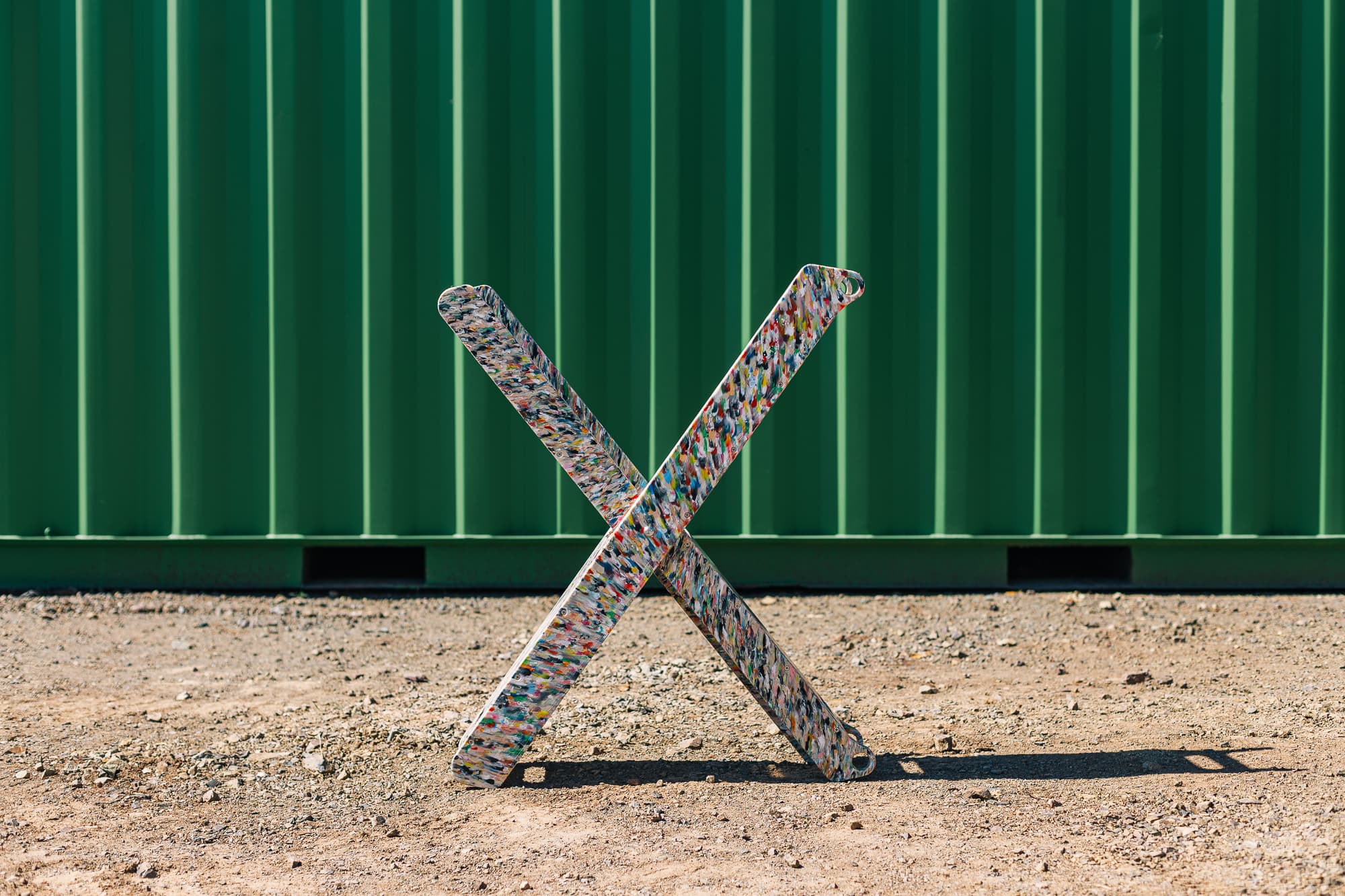
Recycled-plastic legs
Pressed from community-collected plastic waste, the HDPE planks cross into two X-frame trestles, each with a hole at the top for a pole to thread through. Virtually indestructible, no screws.
Watch a bed go together
Start to finish, filmed in real time, ending with a load test. This is the whole build.
How to build it, step by step
Lay out the parts, stand the X-legs, thread the poles, pull it tight. About five minutes, no tools.
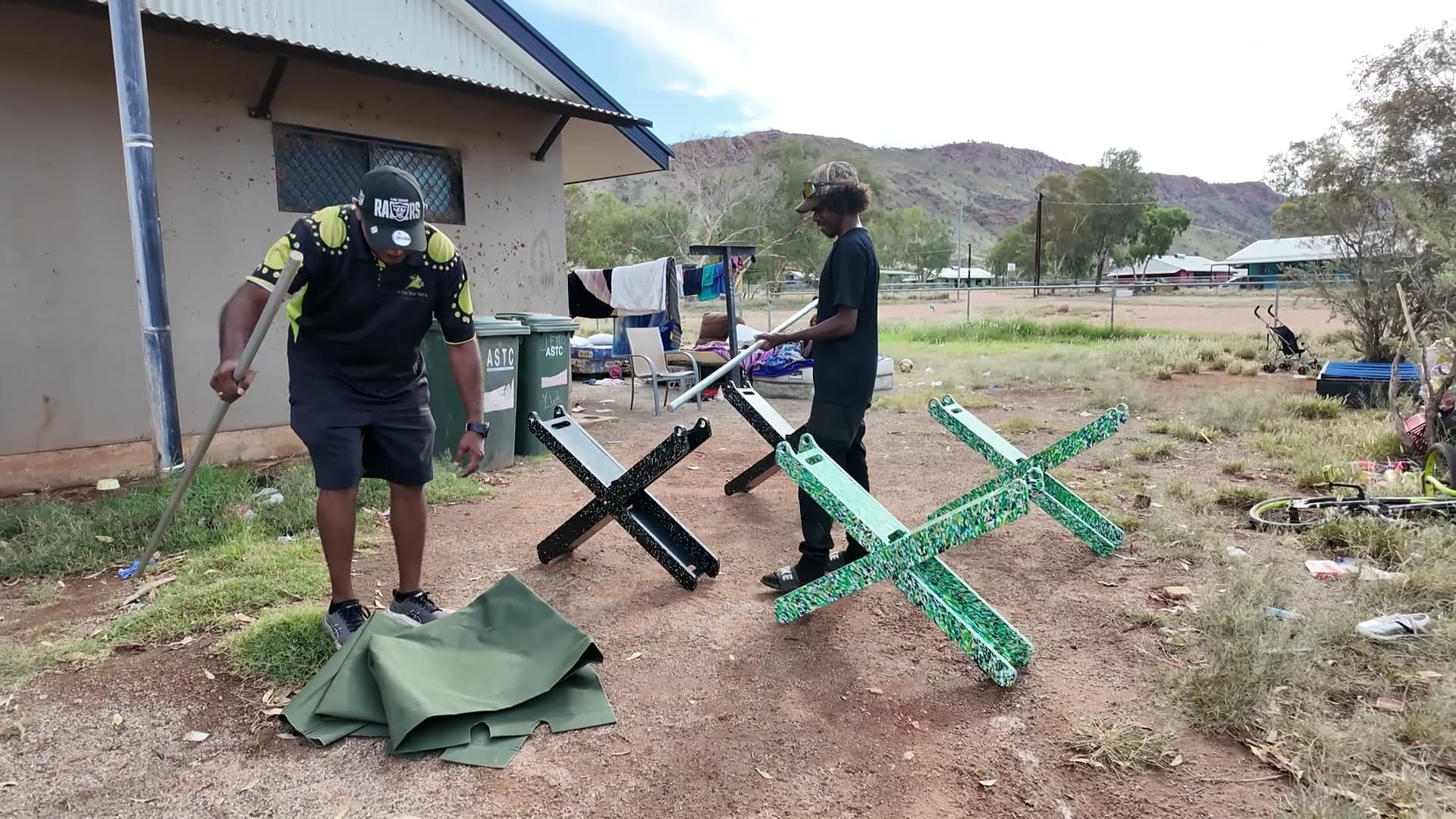
Lay out the parts
Two steel poles, the folded canvas, and the recycled-plastic leg planks. That is everything. No tools, no fasteners.
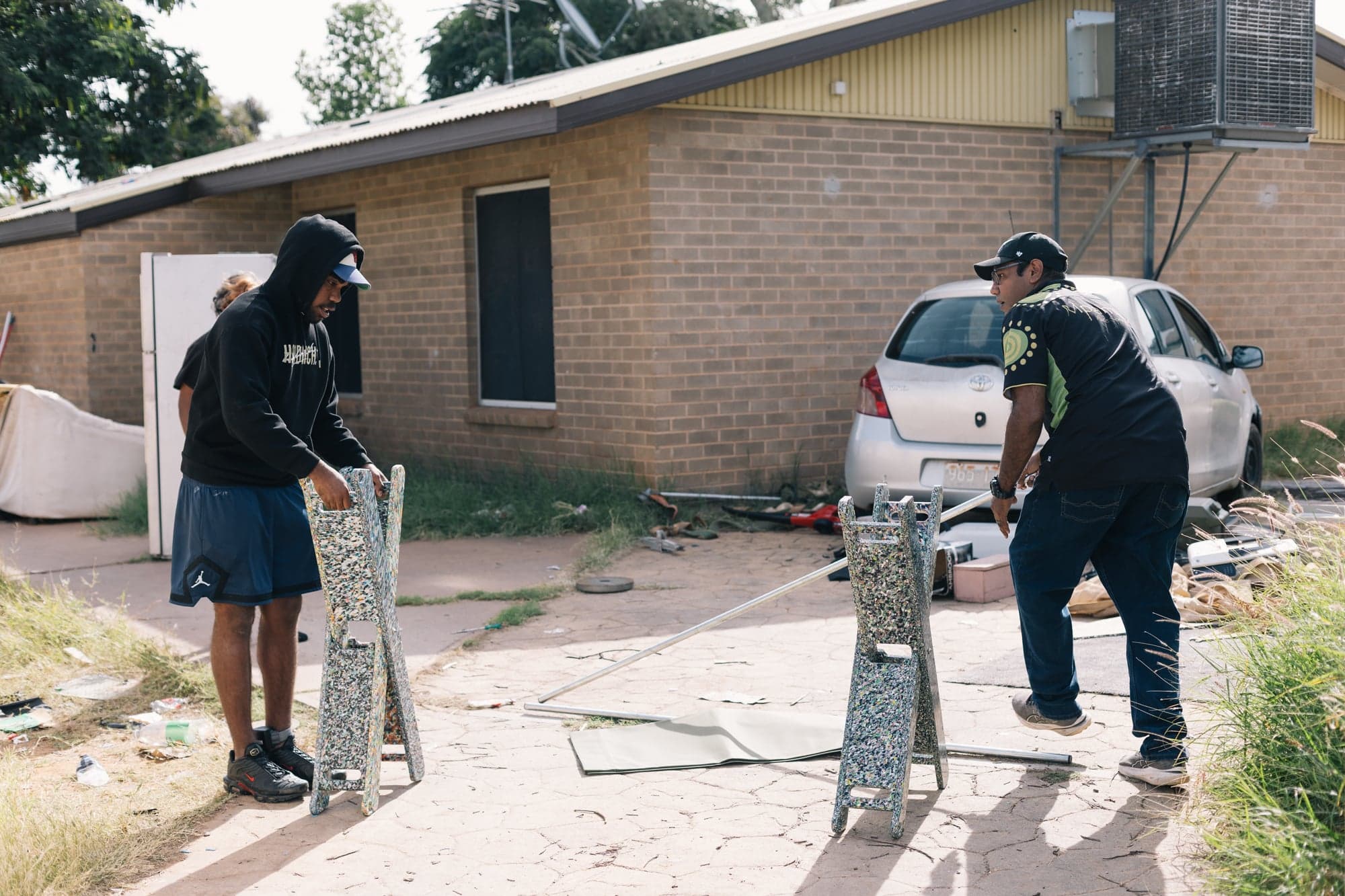
Stand up the two X-frame legs
The crossed plastic planks form two X-shaped trestles, one for each end of the bed, spaced a bed-length apart. These are the supports.
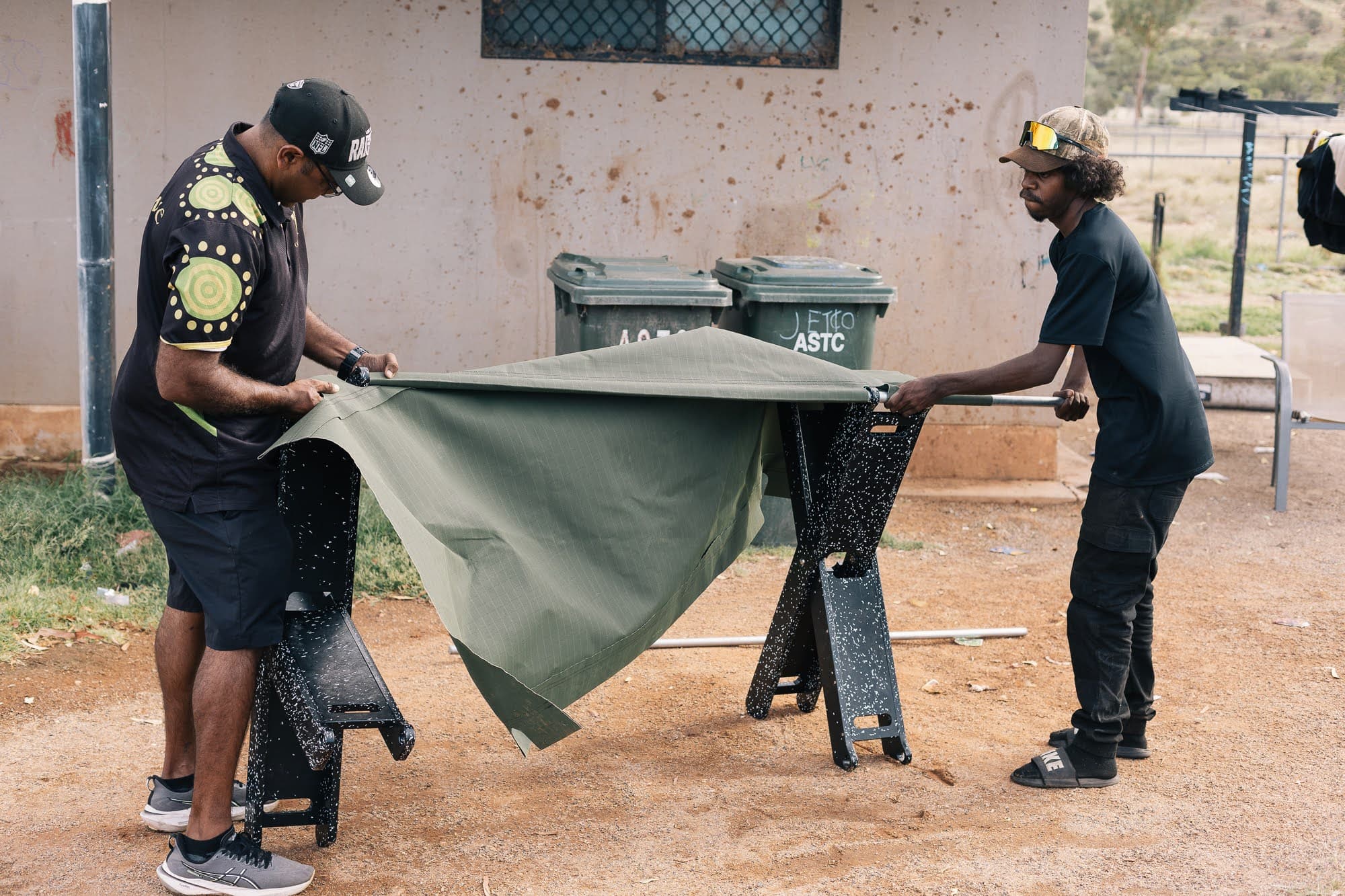
Thread the poles through the canvas and legs
Each steel pole passes through a sewn sleeve on a long edge of the canvas and through the hole at the top of each X-leg. One pole runs down each side.
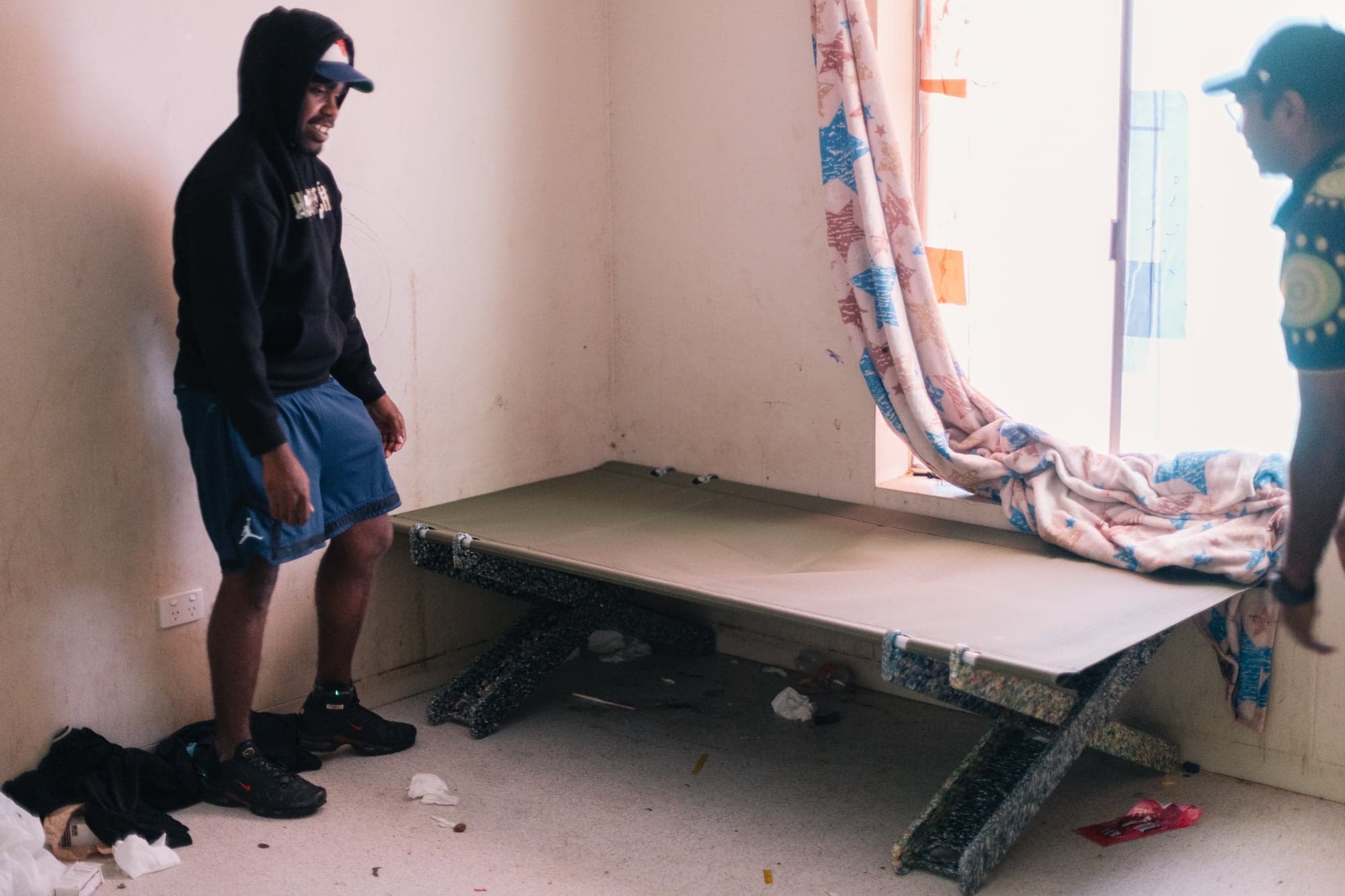
Pull it tight
With the poles run through the leg holes, the canvas pulls taut and the whole frame locks up tight. The poles through the holes hold the tension.
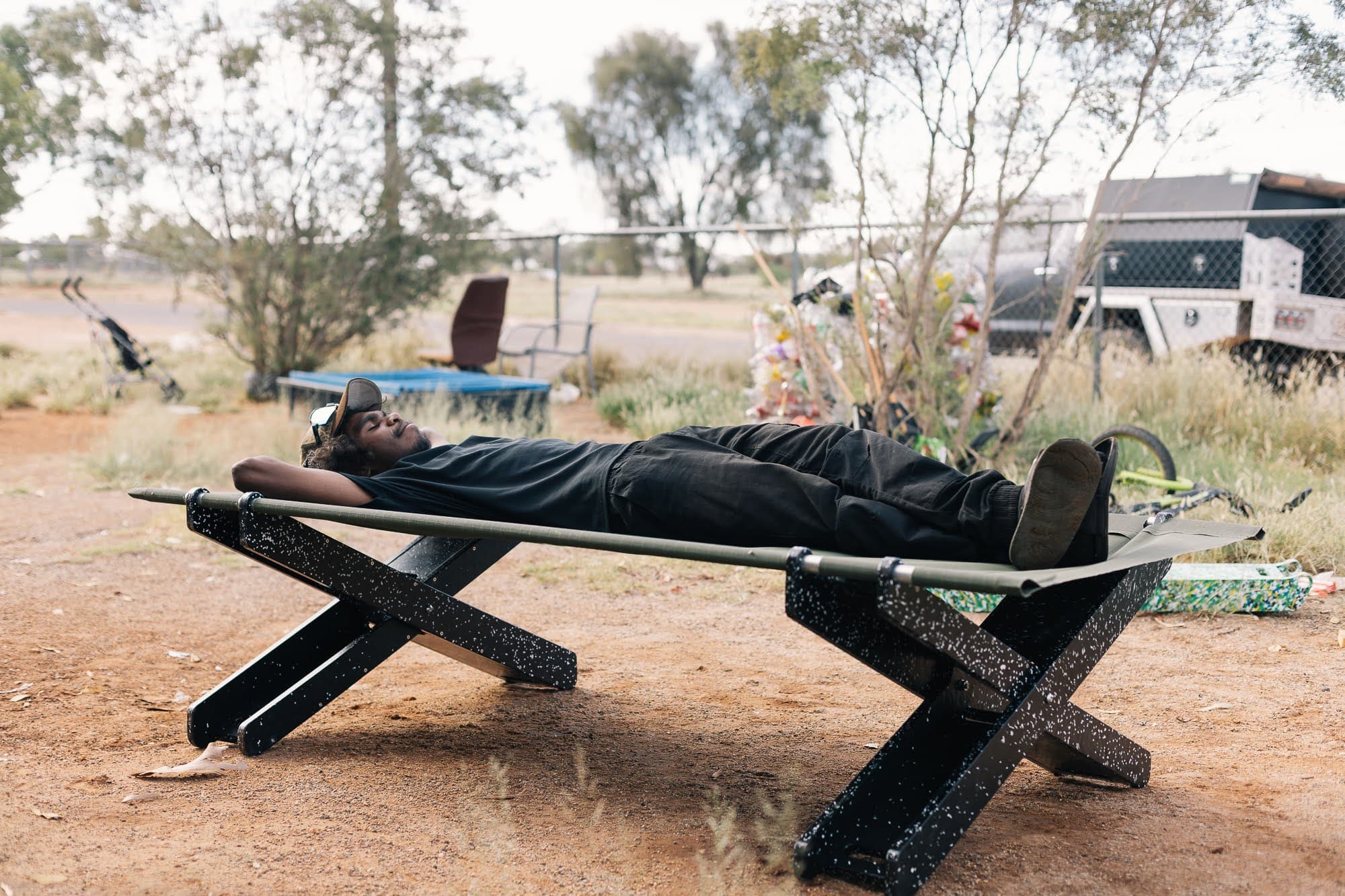
Lie down
That is the bed. It sits low and sturdy, holds up to 200kg, and packs flat again when you need to move it.
Why it works
The weight is what holds it together
It is a tension design. Each pole threads through the hole at the top of each X-leg, so the poles cannot slip, and the canvas stretched tight between them braces the whole frame. The frame will not stand without the canvas: it is the tension that holds everything together. No screws, no tools, just thread the poles through and pull it tight.
Specifications
Materials
- Galvanised steel pipe
- 26.9mm OD × 2.6mm wall, 1950mm lengthDNA Steel Direct, Alice Springs
- Heavy-duty Australian canvas
- Fully washable, quick-dryingCentre Canvas, Alice Springs
- Recycled HDPE plastic X-trestle legs
- Two crossed-plank "X" trestles, pressed from community-collected plastic wasteDefy Design, Sydney (current) / On-country (future)
- Round ribbed tube end caps, 27mm
- Hardware supplier
- X-trestle tension assembly
- Poles thread through the canvas long-edge sleeves and the top holes of the X-legs; tension holds it together — no screws or toolsTension design (no fasteners)
Put one in a home
Every bed diverts 20kg HDPE from landfill and is built toward community ownership.