1Collect
Plastic in. Chip out.
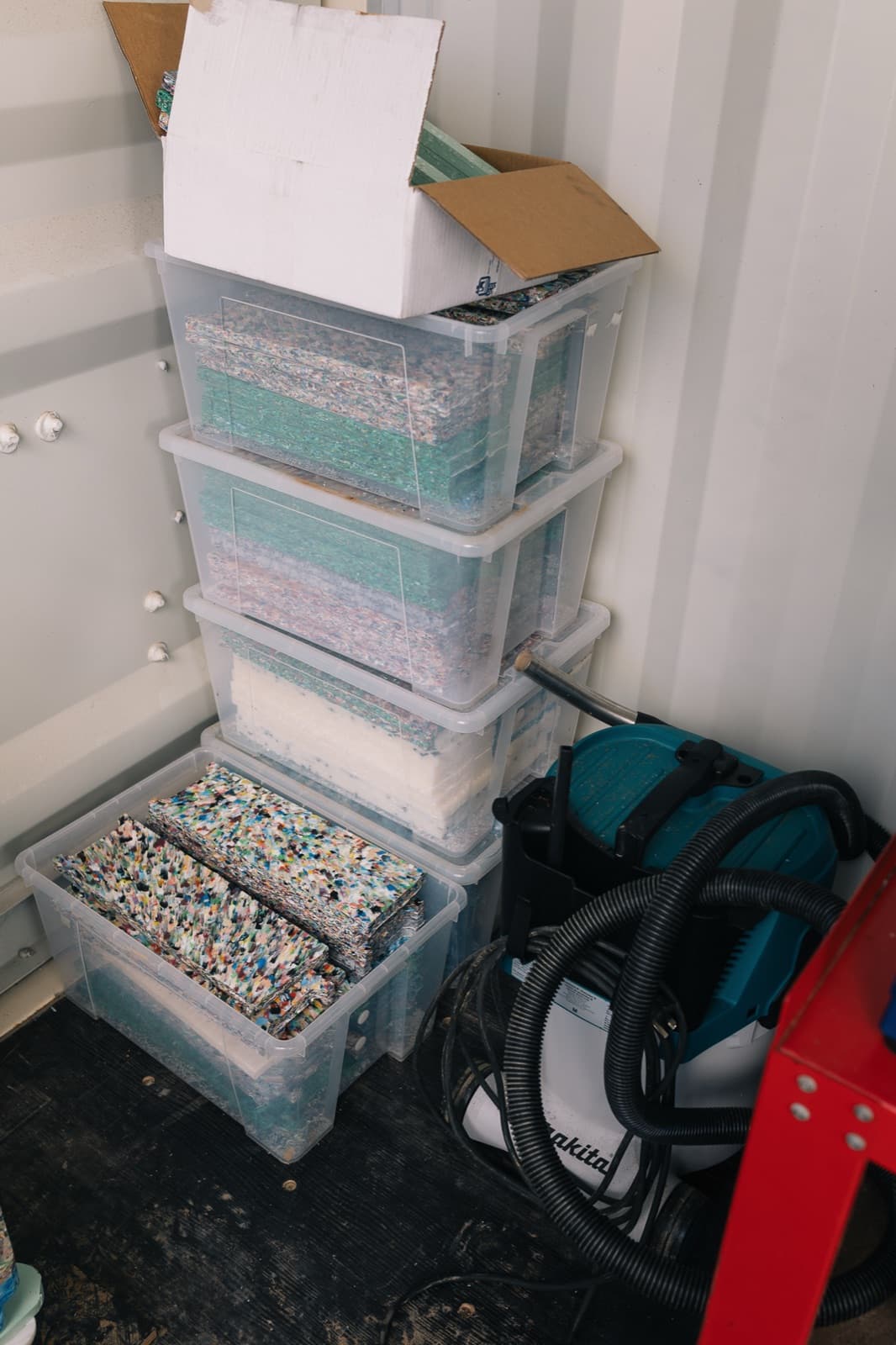
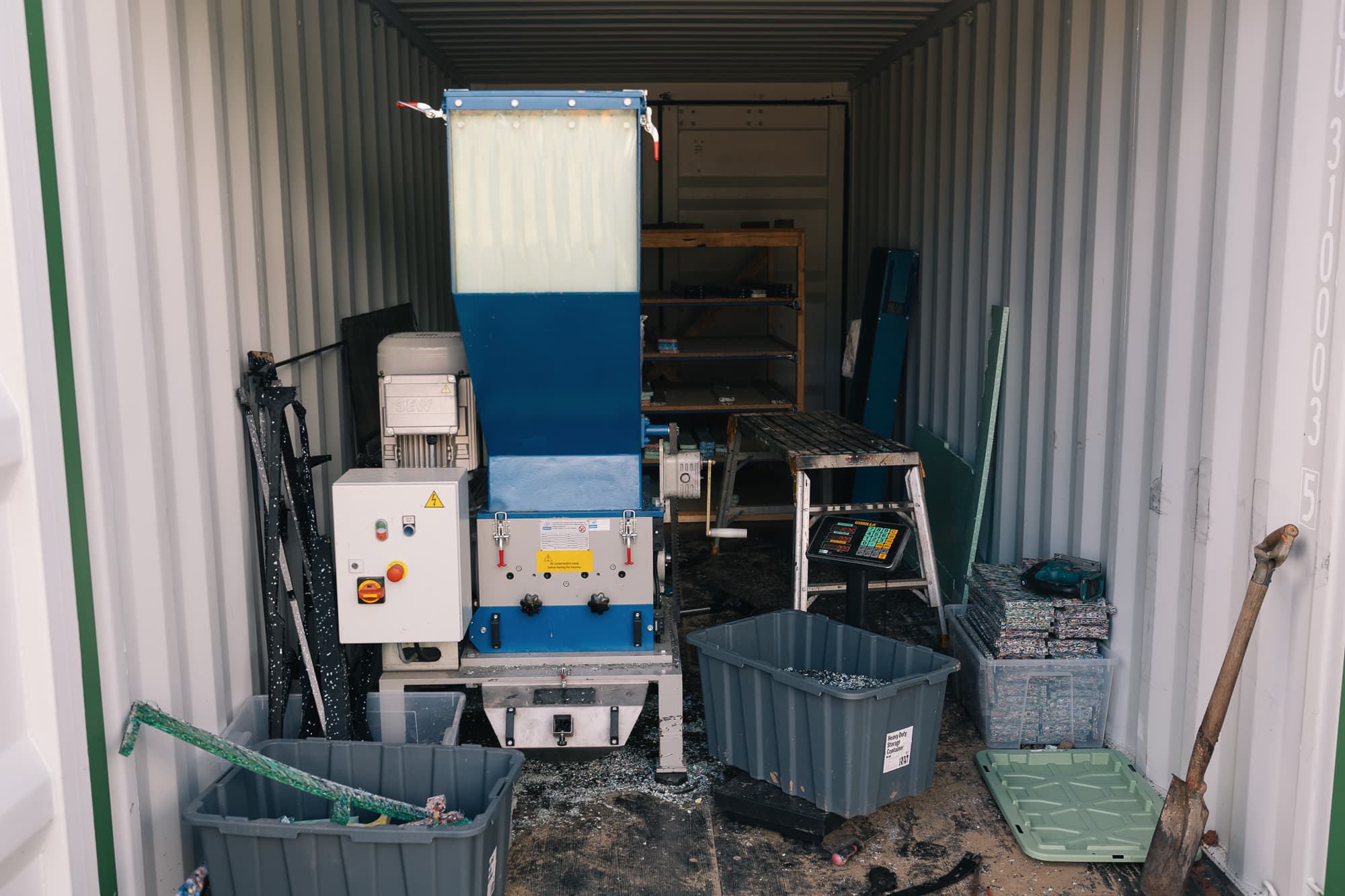
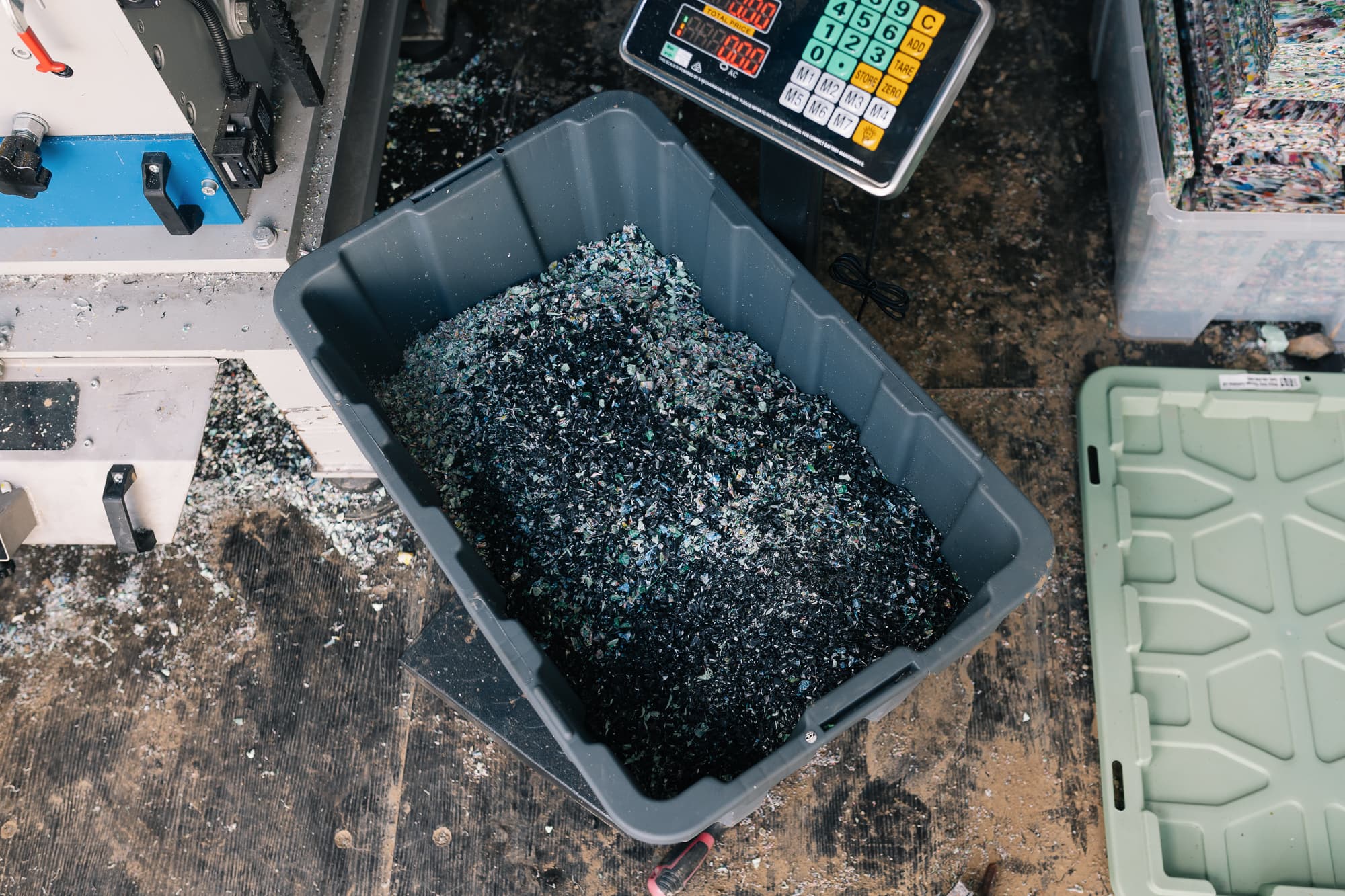
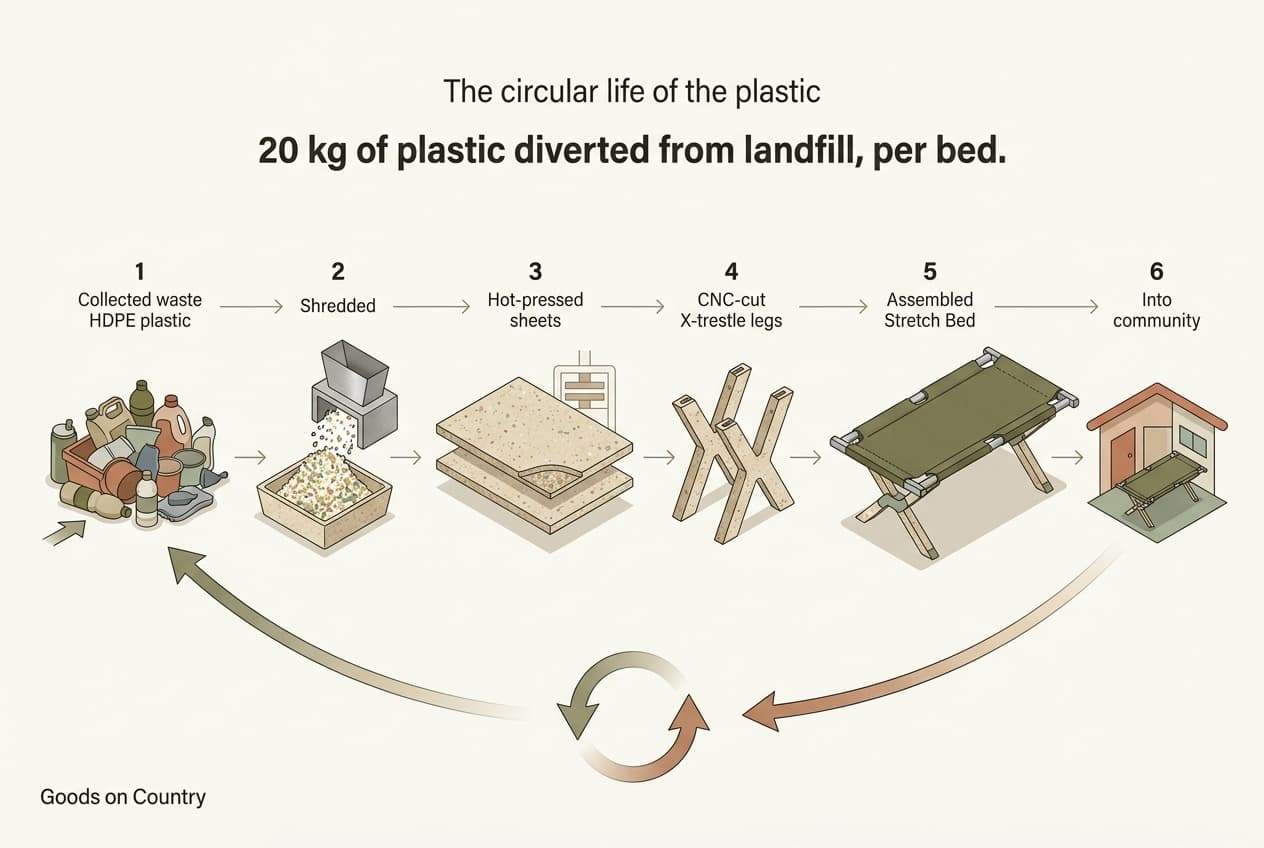
We collect plastic from communities and sites where it would otherwise become waste. It goes into the shredder, comes out as chip, and that chip is what gets pressed into the sheet the leg is cut from.
How it’s made
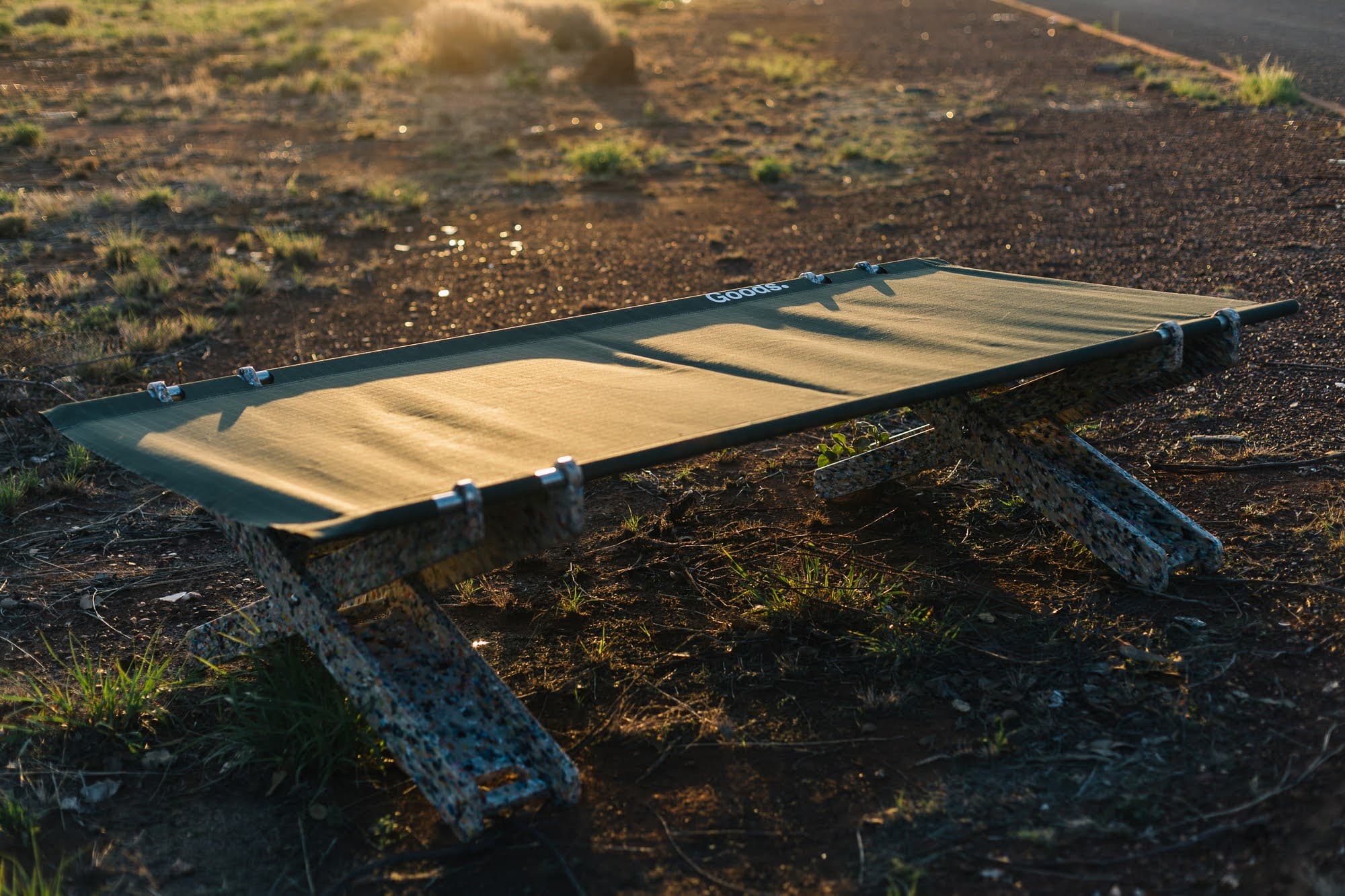
$750 a bed. 188 × 92 × 25cm, 26kg, supports 200kg. Recycled HDPE X-trestle legs, two galvanised steel poles, heavy-duty Australian canvas, up in ~5 minutes with no tools. Made in batches on Country, and this page walks every step of it.
Before the making story
188 × 92 × 25cm, 26kg, supports 200kg. Recycled HDPE X-trestle legs, two galvanised steel poles (26.9mm OD × 2.6mm wall, 1950mm length), heavy-duty Australian canvas. Assembles in ~5 minutes with no tools; the canvas is the structure.
$750 for a single Stretch Bed. Each bed diverts 20kg of plastic from landfill.
Beds are made in batches, not warehoused. We confirm your dispatch window when you order rather than promise a number we have not measured.
Freight is quoted by destination. Remote deliveries carry real freight costs and we say so up front; for bulk or community orders, contact us for a quote before you buy.
Designed to last 10+ years in remote conditions. That is the design intent, not yet a field-proven number, and we will say so until it is.
We do. Every bed carries a QR code: scan it to report an issue, and we arrange the repair or replacement and stay reachable by SMS. The canvas is washable and replaceable.
The loop
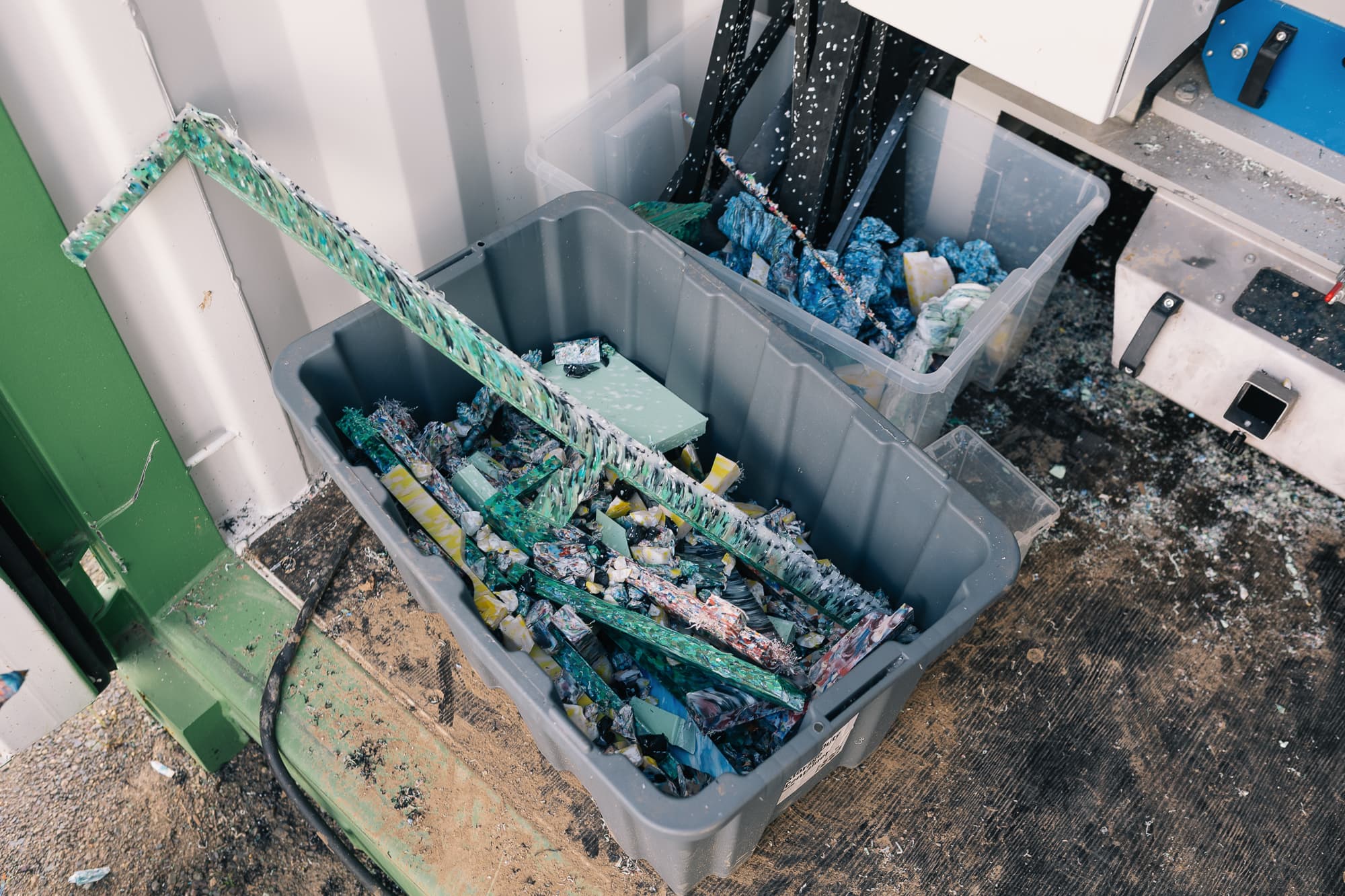
Twenty kilos of plastic that would have gone to landfill becomes the legs of a bed that lasts ten years. Off-cuts go back in the shredder and come out as the next sheet. Same plastic, two or three more presses out of the same batch.
Why plastic, why beds
4,933 tonnes
verifiedPlastics recycled in the NT, 2023-24
The NT recycled 4,933 tonnes of plastic in a year, 8% of everything recycled in the Territory.
Source: WRINT/AEAS20kg
workpaperRecycled HDPE in one Stretch Bed
A Stretch Bed's pressed legs carry about 20kg of recycled HDPE; one tonne of clean plastic is roughly 50 beds' legs.
Source: Product spec; Ben ruling 2026-08-24; canon plastic-kg derivation2,761 households (51.3%)
verifiedVery remote NT: First Nations households needing at least one more bedroom
In very remote NT, half of all First Nations households, 2,761 of 5,377, need at least one more bedroom.
Source: ABS Census 202143.4%, the lowest of any jurisdiction
verifiedFirst Nations people in appropriately sized housing, NT
Fewer than half of First Nations people in the NT live in appropriately sized housing, the lowest result in the country, against 81.4% nationally.
Source: ABSThe NT recycled 4,933 tonnes of plastic last year, and more again went to landfill. A Stretch Bed's pressed legs take about 20kg of it, so one tonne of clean plastic is roughly 50 beds' legs, and the Census counts 2,761 very remote NT households short at least a bedroom. Feedstock will never be the constraint. What the money buys is the part that is: a community that can collect the plastic, make the goods, and come to own the making.
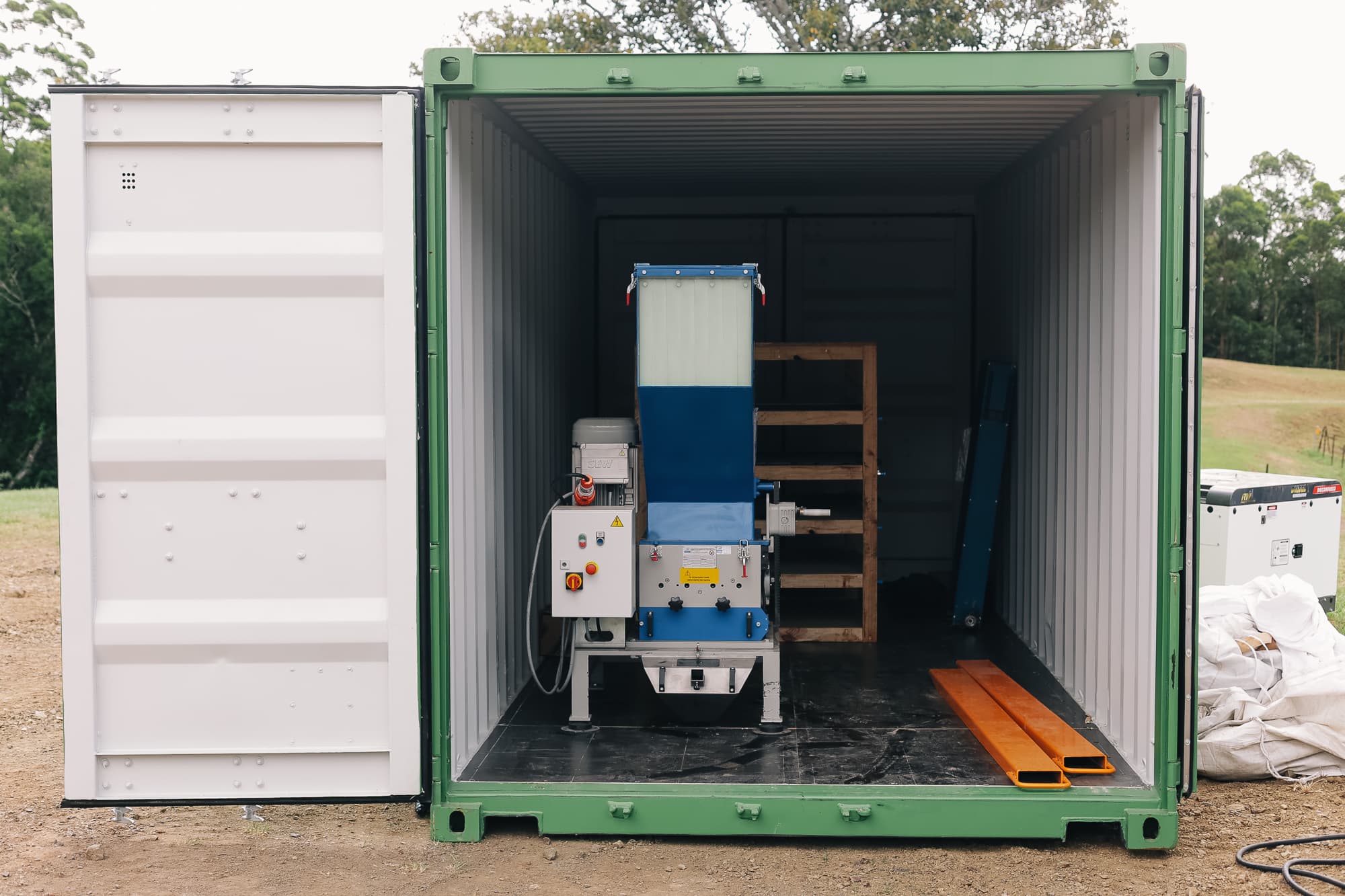
We collect plastic from communities and sites where it would otherwise become waste. It goes into the shredder, comes out as chip, and that chip is what gets pressed into the sheet the leg is cut from.
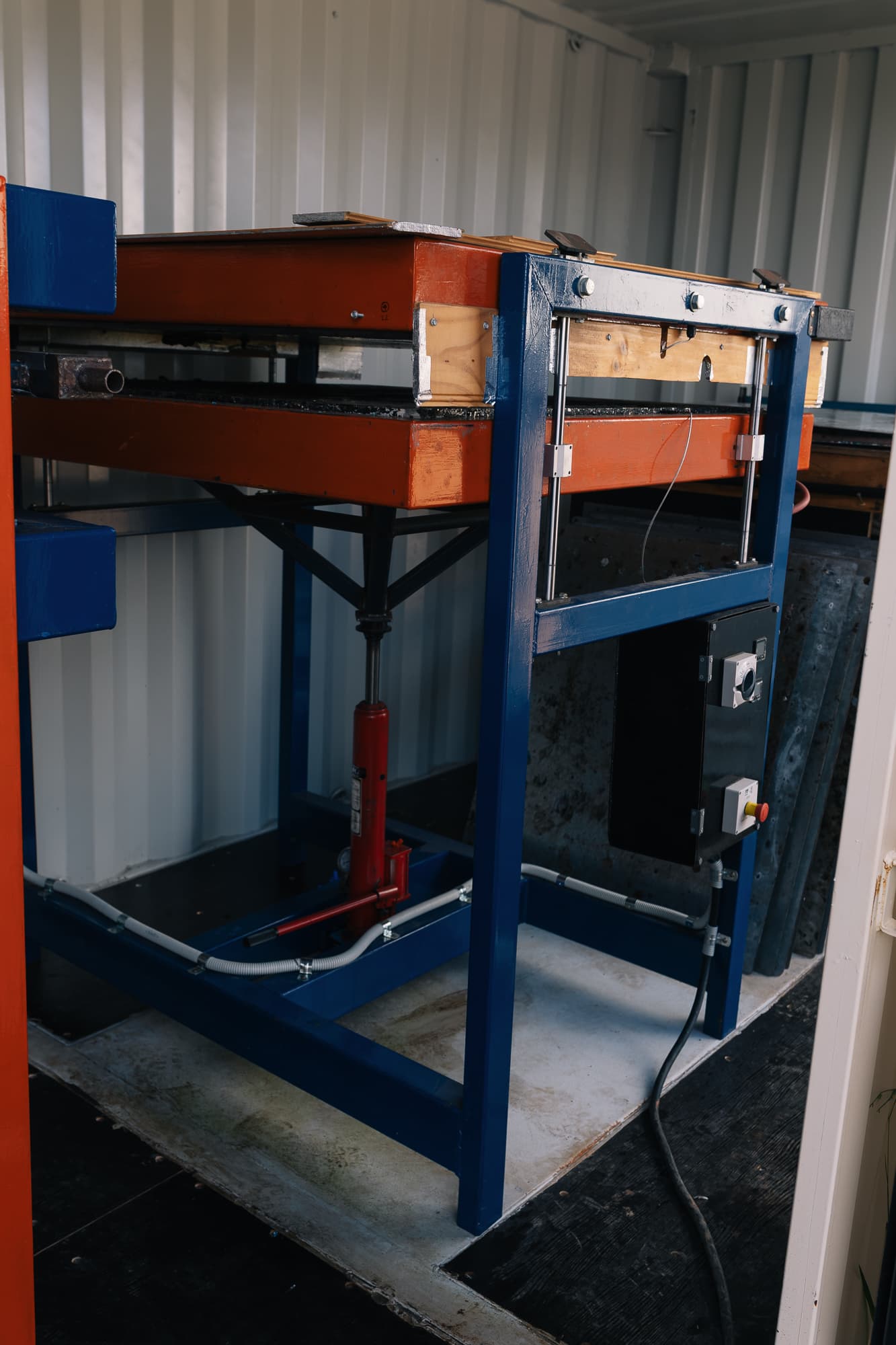
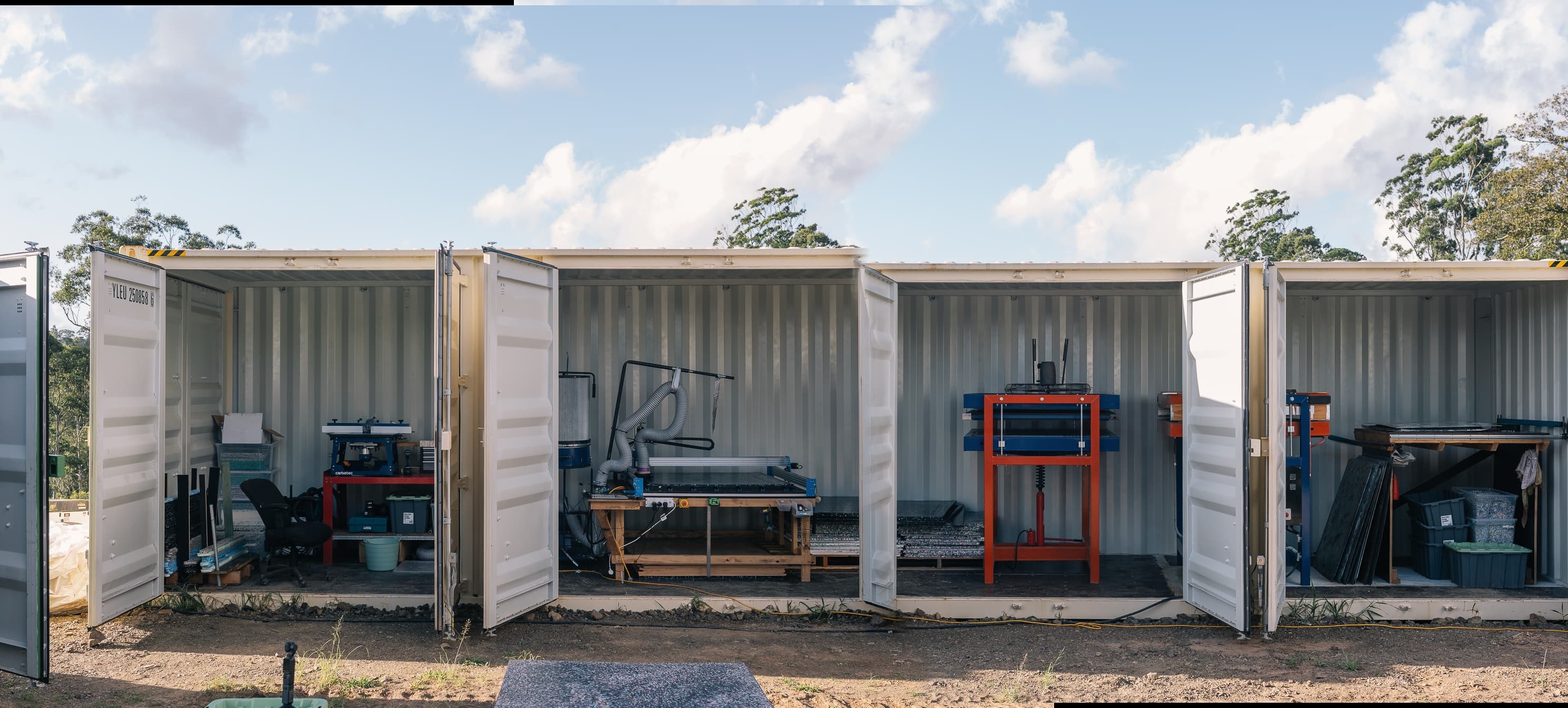
The chip goes into a heat press inside the containerised factory. Under heat and pressure the HDPE fuses into a dense, weather-resistant sheet ready to be cut. Press cycles are timed and monitored. Nothing leaves the container until the sheet passes a finger-test for warp and finish.
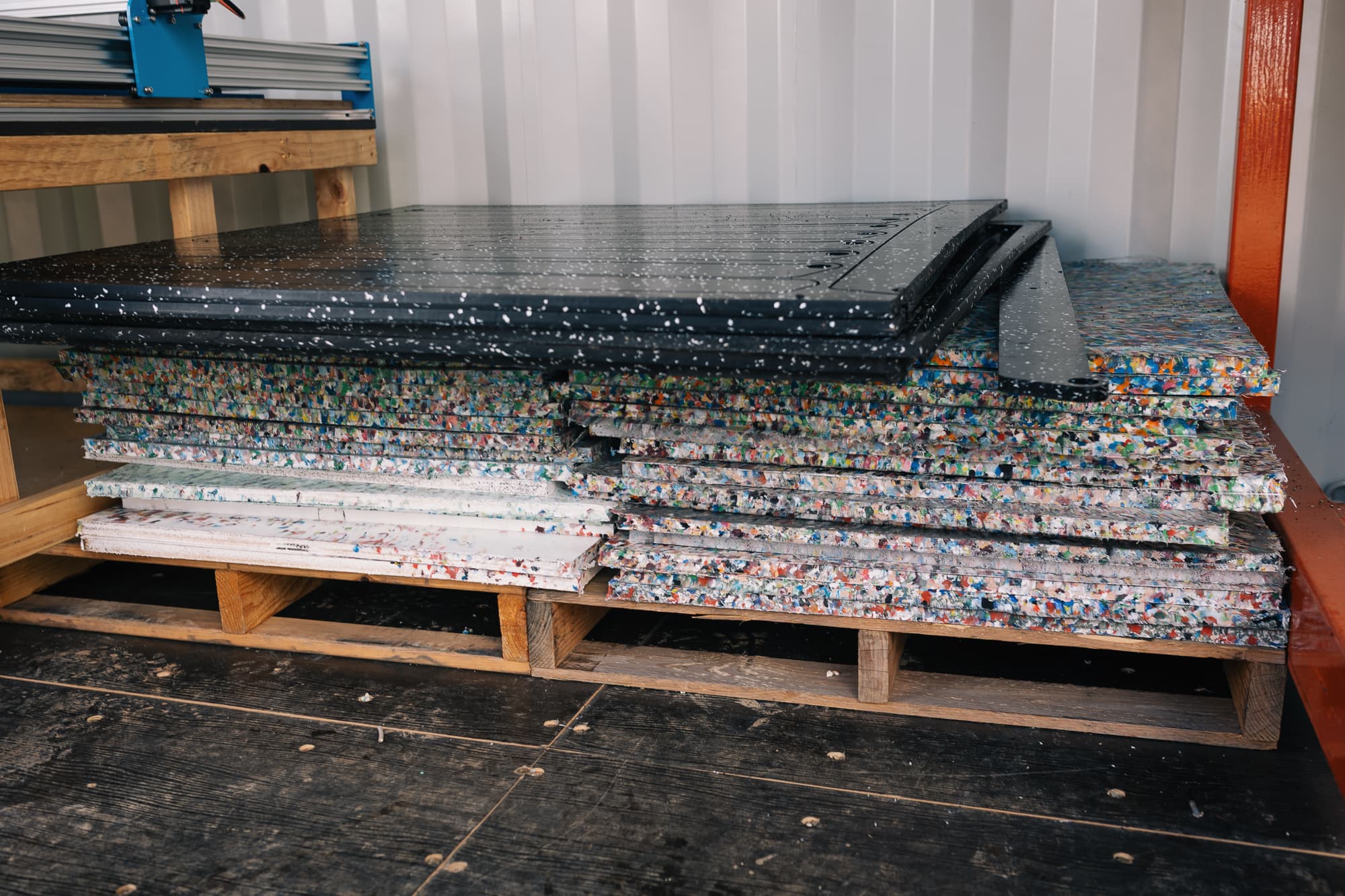
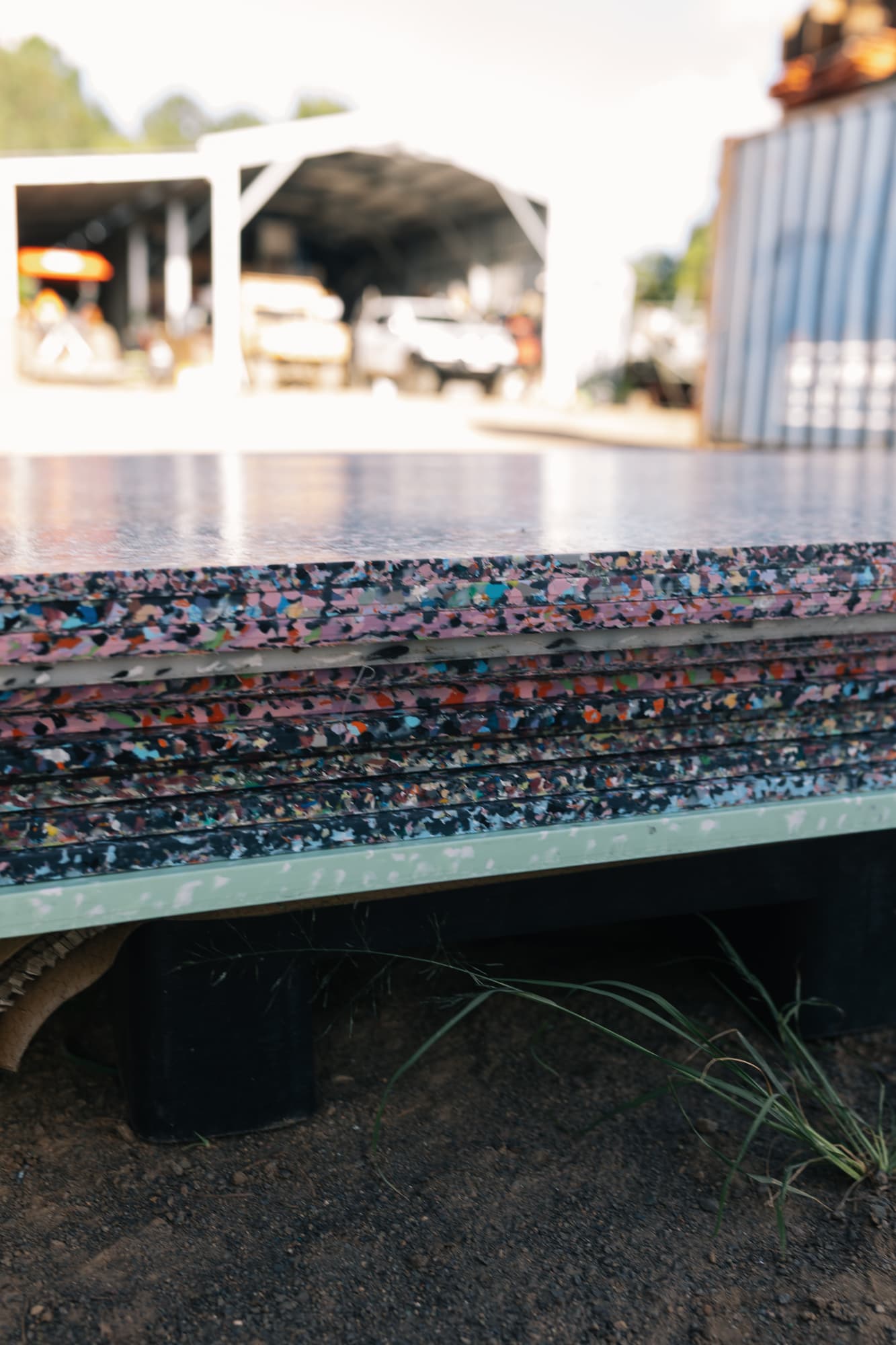
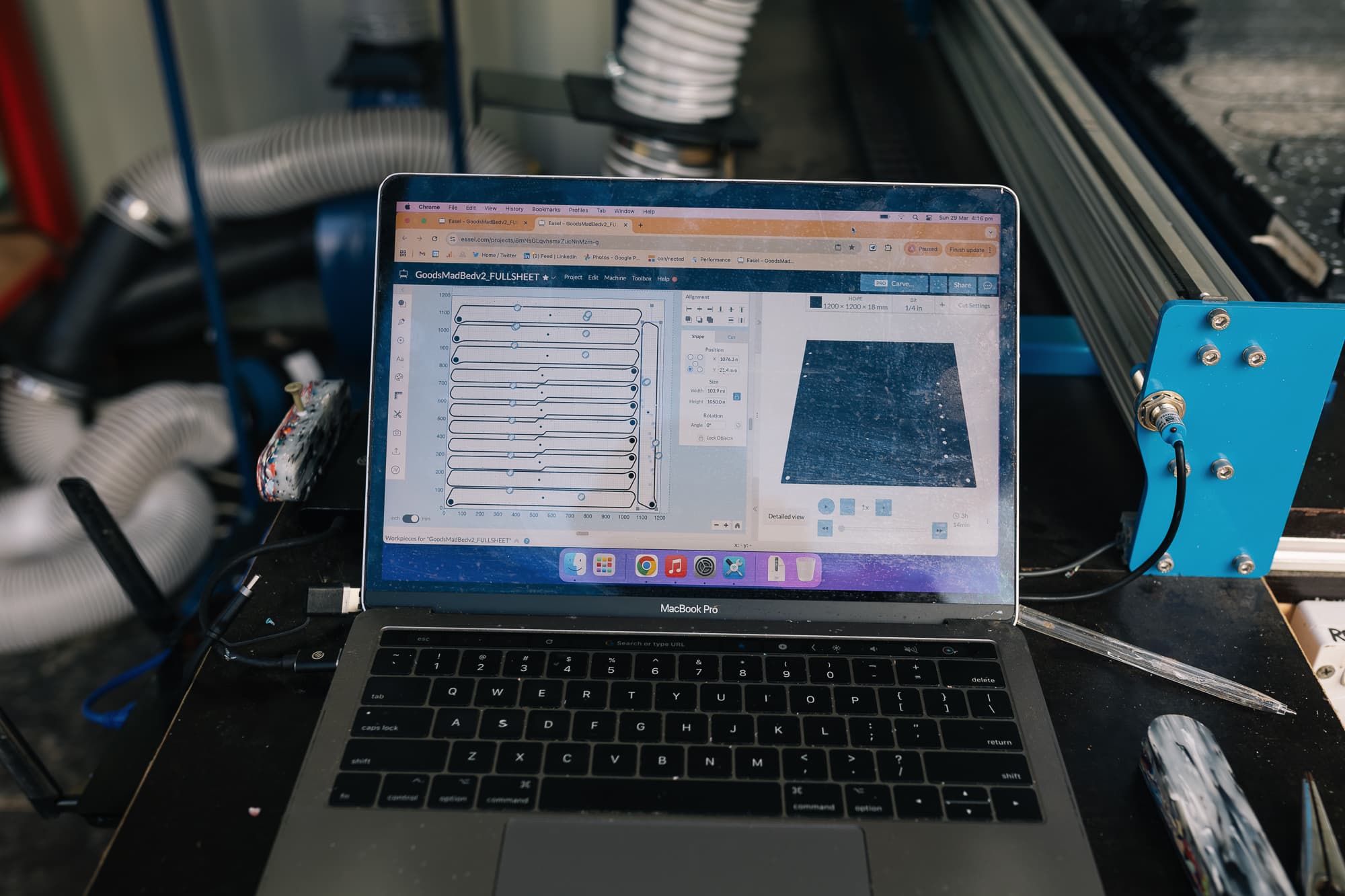
A pressed sheet goes onto a 4×8 CNC router bed. BlueCarve software steps each cut to nest leg blanks against the sheet so off-cuts go back into the chip stream. Same plastic. Two or three more presses out of the same batch.
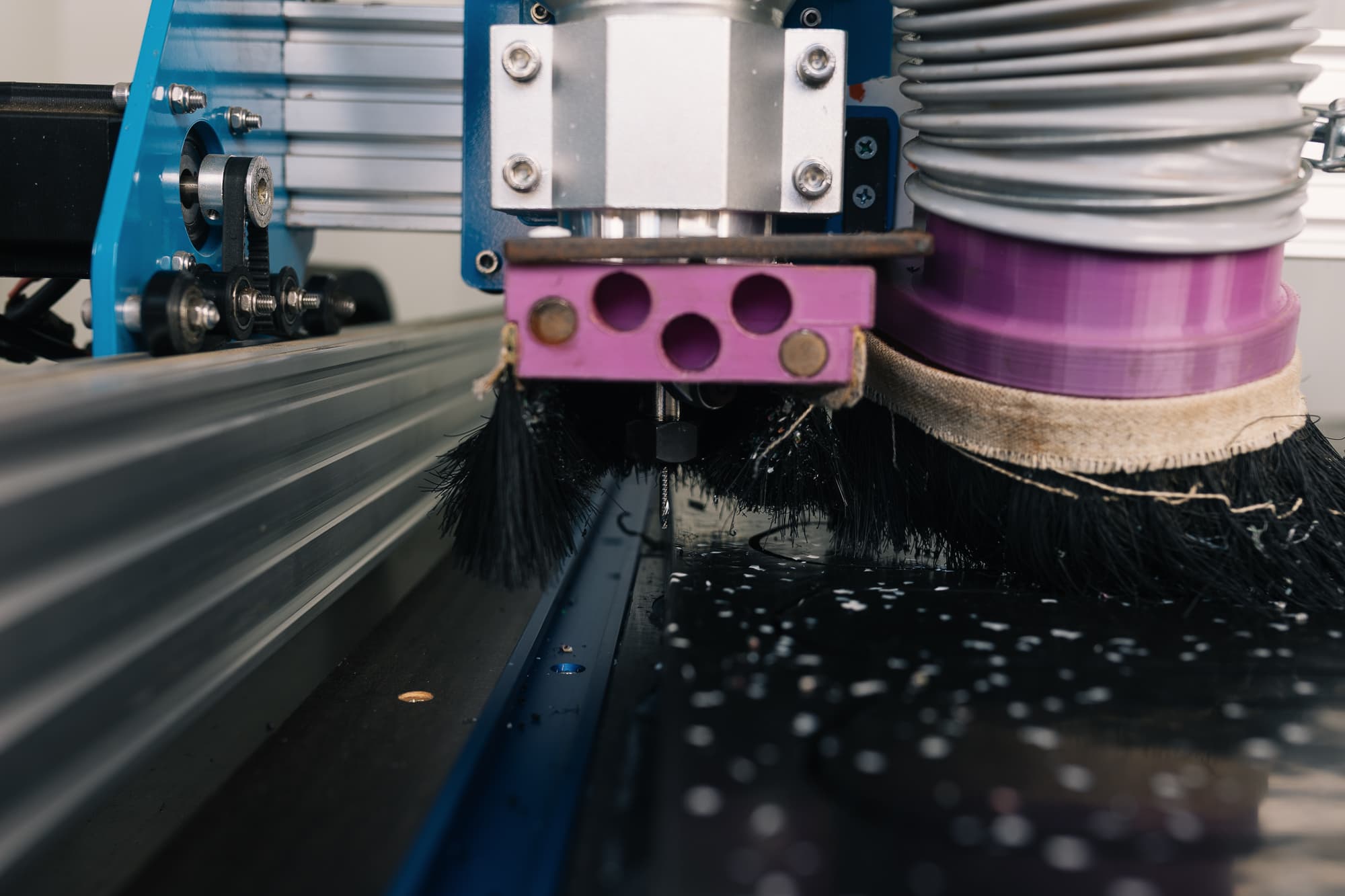
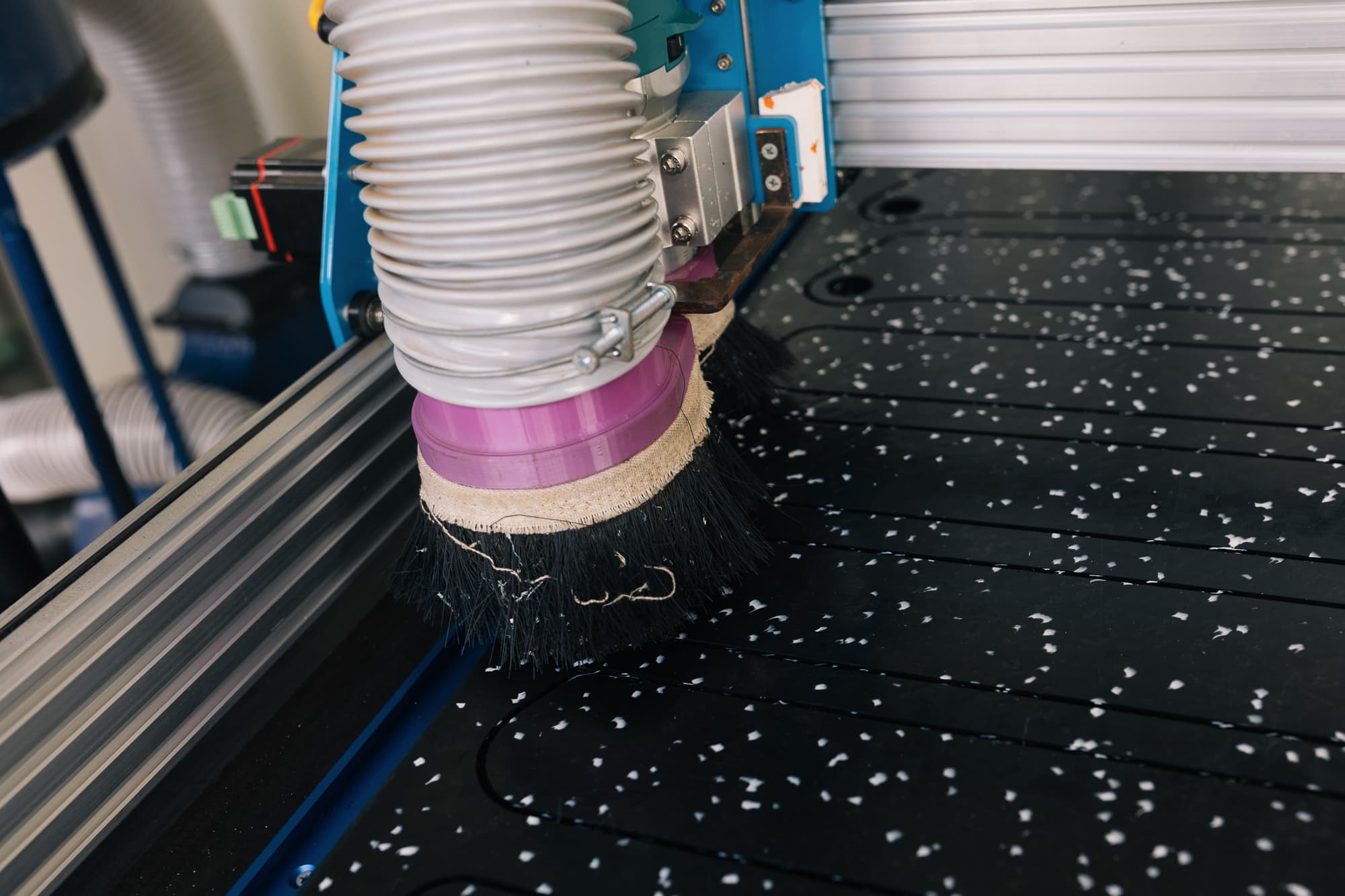
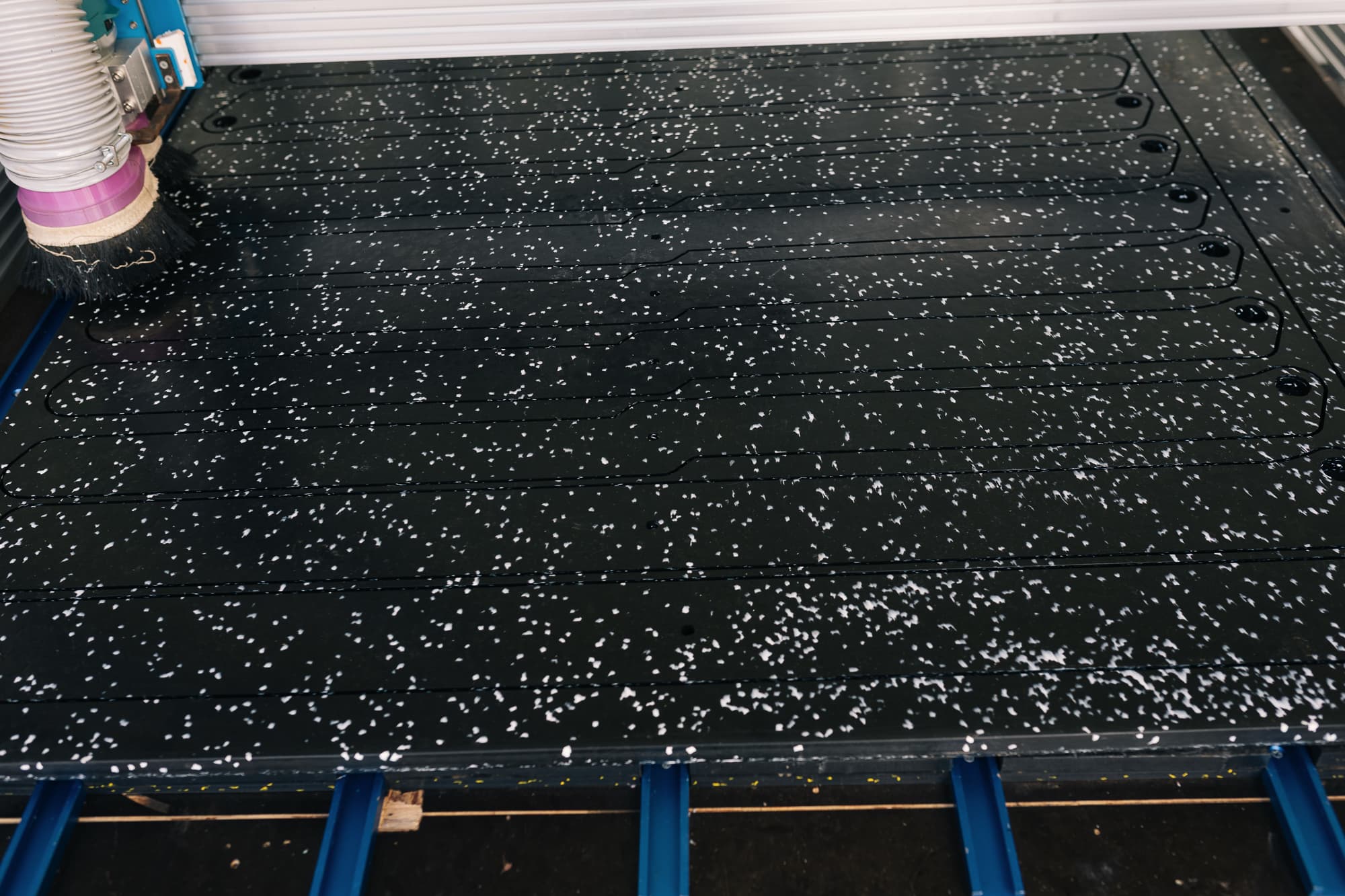
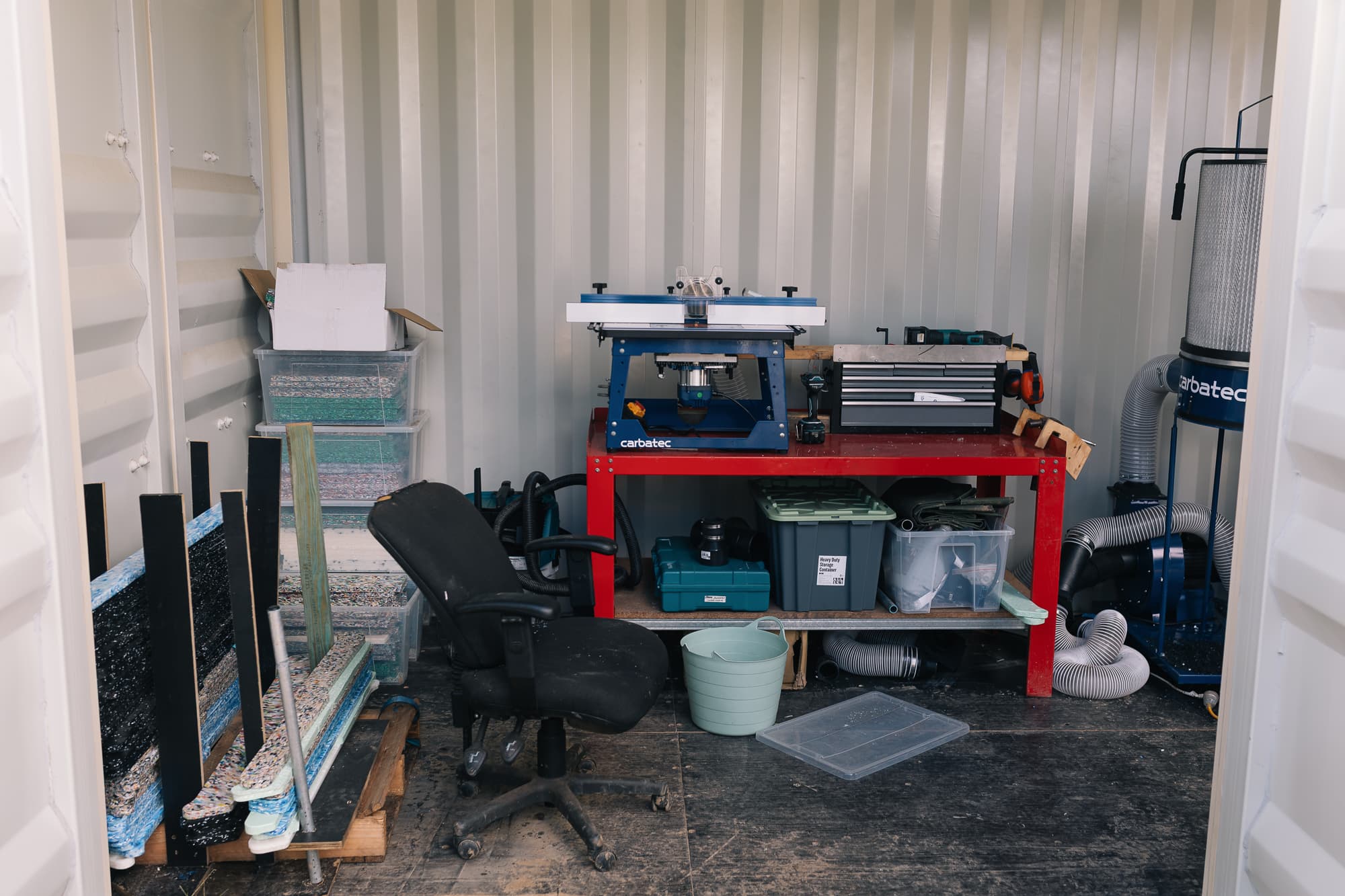
Once the legs are cut, the edges get smoothed with a bull-nose router. Then the young people from Oonchiumpa drill the pole holes into the top of each leg. By the time the parts ship, a family can thread the poles and tension the bed together in a remote community in about five minutes, no tools.
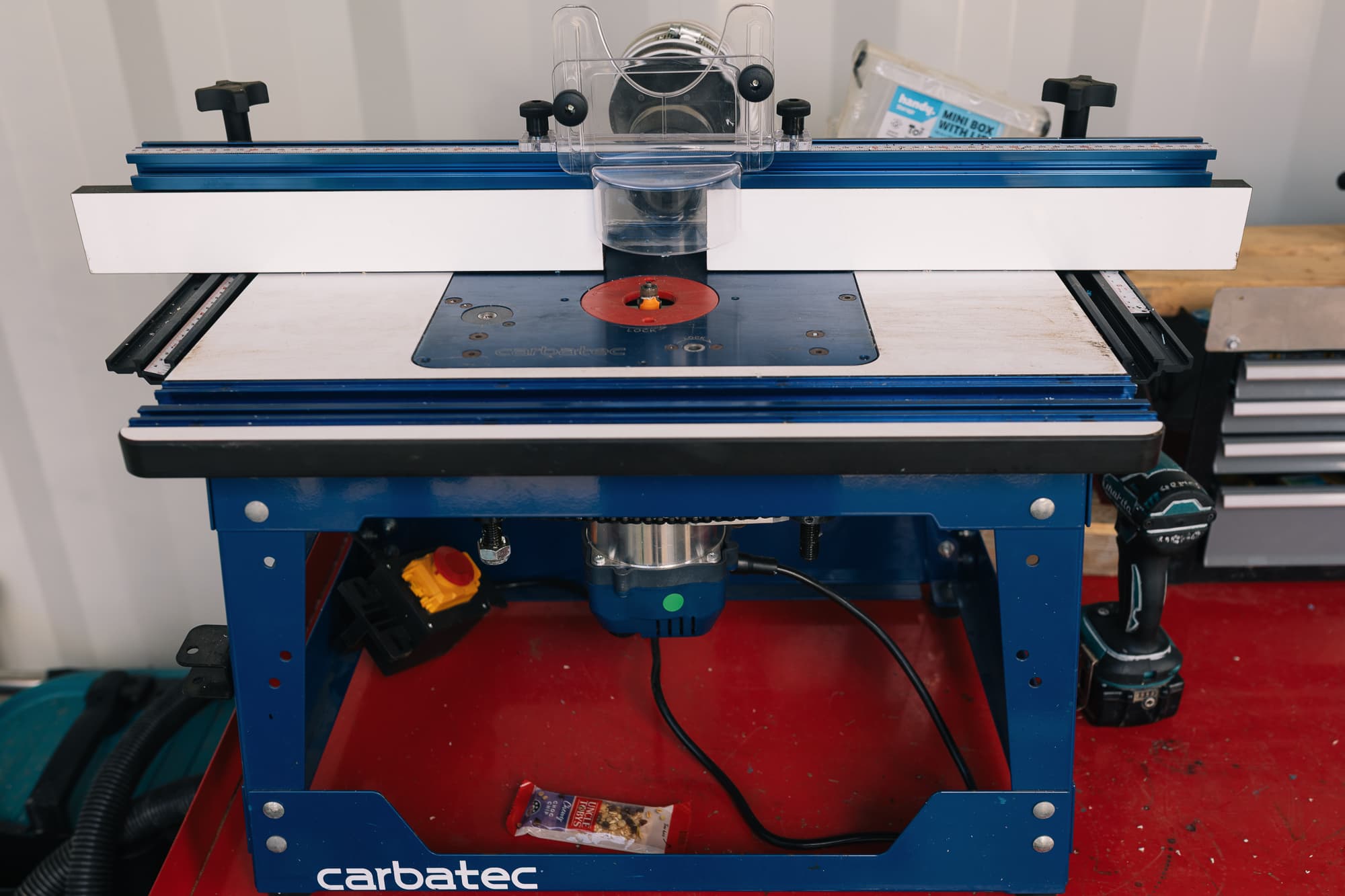
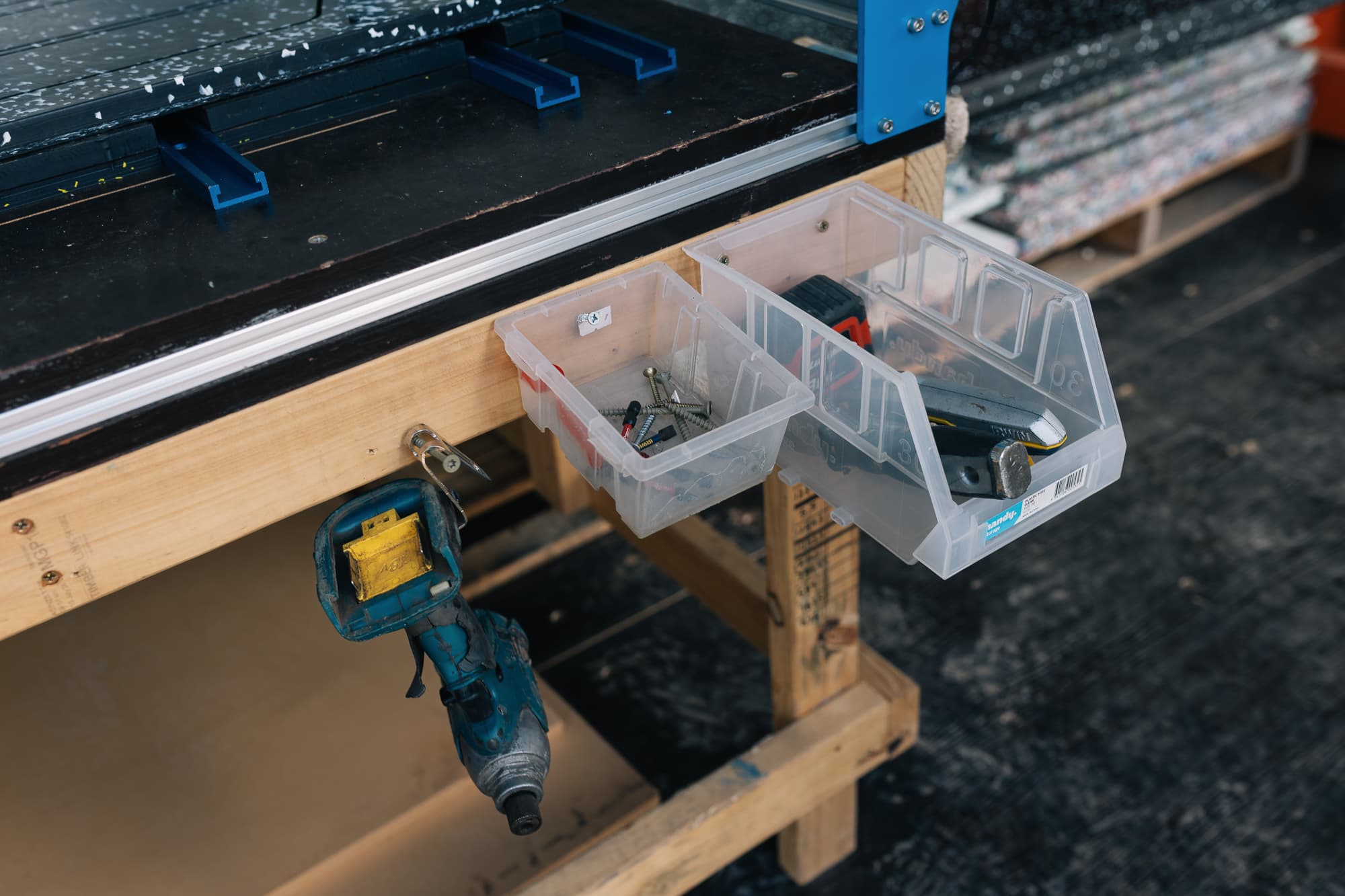
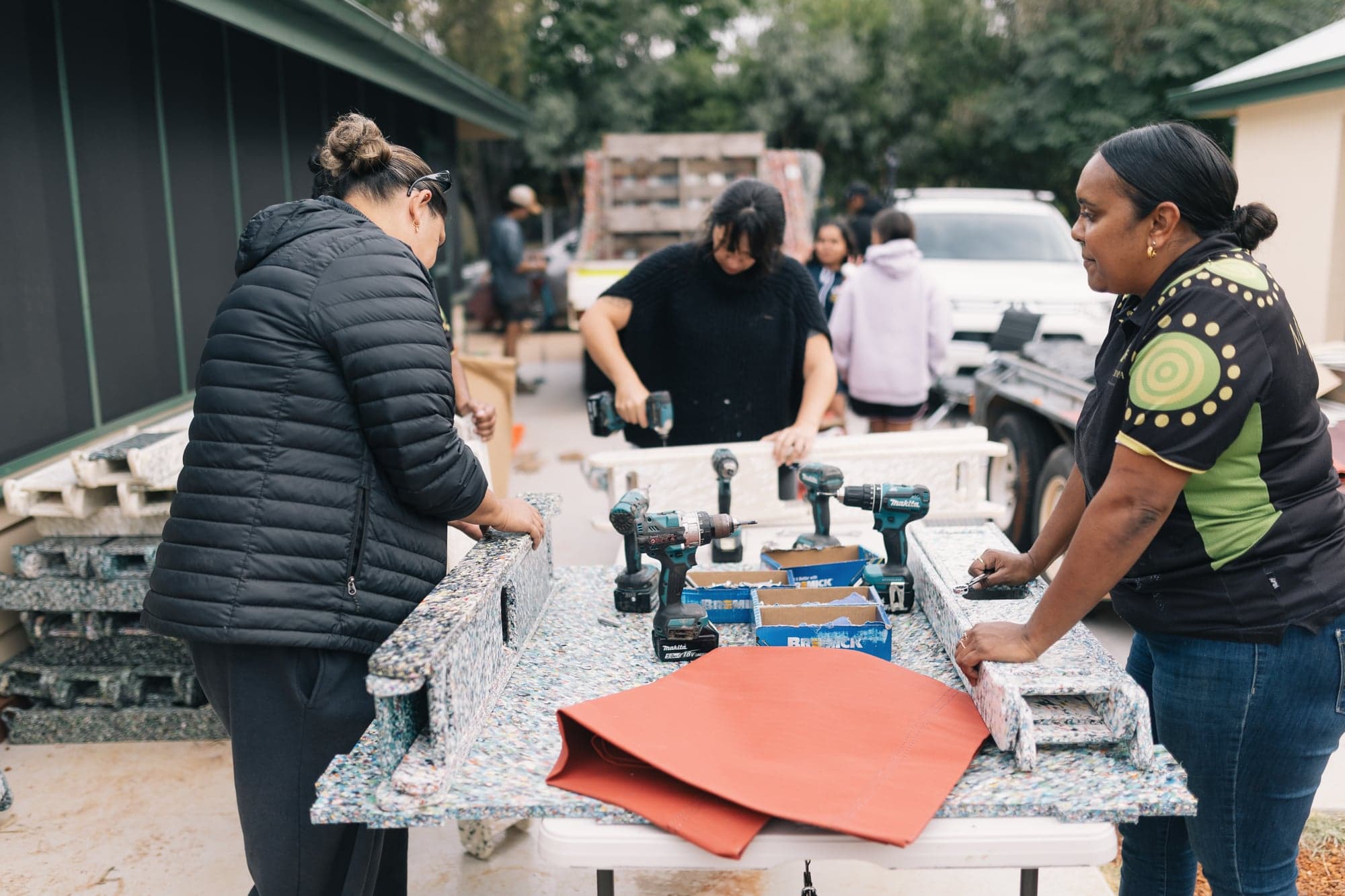
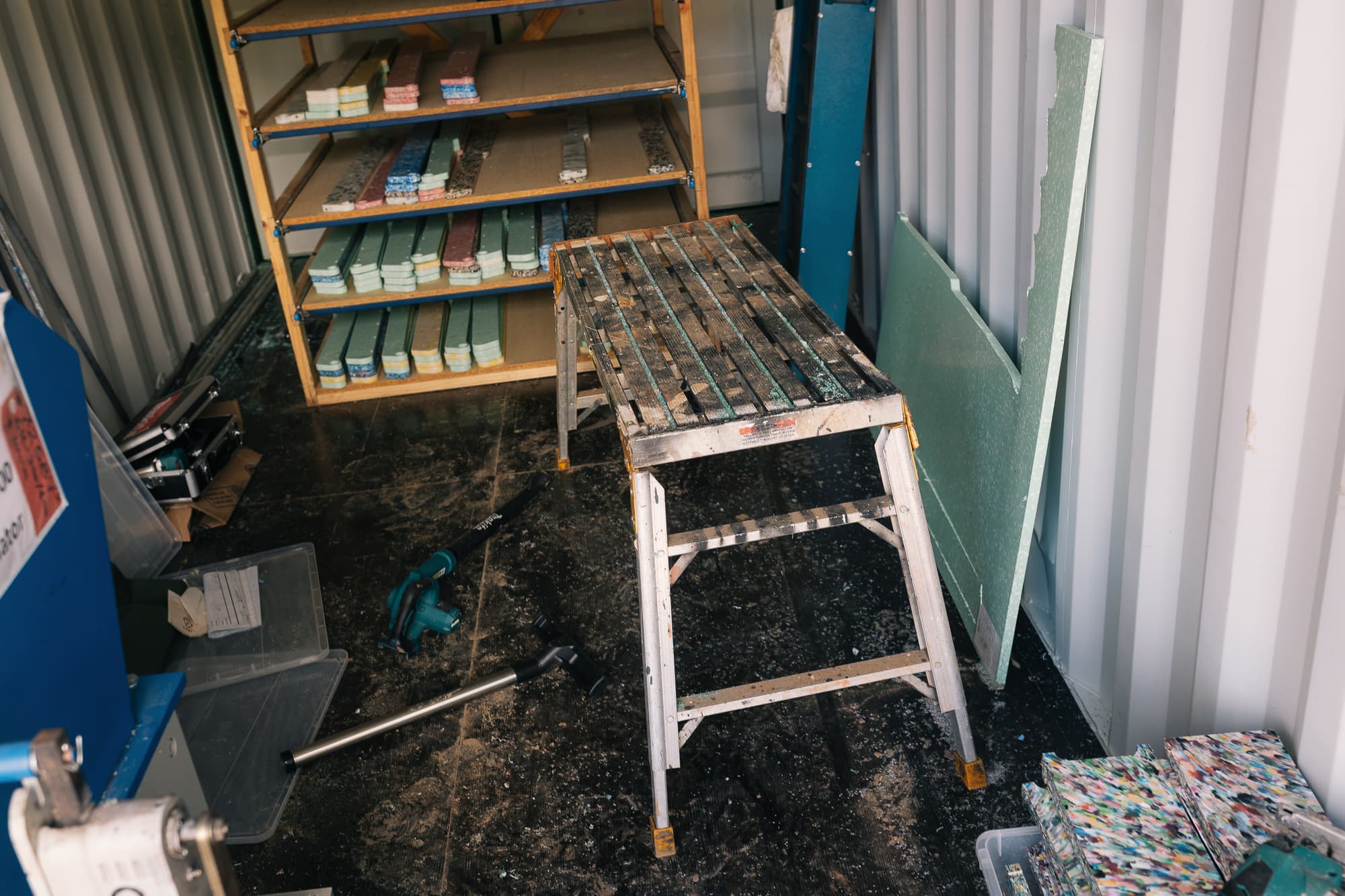
Two galvanised steel poles thread through the canvas sleeves and the holes in two recycled-plastic X-legs. Tension holds it together, no tools, no fasteners, under five minutes. The Stretch Bed is designed so the person who lives with it is the person who assembles it, and so a kid can rebuild it next time the family moves house.
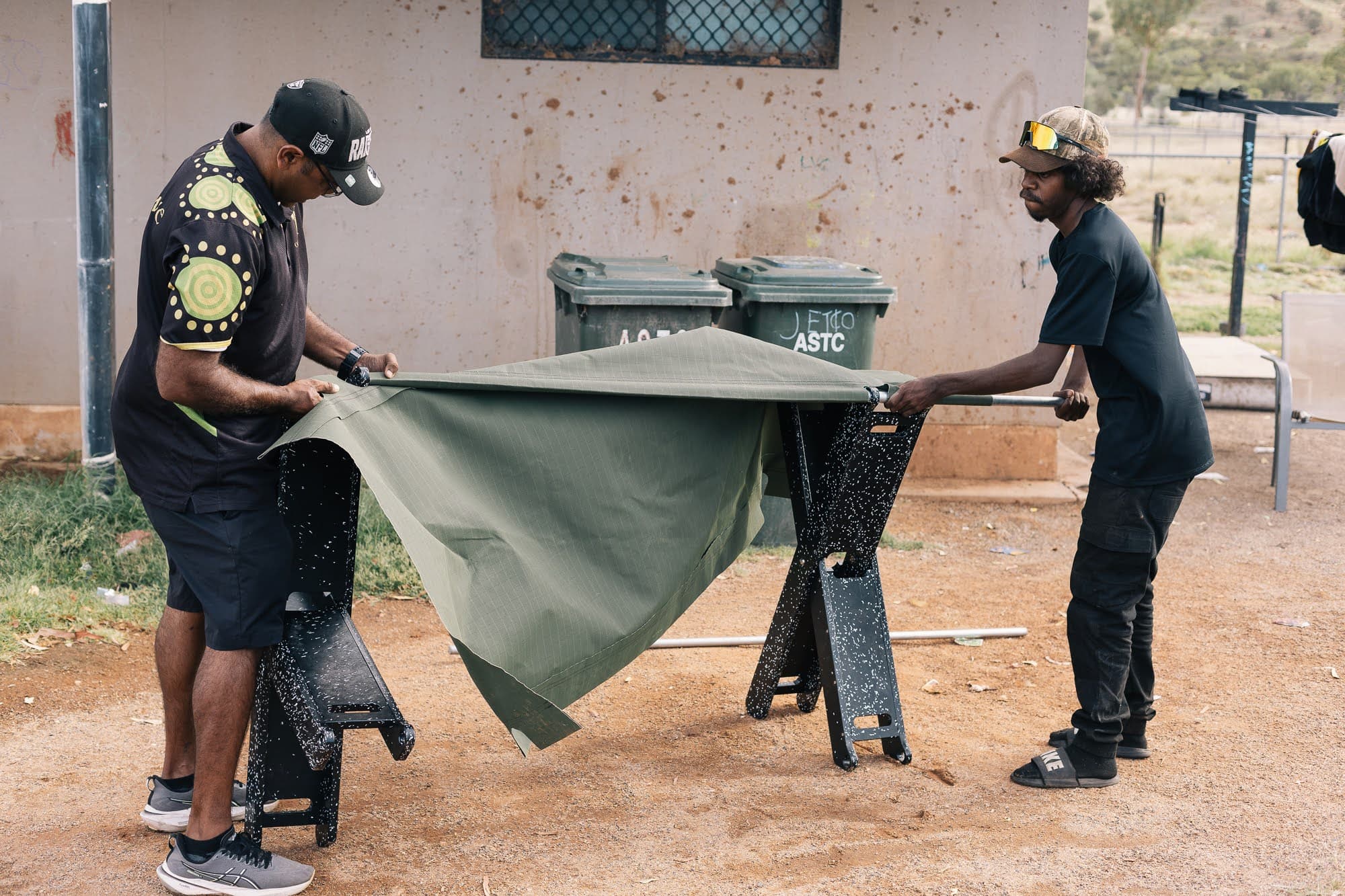
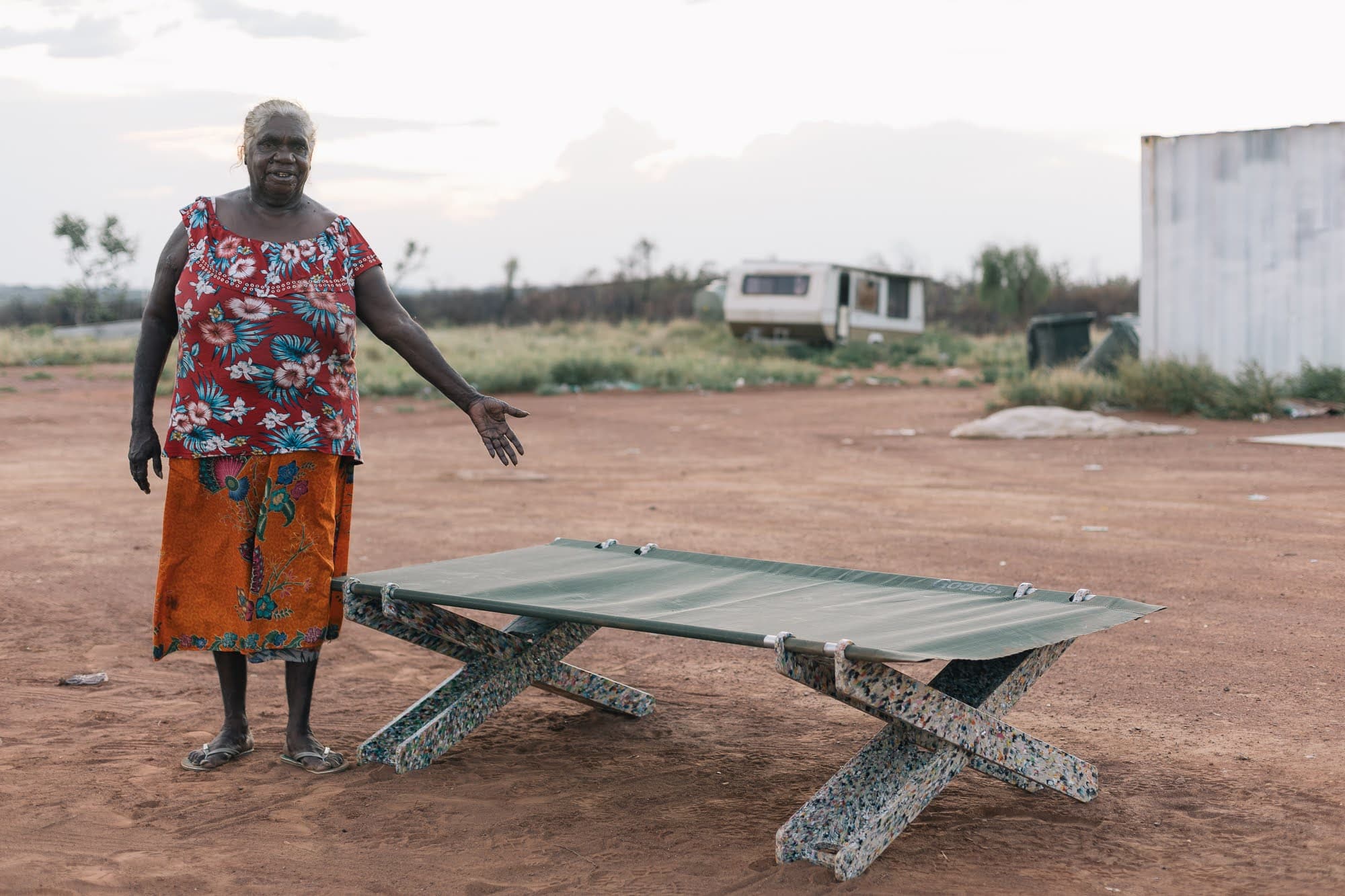
Beds travel by road train and barge to remote communities across the Northern Territory, Queensland and Western Australia. Every Stretch Bed is logged under a QR code that links to a public field-note: where it landed, who unpacked it, what the family said. The work is traceable from chip to canvas.
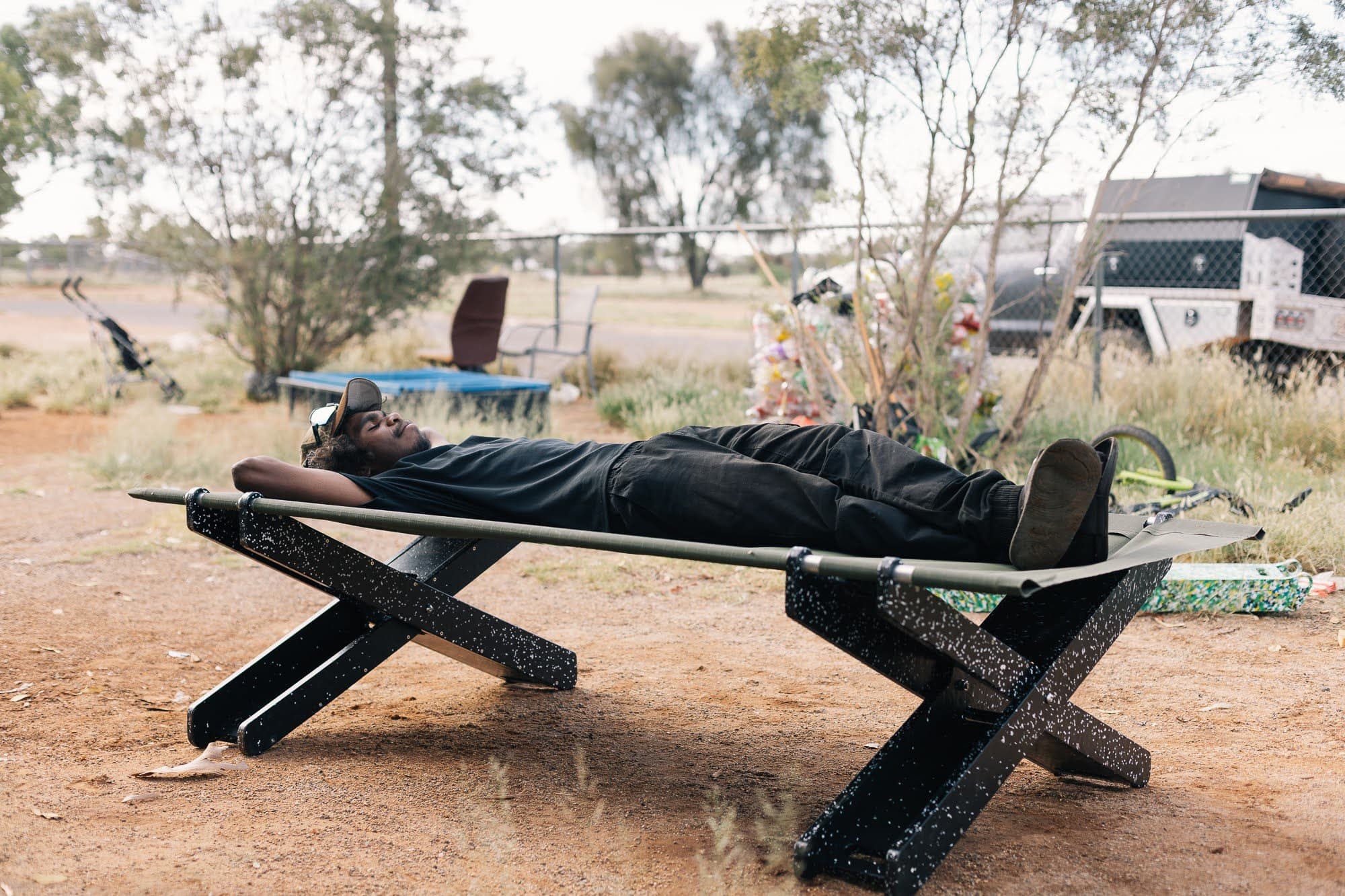
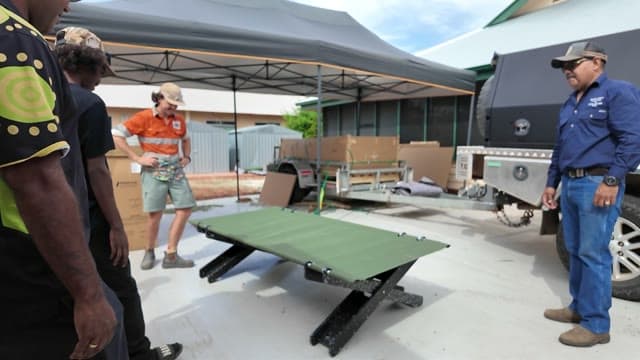
“I'll be rocking up every day to make them.”
Production
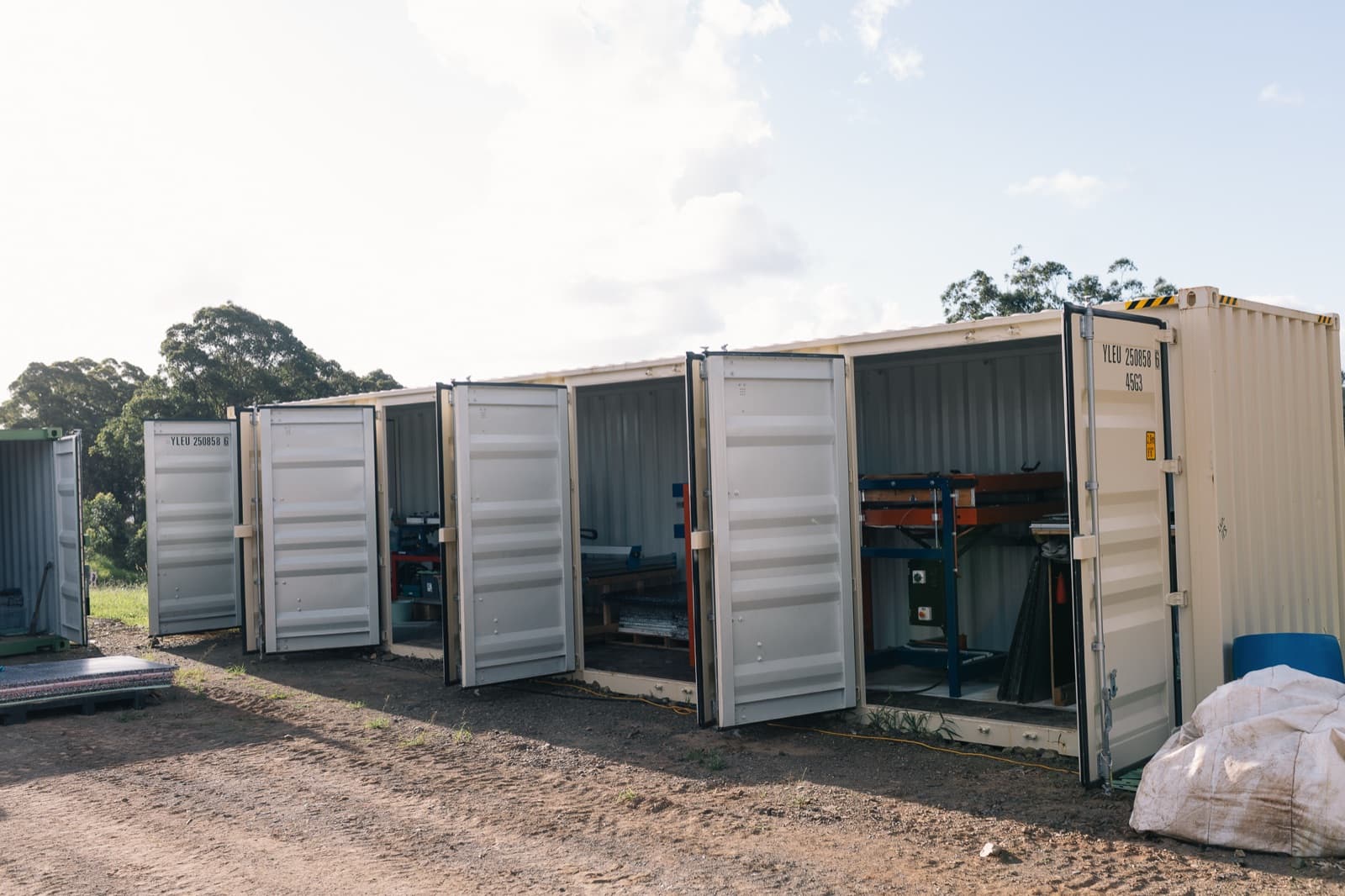
The plant is designed to lift, move and re-deploy. Two 20-foot containers hold the shredder, the heat press, the CNC router and the workstation. Power and water plug in. A community can take ownership of the whole production line and run it from their own yard.
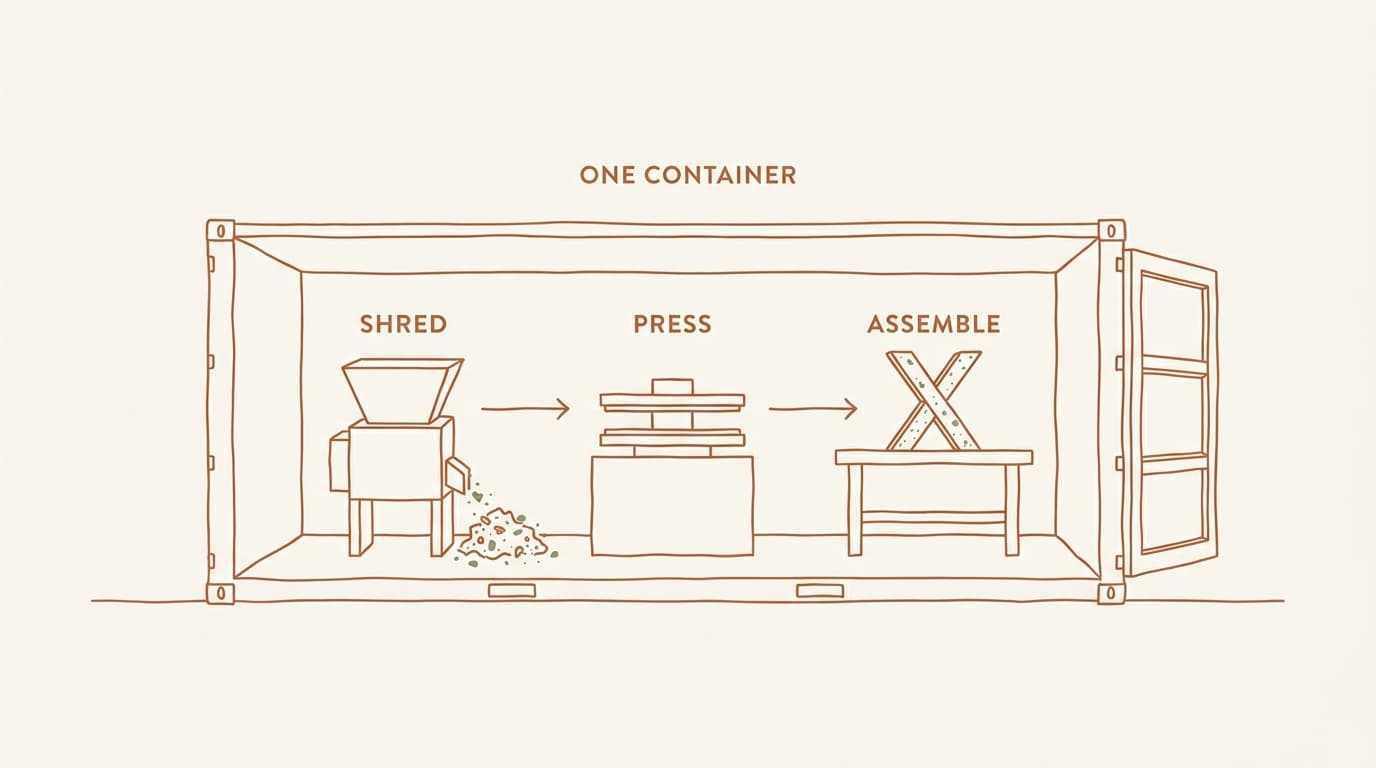
Shred, press, assemble. One container holds every step from plastic to leg.
The capital buys the path, not just the press. The making can transfer toward community ownership and run from their own yard.
The model
“When someone asks ‘Who makes these?’ the answer is ‘We do.’”