The Problem
$3 million per year
One Alice Springs provider sells $3M/yr of washing machines into remote communities. Most end up in dumps within months.
Consumer-grade machines aren't built for remote conditions — extreme heat, dust, hard water with high mineral content, and limited access to repairs or spare parts. Communities end up in a cycle of buying cheap machines that fail quickly.
The Health Connection: Scabies → Rheumatic Heart Disease
Without working washing machines, bedding and clothes can't be kept clean. Scabies spreads through contaminated fabric, leading to skin infections that can trigger Rheumatic Heart Disease — a condition that is entirely preventable with good environmental health, but kills children in remote communities.
“It’s great to say you should wash your sheets every week. But if you don’t have a washing machine, that’s not going to work.”
We asked: what if we started with commercial-grade equipment proven to survive thousands of cycles in laundromats, and adapted it for remote community use?
The Journey So Far
Research & Community Conversations
We spent time in communities understanding the problem firsthand. Washing machines were consistently raised as a top priority — families were spending hundreds on machines that lasted weeks. We mapped the failure modes: dust ingress, mineral buildup, power fluctuations, and lack of service infrastructure.
Choosing the Base Unit
After researching commercial options, we selected the Speed Queen commercial washer — machines built for laundromats that run multiple cycles daily for years. The commercial-grade components handle exactly the kind of heavy use and harsh conditions found in remote communities.
Naming and community-led design
Elder Dianne Stokes named the machine Pakkimjalki Kari in Warumungu language. The naming reflects who leads the design. The design happens in community. We work alongside to test, refine, and build what community decides.
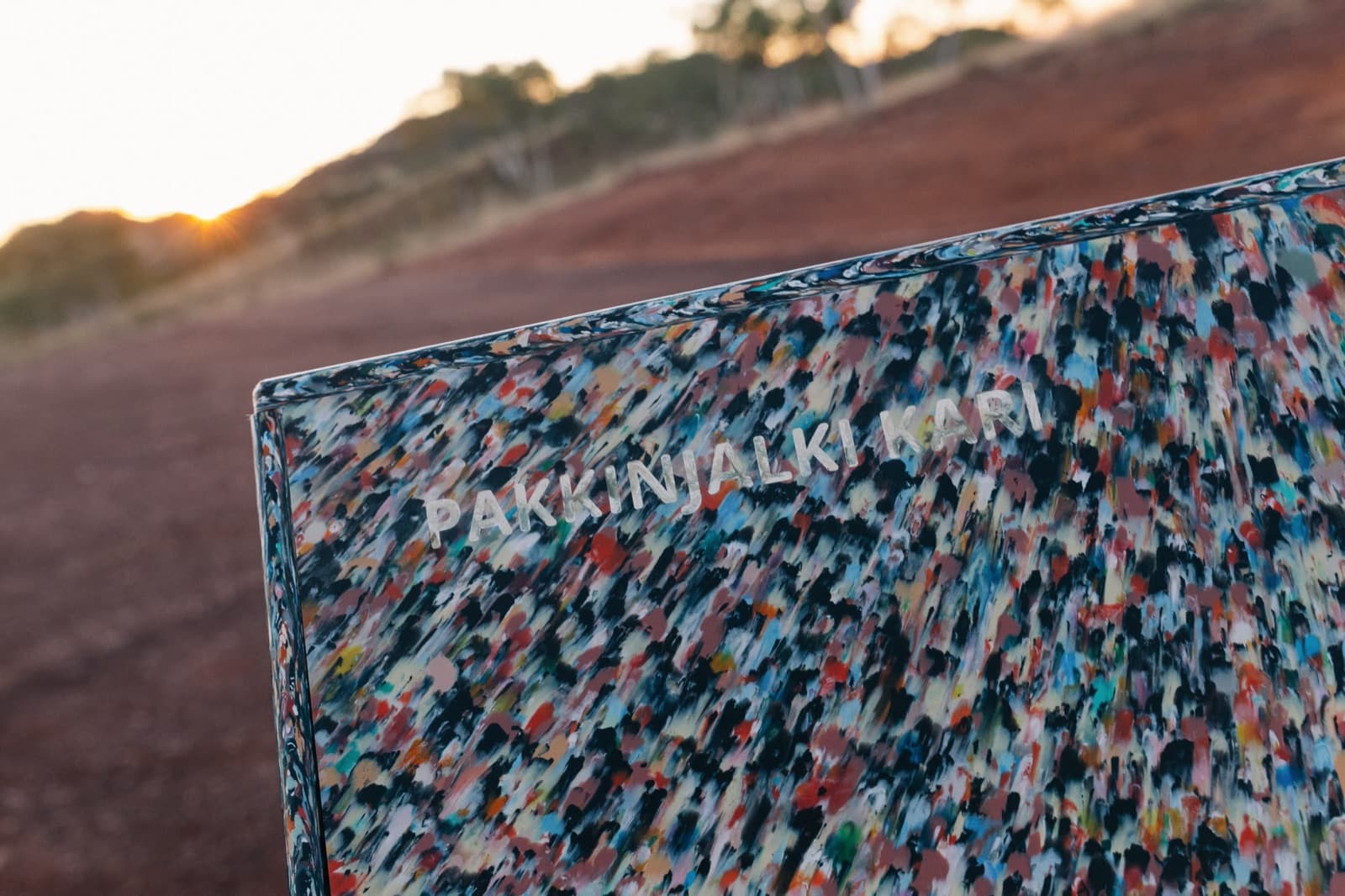
Pakkimjalki Kari, named in Warumungu language by Elder Dianne Stokes
Prototype Deployment (Current Stage)
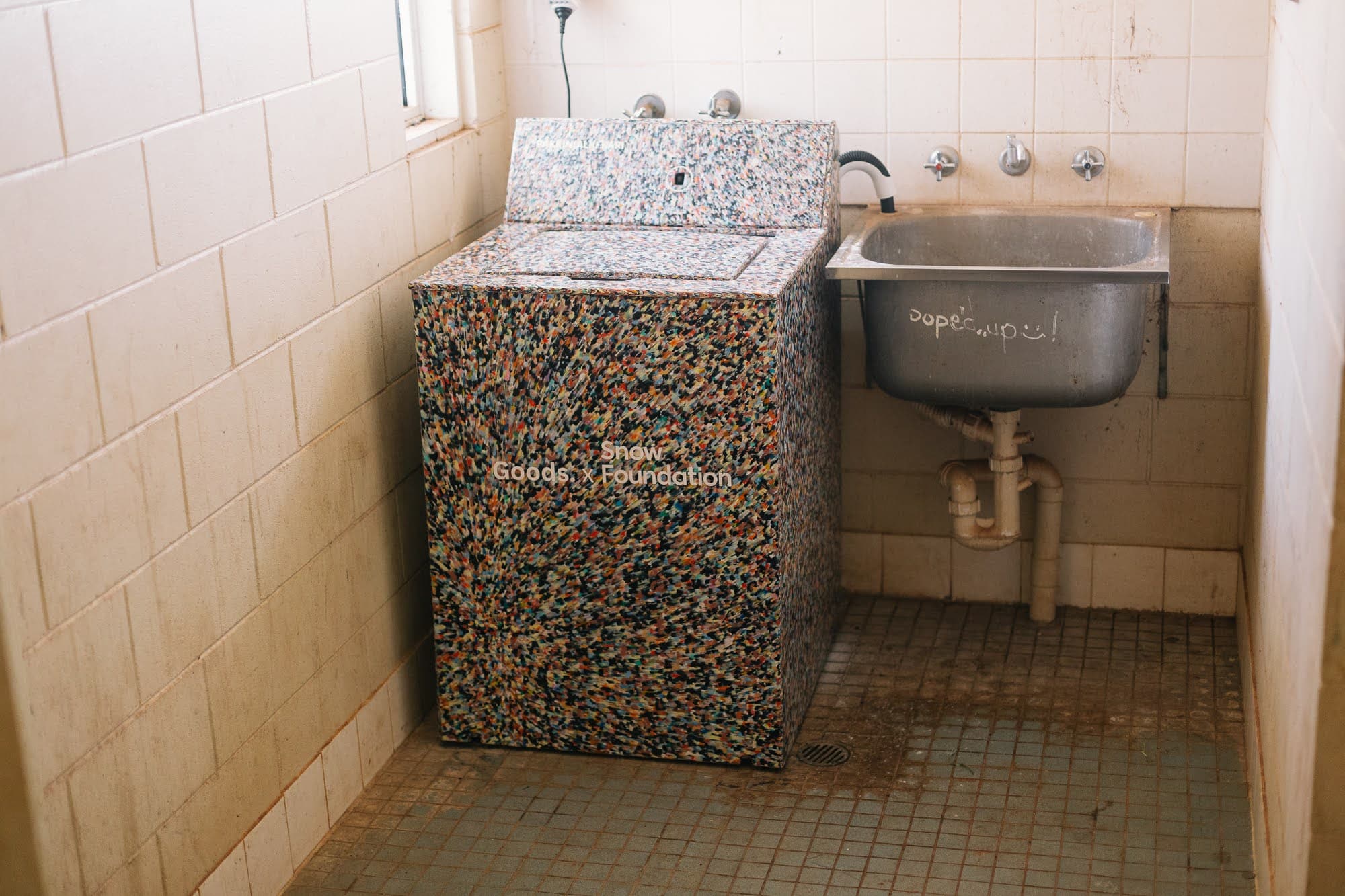
Several units are now operating in remote communities. We're collecting data on reliability, maintenance needs, water and power usage, and community satisfaction. This real-world testing is essential — lab conditions can't replicate 40°C heat, red dust, and bore water.
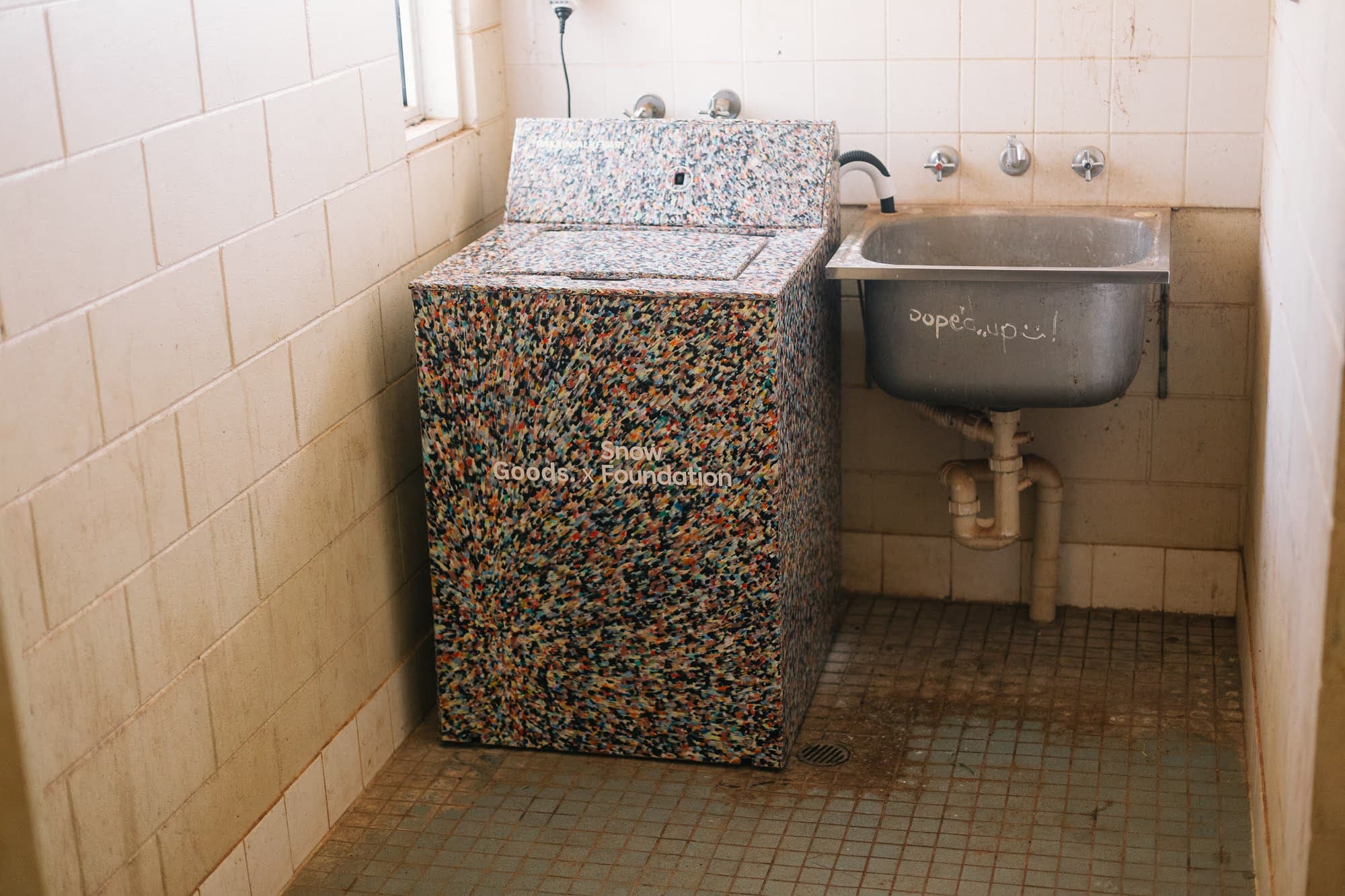
A Pakkimjalki Kari unit installed and operating in community
Price Optimisation (Next)
Working with suppliers and logistics partners to reduce the total delivered cost while maintaining quality. We're also exploring whether our on-country plastic recycling facility could produce protective housing components.
Community Availability (Future)
Once we've validated reliability and achieved the right price point, we'll make Pakkimjalki Kari available to communities and organisations. Same model as the Stretch Bed — with the long-term goal of community-owned manufacturing.
Community Voices
“They truly wanna a washing machine to wash their blanket, to wash their clothes, and it's right there at home.”
Patricia works at an Aboriginal corporation in Tennant Creek. She's from the Oo Tribe, White Cockatoo clan group. She sees the need every day — families without working washing machines, dirty blankets contributing to skin infections, children missing school. Patricia helped connect Goods with language groups across the NT, building the relationships that made Pakkimjalki Kari possible.
“Working both ways — cultural side in white society and Indigenous society.”
Elder Dianne Stokes named the machine and designed it. She sat around the fire with her family refining the construction. When she received the first Stretch Bed, she came back within two weeks requesting twenty more for her community. Dianne embodies how Goods works: community members lead the design, we support the build.
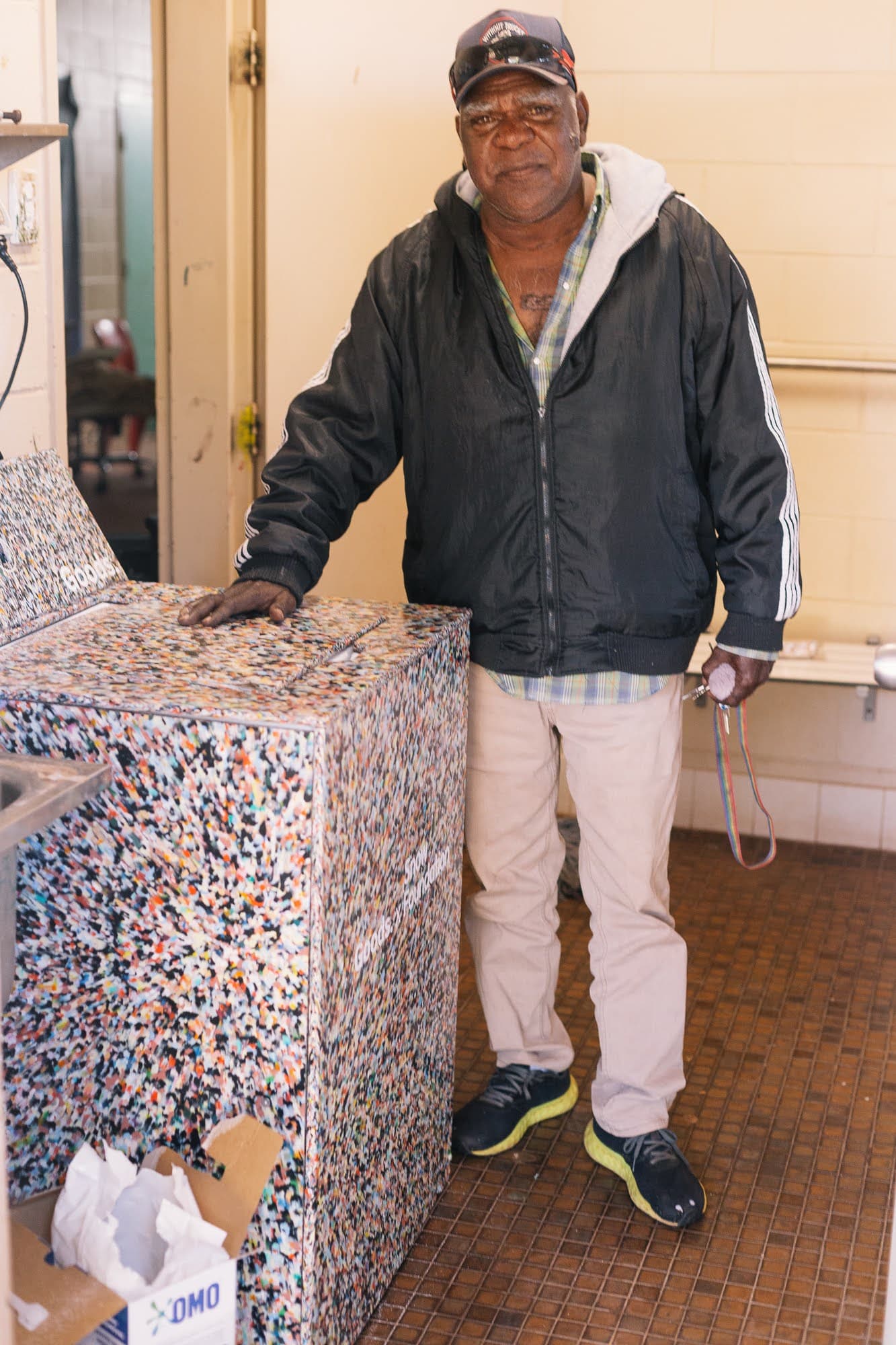
Community members engaging with the Pakkimjalki Kari washing machine
How It Works
Pakkimjalki Kari starts with a Speed Queen commercial washer — the same machines used in laundromats that run hundreds of cycles per week for years. This isn't a consumer appliance rebadged for remote use. It's industrial equipment adapted for household conditions.
What Makes It Different from Consumer Machines
Commercial-Grade Motor
Built for thousands of cycles in laundromat environments. Consumer machines are designed for 2-3 loads per week — remote households often do 2-3 loads per day.
Metal Components (Not Plastic)
Internal components are metal where consumer machines use plastic. This is why laundromat machines last 10-15 years while consumer machines fail in 1-2 years in remote conditions.
Simple Controls
Minimal buttons, intuitive operation. No digital displays to fail. Designed so anyone can operate it without instruction manuals.
Serviceability
Parts are standard commercial components — available and replaceable. Unlike consumer machines designed to be disposed of when something breaks.
Adaptations for Remote Use
Future Vision
Recycled Plastic Housing
The same on-country facility that presses recycled HDPE into Stretch Bed legs can produce protective housing panels for the washing machine. Community plastic waste becomes machine protection — the same circular economy model.
Community-Owned Manufacturing
The long-term goal is the same as the Stretch Bed: transfer manufacturing capability to community-owned enterprises. Local people collecting waste, building housing components, assembling and maintaining machines, and coming to own the making.
Price Optimisation
Commercial-grade machines cost more upfront but last 5-10x longer. We're working with suppliers and logistics partners to bring the delivered cost down while maintaining the quality that makes them last. The goal: a machine that costs more than a cheap one but saves communities thousands over its lifetime.
Beyond Washing Machines
The containerised production facility can produce components for fridges and other appliances using different moulds and cut files. The same approach (commercial-grade base, recycled plastic housing, designed in community) can apply to any essential appliance that fails prematurely in remote conditions.
Quick Specs
| Base Unit | Commercial-grade Speed Queen |
| Capacity | Commercial-grade |
| Housing | Recycled HDPE plastic panels (same material as Stretch Bed legs) |
| Design Focus | Remote reliability — dust, heat, hard water, power fluctuations |
| Target Lifespan | 10-15 years (vs 1-2 for consumer machines) |
| Current Stage | Prototype Testing |
| Community Testing | Active deployments in several remote communities |
| Price | TBD (optimising for remote delivery) |
| Named By | Elder Dianne Stokes, in Warumungu language |
Operation Guide (Preliminary)
Based on Speed Queen commercial washer operation. Will be updated as we refine the design for remote conditions.
Basic Operation
- Load clothes (do not overload — leave space for agitation)
- Add detergent to dispenser (appropriate amount for load size)
- Select cycle and temperature
- Close lid and press start
- Machine will automatically fill, wash, rinse, and spin
Cycle Selection
Maintenance (Preliminary)
Daily
- Wipe down exterior and control panel
- Leave lid open between loads for air circulation
- Check for unusual sounds or vibrations
Weekly
- Clean lint filter (if applicable)
- Inspect hoses for leaks or wear
- Wipe door seal and check for debris
Monthly
- Run cleaning cycle with washer cleaner or vinegar
- Check water inlet filters for mineral buildup
- Inspect drain hose for clogs
- Verify machine is level (adjust feet if needed)
Troubleshooting
| Issue | Possible Cause | Solution |
|---|---|---|
| Won't start | Lid not fully closed | Ensure lid is properly latched |
| Won't fill | Water supply off or inlet clogged | Check taps are on, clean inlet filters |
| Won't drain | Drain hose kinked or clogged | Check drain hose, remove blockages |
| Excessive vibration | Unbalanced load or machine not level | Redistribute clothes, adjust leveling feet |
| Mineral buildup | Hard water in remote areas | Run vinegar cleaning cycle monthly, consider water softener |
For issues not listed here, contact us.
How to Get Involved
Community or Organisation
If your community needs reliable washing machines, we want to hear from you. We're looking for communities willing to participate in prototype testing and provide feedback.
Get in touch →Funding Partner or Sponsor
Help us get more prototypes into communities, fund R&D on price reduction, or support the path to community-owned manufacturing.
Partner with us →Technical Expertise
Know about commercial appliances, remote power systems, water treatment, or logistics? We're always looking for people who can help us solve specific challenges.
Share your expertise →Stay Updated
Register your interest and we'll let you know when Pakkimjalki Kari is available, or when we have testing results to share.
Register interest →