The Work That Stays
This is not a story in which Goods on Country arrives carrying the answer.
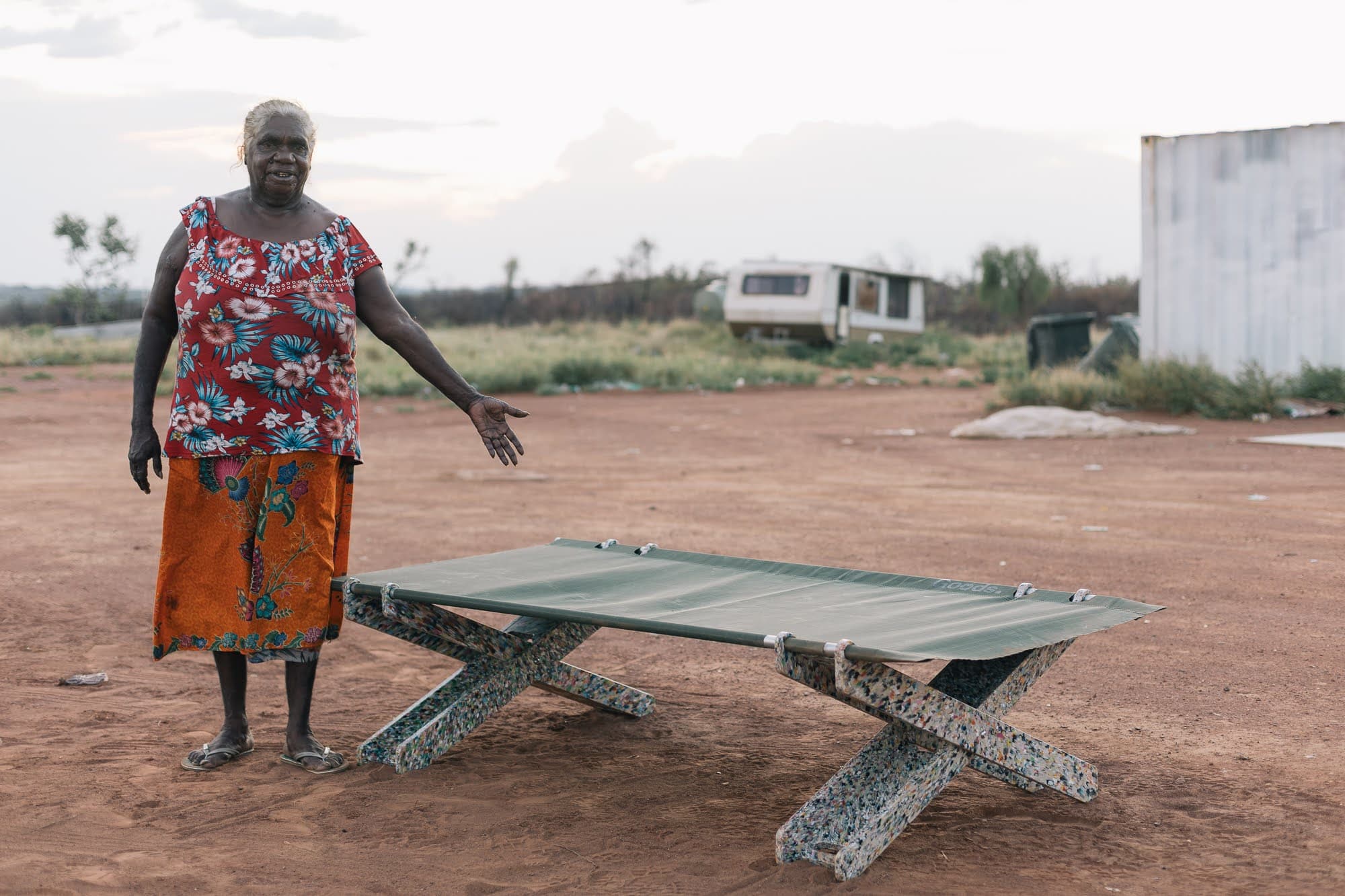
It is a story about people asking for ordinary things that work, and about a small project learning that a bed can be useful without being the end of the work. A bed can lift a body from the ground. A washing machine can bring the blanket home. A factory can turn discarded plastic into something a family needs.
But if the wages, machinery, contracts, knowledge, margin and decisions still leave the community, the old arrangement remains standing behind the new object.
The deepest ambition of Goods is not to become the largest manufacturer in the centre of the map. It is to build the conditions in which the making can move outward and stay there.
The community voices quoted here are drawn from the cleared Goods storyteller record. They are not decoration around the argument. They are the record of how the argument changed.
Stop 1 · Kalgoorlie
The morning the bed disappeared
Ninga Mia, Kalgoorlie, WA · late 2024
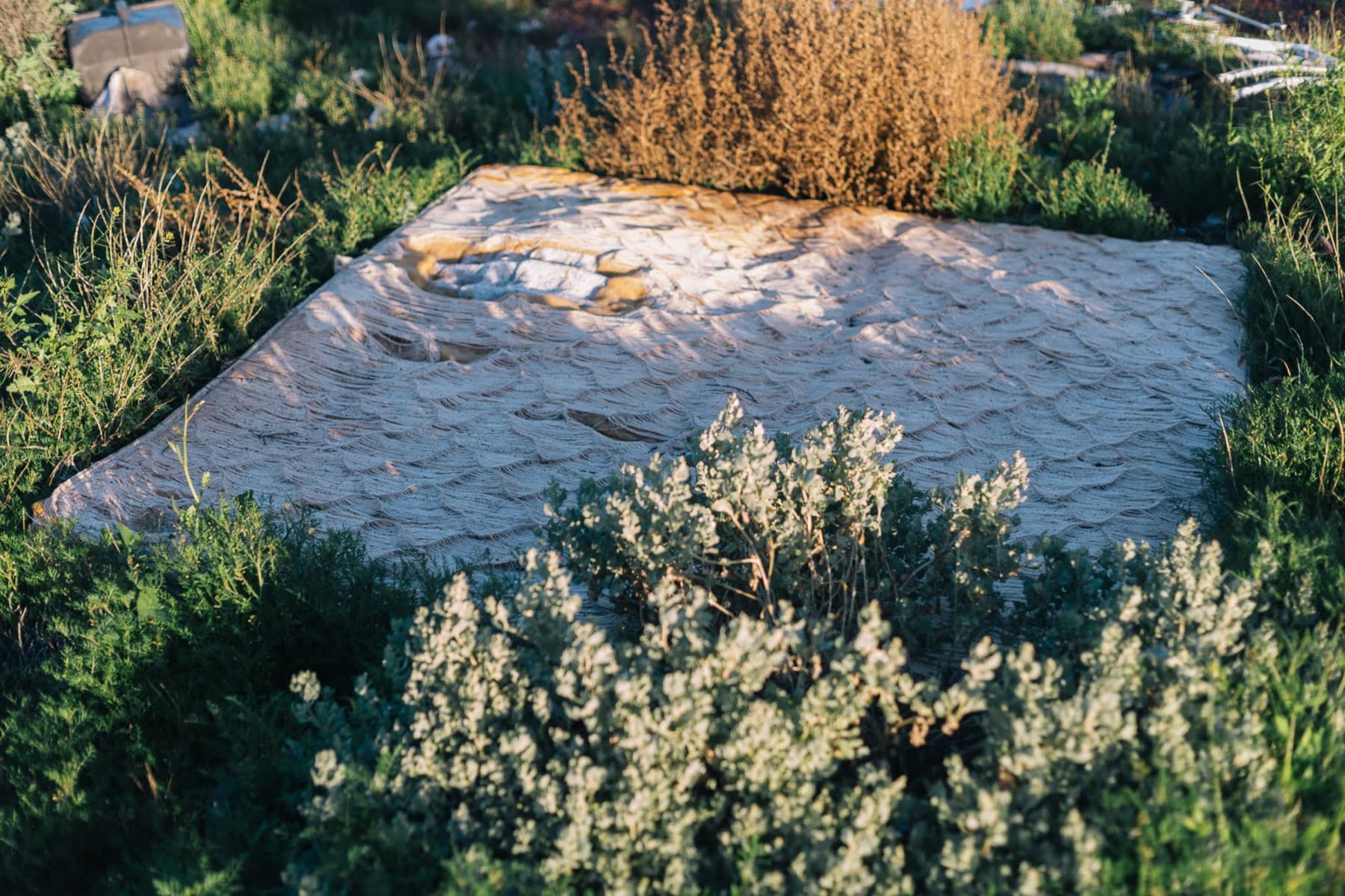
Before the product had a settled name, Ben Knight and Nic Marchesi brought a strange first bed to Ninga Mia. It was made from collapsible plastic crates, joined beneath a mattress system. It could come apart. It could travel. Parts could be replaced. In the records it moves through several names: the Greate Bed, the Great Bed, the crate bed, and finally the Basket Bed. The name moved because the object was still learning what it was.
Gloria Turner and her relatives helped put it together outside their tent. Then the family went into town, and the bed was left out the front. The visitors had heard kind words about the prototype, but kindness is not proof. A person can say they like an object while its makers are standing there and leave it untouched once the vehicle turns away.
That night the weather came in. Wind. Rain. The team lay awake wondering whether the bed would hold, whether anybody would use it, and whether they had understood anything at all. They returned in the morning. The bed was gone.
They drove around looking for it. Perhaps the wind had taken it. Perhaps it had broken. Perhaps the family had decided the thing was useless. Then they looked inside the tent. Gloria and her relatives had pulled the Basket Bed in so they could sleep together around it.
The two surviving records remember the arrangement differently. The contemporaneous field recording says six people were sleeping in the tent, with three on the first mattress. A later team retelling remembers all six women sleeping on it together. The difference should remain visible. Memory does not become more truthful because a storyteller sands it smooth.
The proof was not that a crate bed had solved housing, or that one night had become a health outcome. The proof was choice. Gloria and her family used it when nobody from Goods was watching.
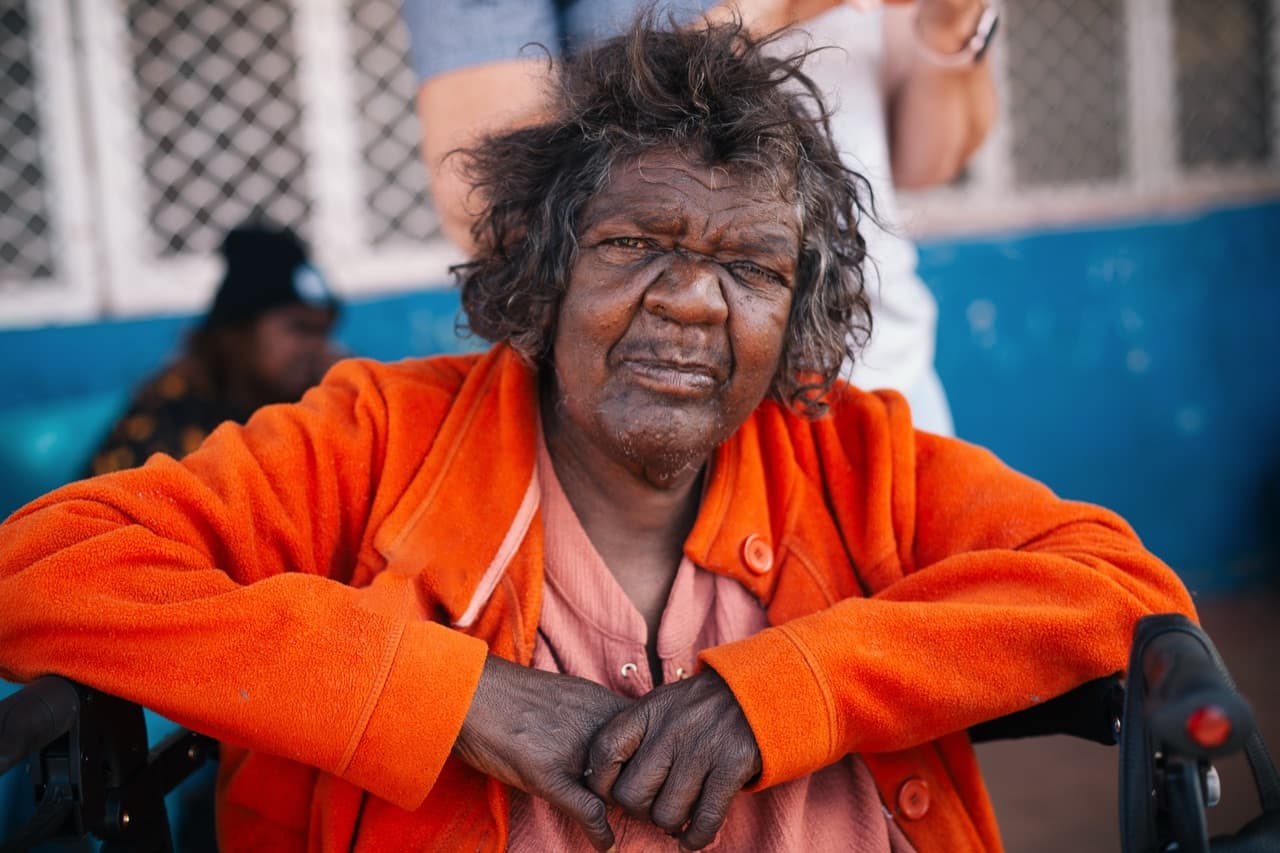
Sleep on a good mattress. For the back, the legs, the muscles.
 Gloria TurnerCommunity member · Kalgoorlie, WAOn sleep quality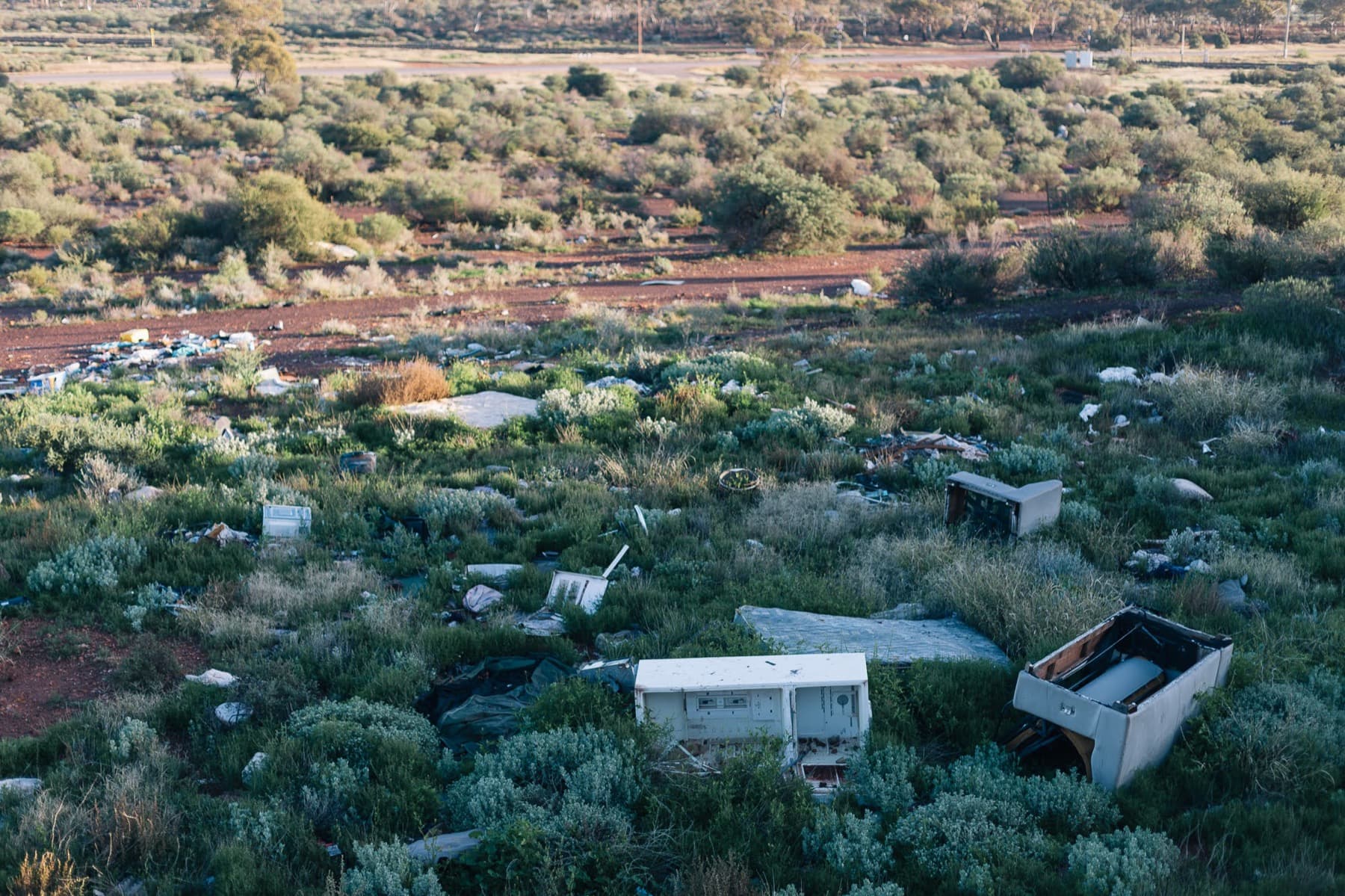
Stop 2 · Tennant Creek
Who gets asked?
Tennant Creek, NT
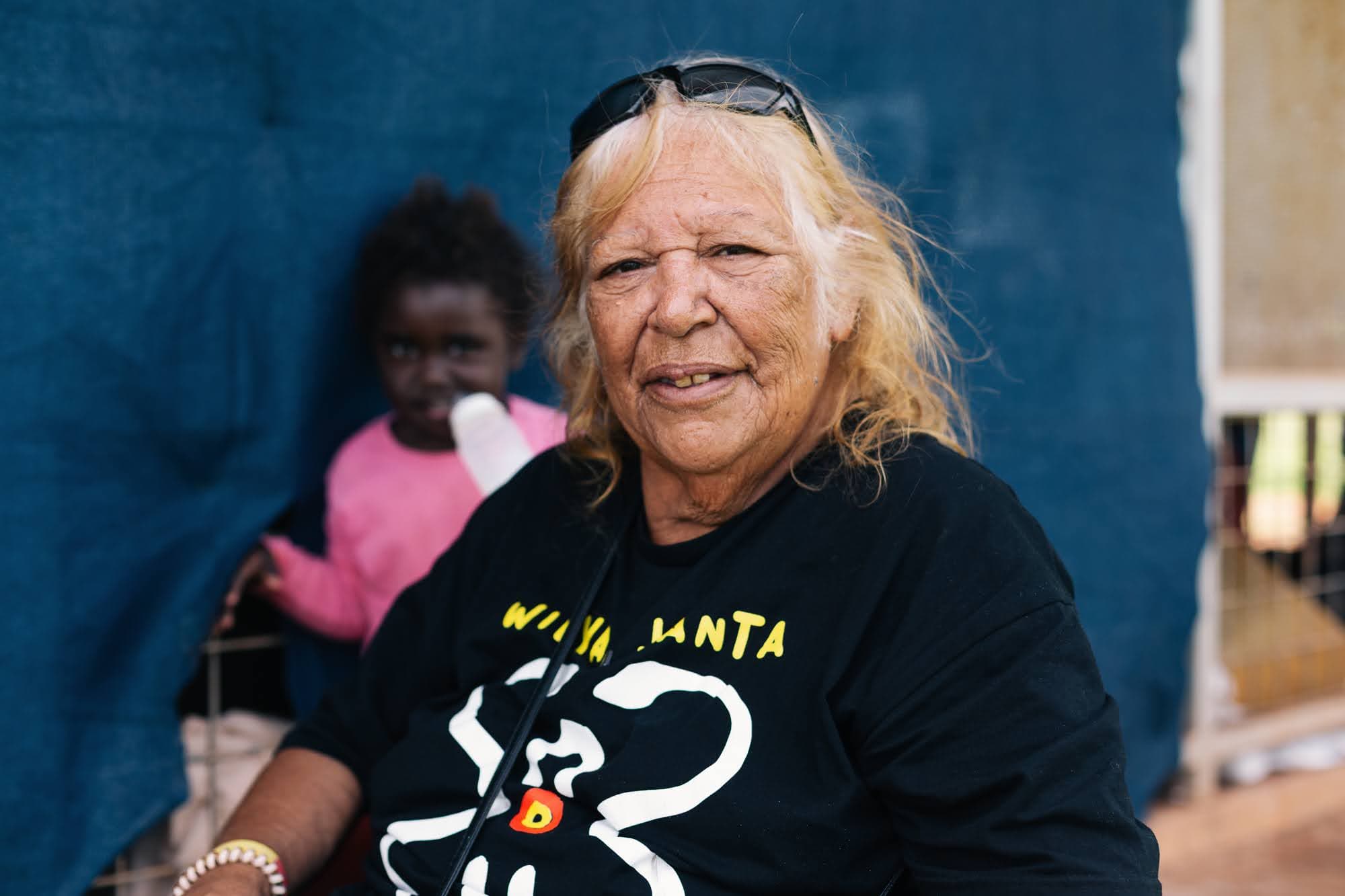
In Tennant Creek, Linda Turner asked the question that sits beneath the entire project. The sentence is about housing, but it opens into every ordinary object inside a house.
Who decides what is practical? Who decides what is beautiful? Who decides whether a bed should be lower for an Elder, whether a cover must be washable, whether parts should be replaceable, whether an appliance can be repaired without flying in a technician, whether the name on the object belongs to the place where it will live?
Tennant Creek became a place of repeated return, design and relationship. Jimmy Frank helped push the early bed through experiments. Melissa Jackson made the height question explicit: they like to have lower beds, especially for older people. Annie Morrison looked at the beds and turned interest into demand.
The project was learning that community design is not a workshop stage before manufacturing. It continues through use, language, ordering, repair, employment and the decision about what should be made next.
Goods has learned to distrust consultation that cannot alter the thing being consulted on. If the visit produces photographs and signatures but the product, timetable, contract, ownership and budget remain unchanged, the work has not listened. It has collected evidence for a decision already made.
Gary, a community partner and practitioner, described another way. Sit on the grass. Sit in the dirt. Sit beside the fire. Put down the pen and paper. Explain what you are doing. Let people look and listen. When they are ready, they will try. The first design tool is time.
We've never been asked what sort of house we'd like to live in.
 Linda TurnerCommunity member · Tennant CreekBeing asked
I was looking at the beds. They're good. I was trying to ask them if they can make one for me.
 Annie MorrisonCommunity member · Tennant CreekOn the Stretch Bed
We had 150 men lead the march from our men's group. The women and kids came behind us. We marched through the street.
 GaryMen's group leader · Mount IsaCommunity leadership
I want to see a better future for our kids and better housing. Not only here but for the whole nation. We're all struggling today for housing.
 Norman FrankWarumungu Elder, Wilya Janta founder · Tennant CreekHousing for all
Stop 3 · Tennant Creek
The machine with a name
Tennant Creek, NT · January 2026
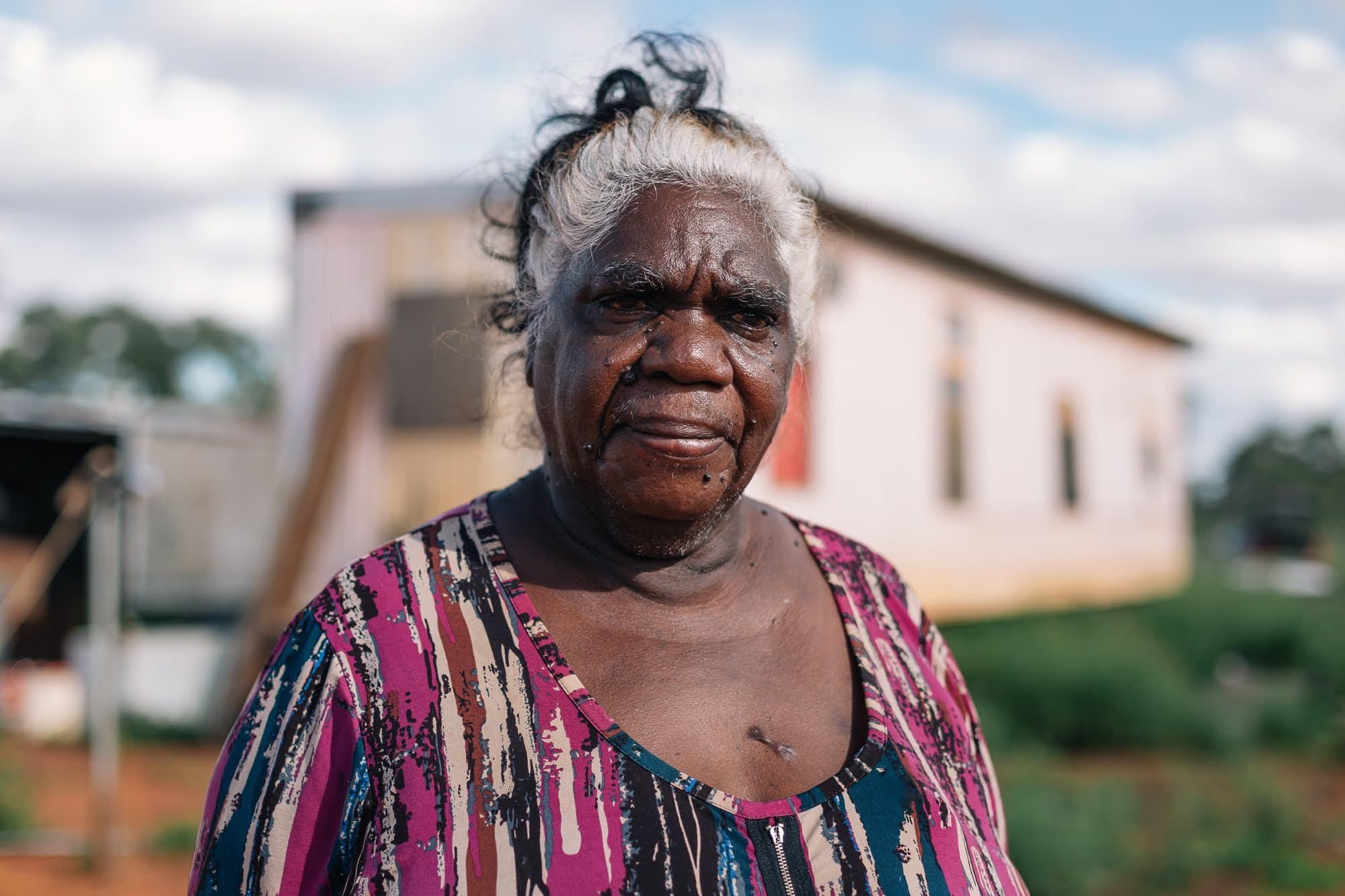
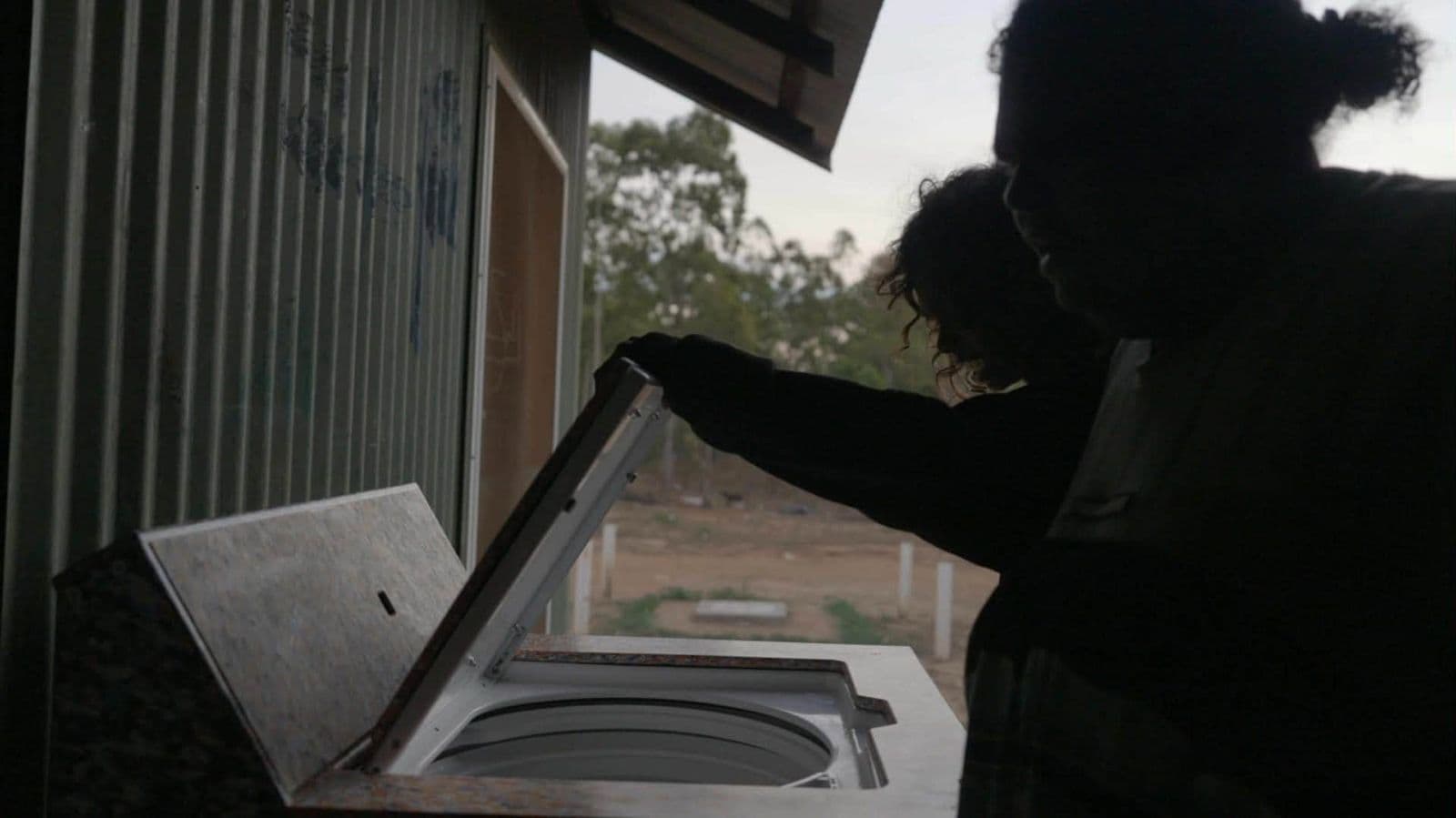
The washing machine entered the work because a bed is not the whole house. A raised, washable bed helps. A family still needs to wash the canvas, blankets, clothes and towels. Advice about hygiene becomes hollow when the machine is absent, broken or four hours away.
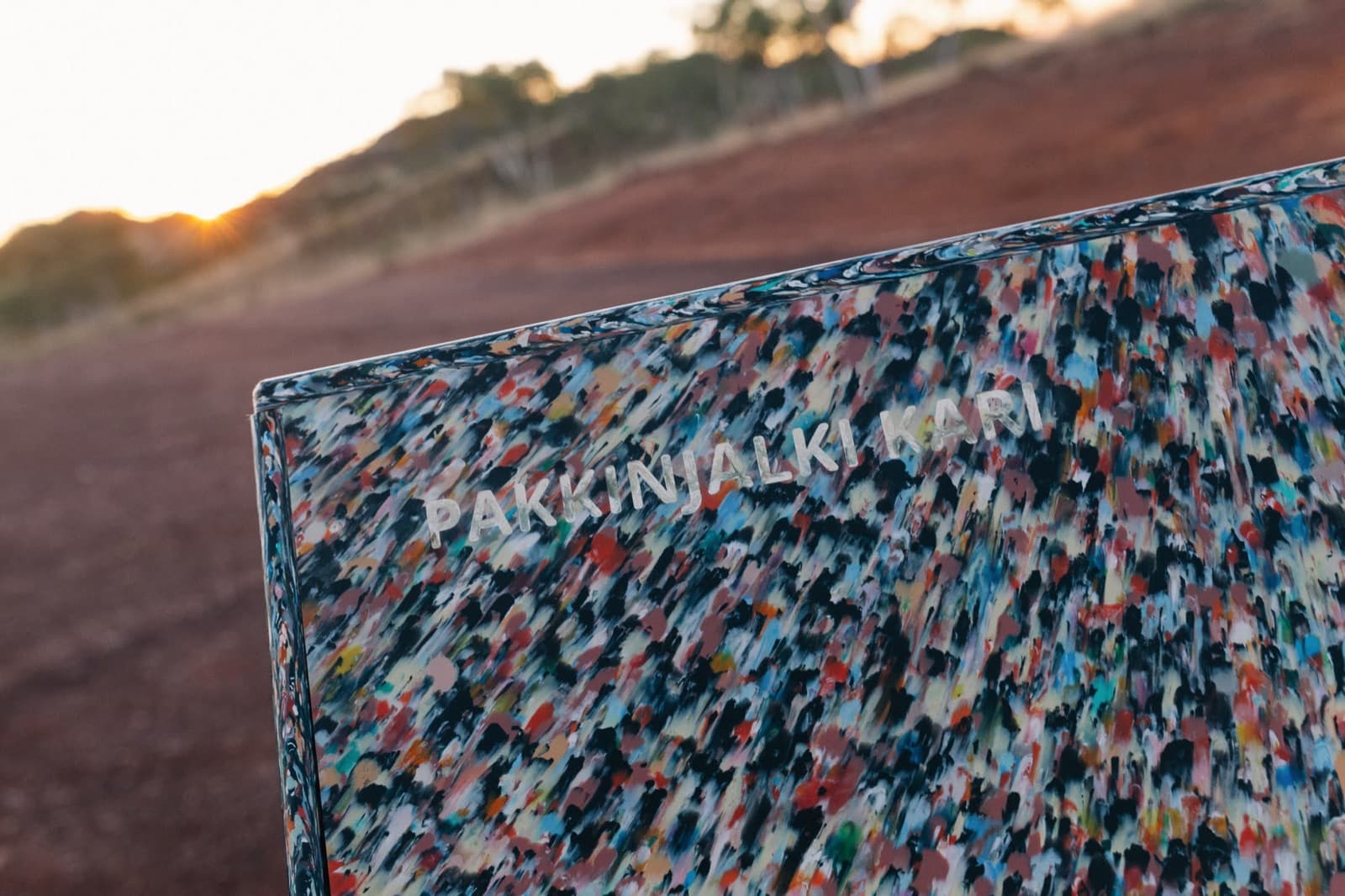
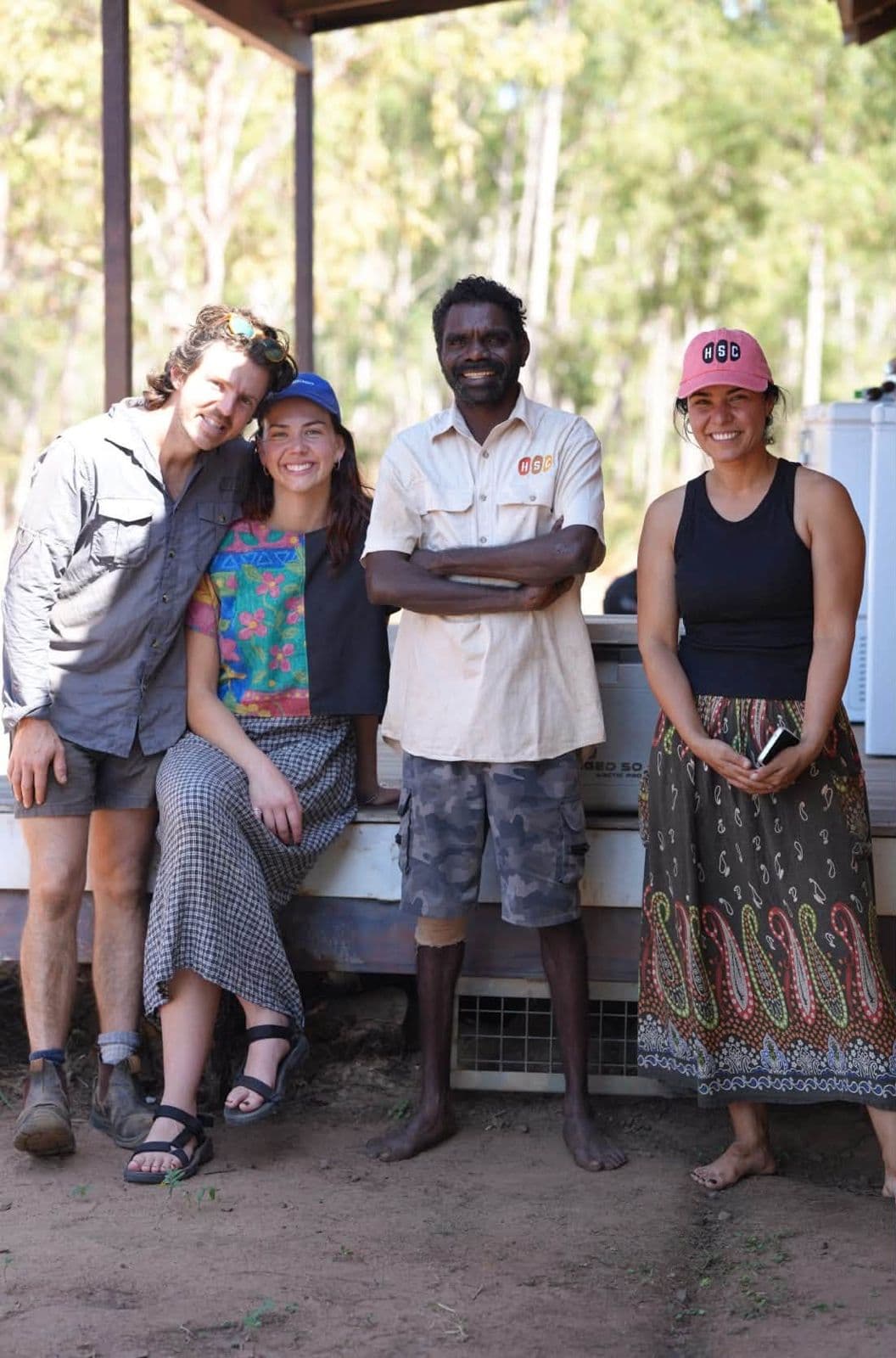
Dianne Stokes, a Warumungu and Warlmanpa Elder and Traditional Owner, helped shape the machine and gave it a name in Warumungu: Pakkimjalki Kari. The name is not a label applied after the engineering. It is authorship. The machine enters the world carrying language from the place where its purpose was understood.
The Bloomfield family built five of the current Pakkimjalki Kari machines with Nic in January 2026. The design uses a commercial-grade Speed Queen base, simplified operation and a repair pathway suited to distance. Health organisations then used and reordered machines, turning an idea into early institutional demand.
The machine remains a prototype and register-interest product, not a mature national sales line. The strongest claim is not that it is indestructible. It is that its life is being designed with the people who must use, maintain and repair it.
It means something that really makes me happy.
 Dianne StokesWarumungu and Warlmanpa Elder. Designed and named both products. · Tennant CreekOn Pakkimjalki Kari, the washing machine she named
Education and awareness is great, but you need to match it with something that actually enables people to change. It's great to say you should wash your sheets every week. But if you don't have a washing machine, that's not going to work.
 Dr Boe RemenyiPaediatric Cardiologist · practitioner · NT-widePractical solutions
They truly wanna a washing machine to wash their blanket, to wash their clothes, and it's right there at home.
 Patricia FrankAboriginal Corporation Worker, Oo Tribe, White Cockatoo clan · Tennant CreekWashing at home
- 23
- washing machines in community
- verified
Stop 4 · Palm Island
The sea enters the price
Palm Island, QLD
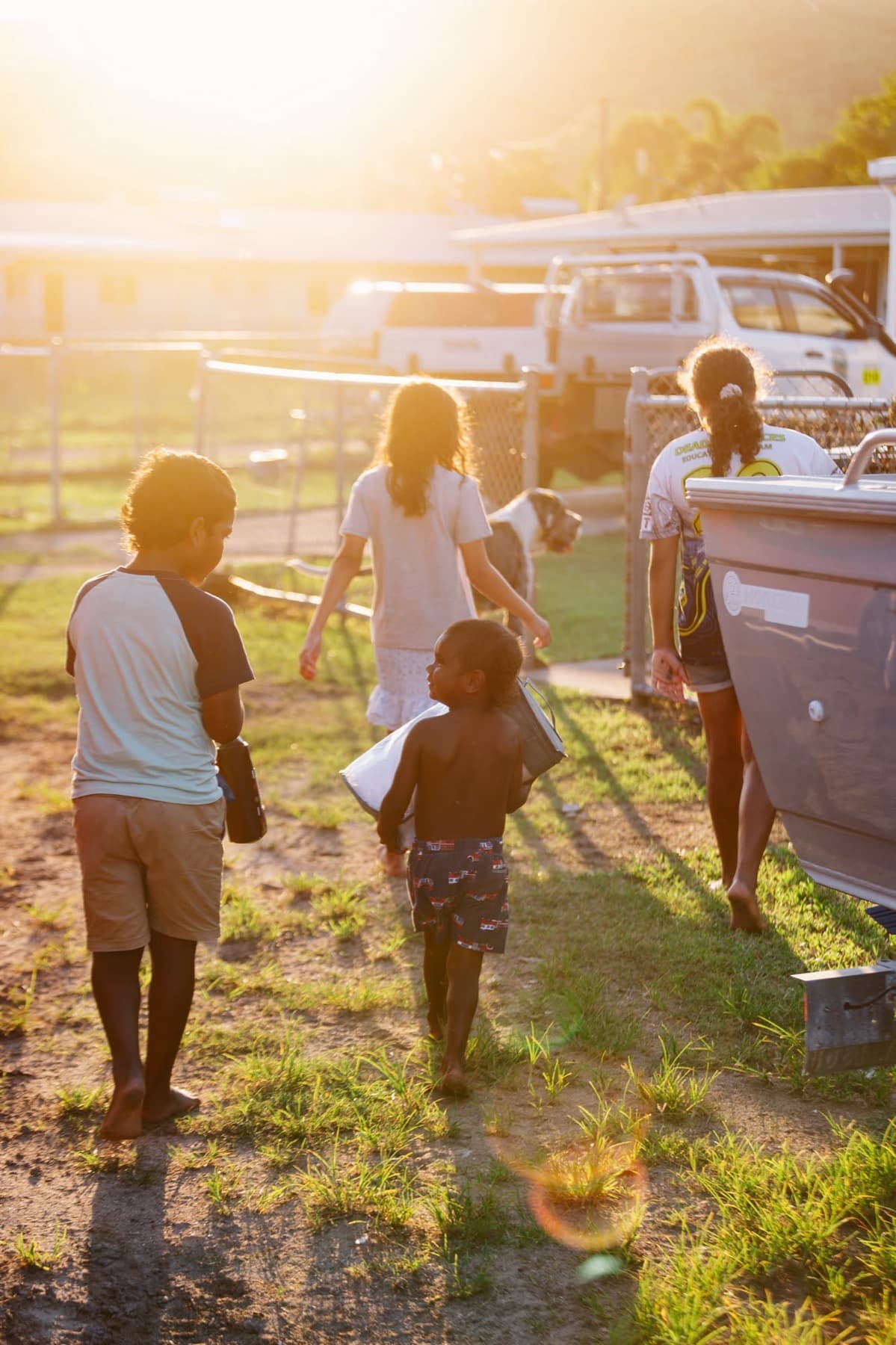
Palm Island does not need to be introduced as a problem. Ivy begins with the beauty of the island, her grandchildren, the heat and the beach. Then she speaks about what it costs to bring ordinary things home.
Alfred Johnson makes the freight plain, and the phrase is simple. It all adds up. The cost of the bed. The cost of the barge. The cost of bulky packaging. The cost of replacing a product that fails. The cost of a family arriving when there is nowhere obvious to sleep. The cost of an object that cannot be packed, repaired, carried outside or moved into the back of a car.
Daniel Patrick Noble names the choice that follows: sometimes people would rather go without.
Ivy does not become a grateful recipient inside the story. She becomes an evaluator. She notices whether the bed is easier to rise from. She notices whether it can go outside, to camp or beneath shade. She notices whether it is easy to make. Then she places a condition on expansion: it is best to work with more community, like people who want to.
More community, but with people who want to. That sentence is part of the model. Consent is not only a permission form for a photograph. It is the right to decide whether the project comes into the room at all.
Palm Island gave Goods two enduring design requirements. First, the freight route belongs inside the product design. Second, the home is larger than four walls. A bed may have to serve a room, a verandah, a camp, a visit and the movement of kin.
Hardly any people around the community have got beds. When they got family members over, there's not enough for everyone.
 IvyCommunity member · Palm IslandHousing need on Palm Island
You have to bring them on the barge. You can't just take them on the boat. You have to pay for freight. It all adds up.
 Alfred JohnsonCommunity member · Palm IslandWhy local manufacturing matters
A lot of them are low income earners. Just to have that extra cost of bringing things over, it all adds up. Sometimes people would rather go without.
 Daniel Patrick NobleCommunity member · Palm IslandRemote freight costs
Stop 5 · Utopia
Arrival is not the ending
Utopia and Urapuntja homelands, NT · May 2026
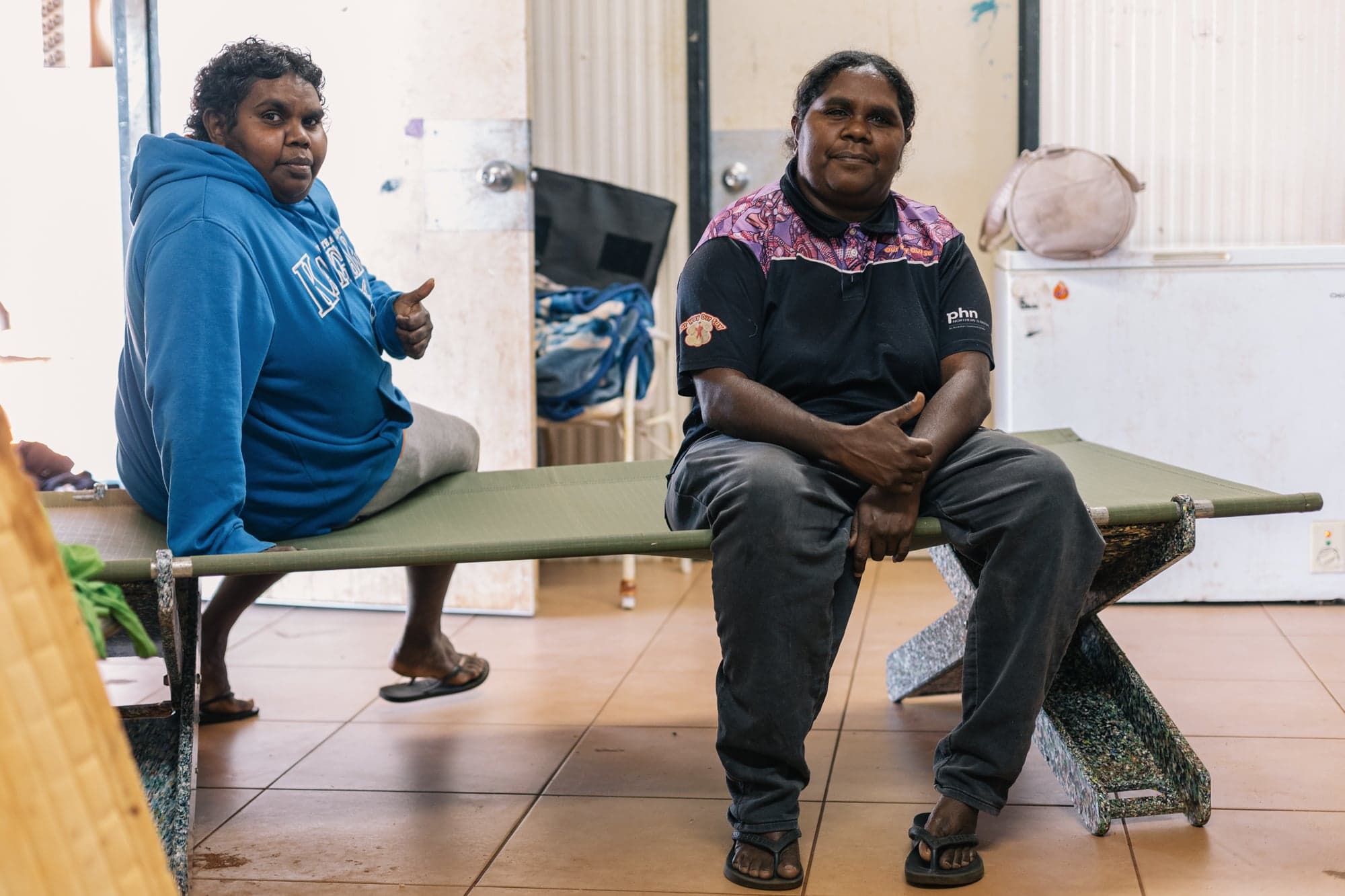
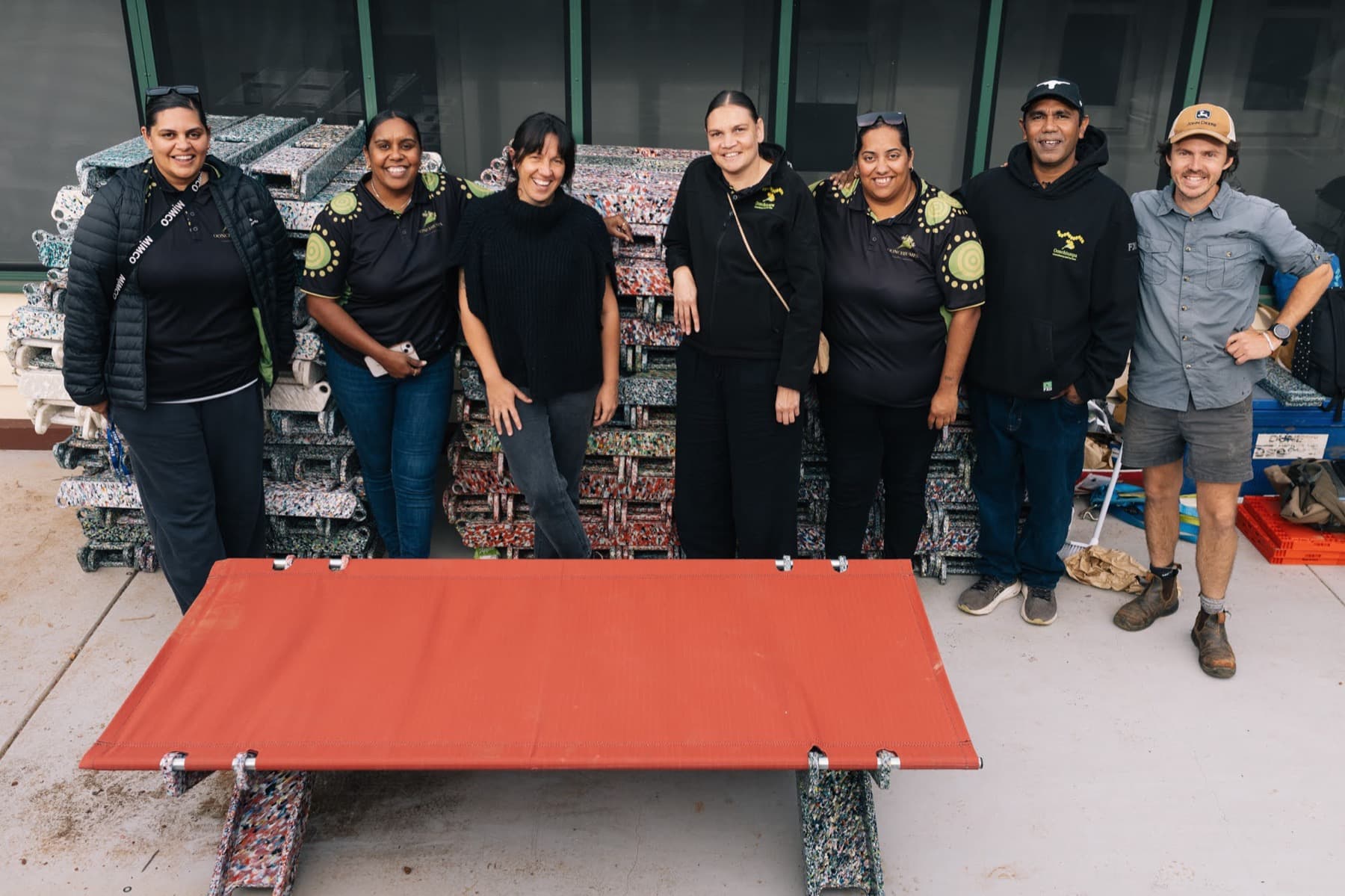
In May 2026, Oonchiumpa and Goods travelled the Utopia and Urapuntja homelands with beds supported through the Centrecorp pathway.
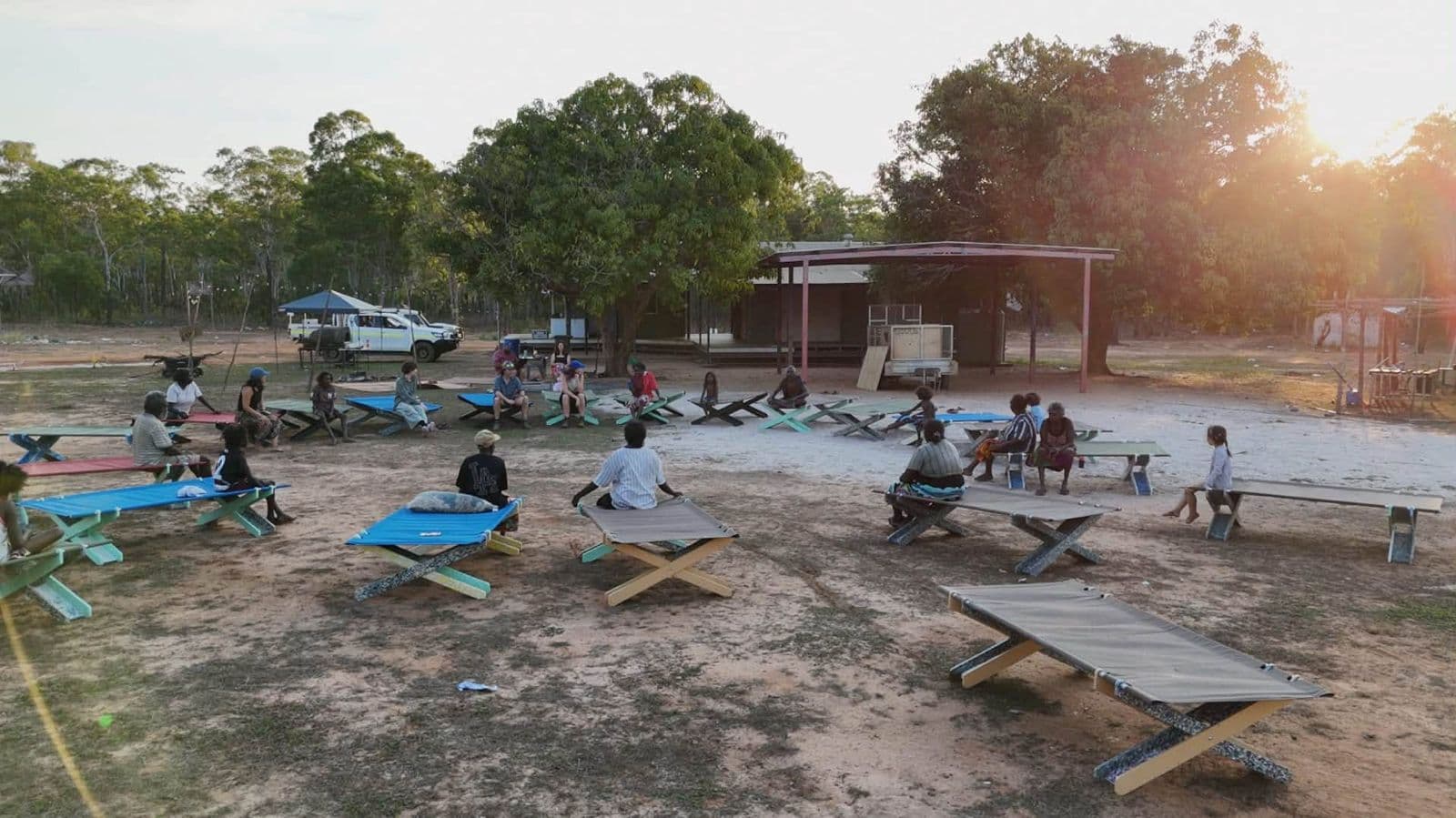
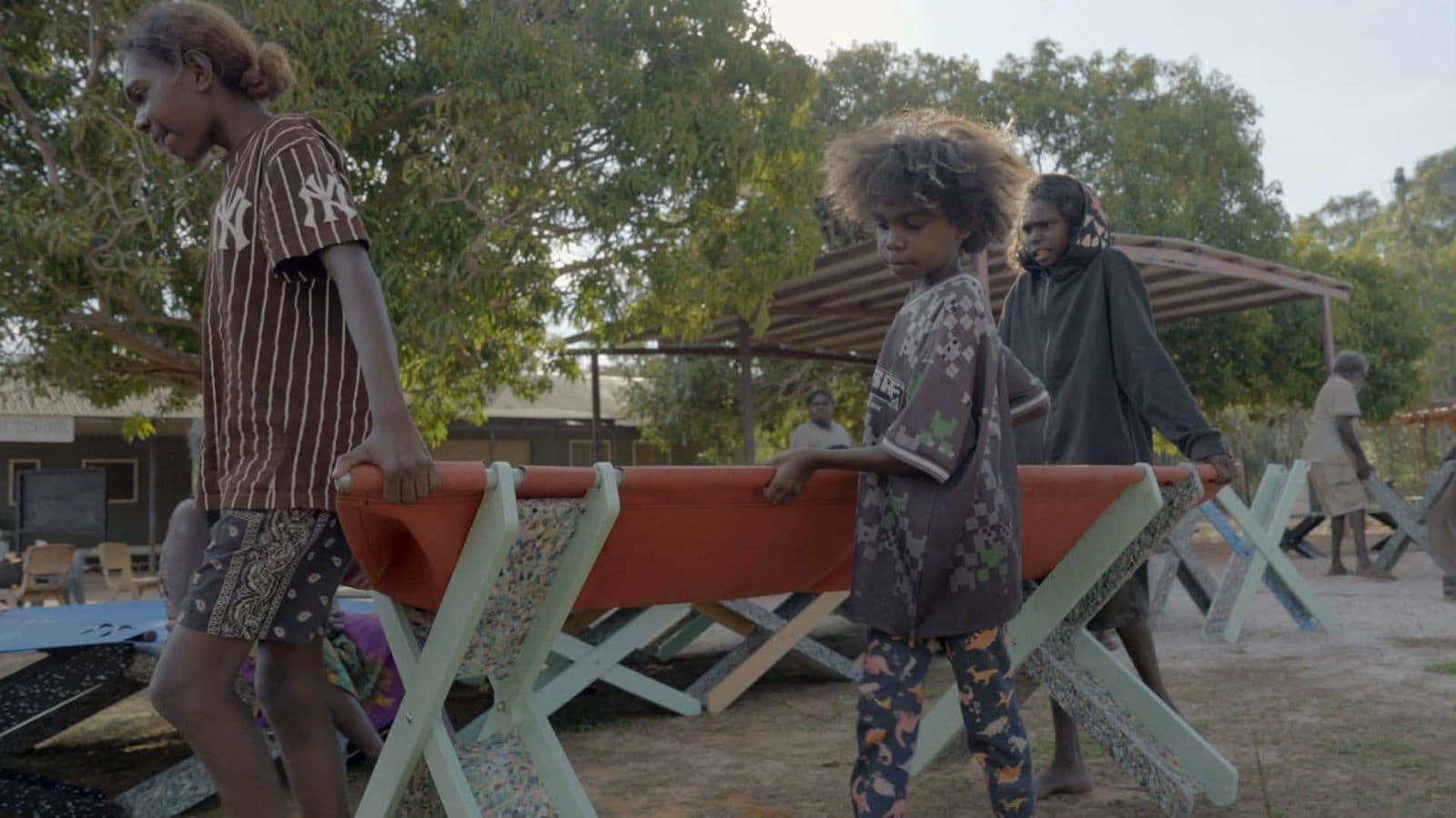
Oonchiumpa did not act as a distribution contractor. The organisation carried cultural authority, relationships, the route, the people waiting, the young makers and the meaning of the visit. Beds were built with young people and moved into households through people who knew the Country and families.
The road is part of the work. It is not the ending. A production machine placed at the edge of a town can become another dead machine if there are no orders, wages, safety systems, maintenance, quality standards, transport, working capital and decision rights around it.
Goods began asking a harder question after each delivery. What came in on the truck? What left on it? What stayed?
The beds stayed. Some skills stayed. Relationships deepened. The evidence improved. But the plant, contracts, order book, margin and ownership pathway were not yet held in community. The product had proof. The transfer still needed one.
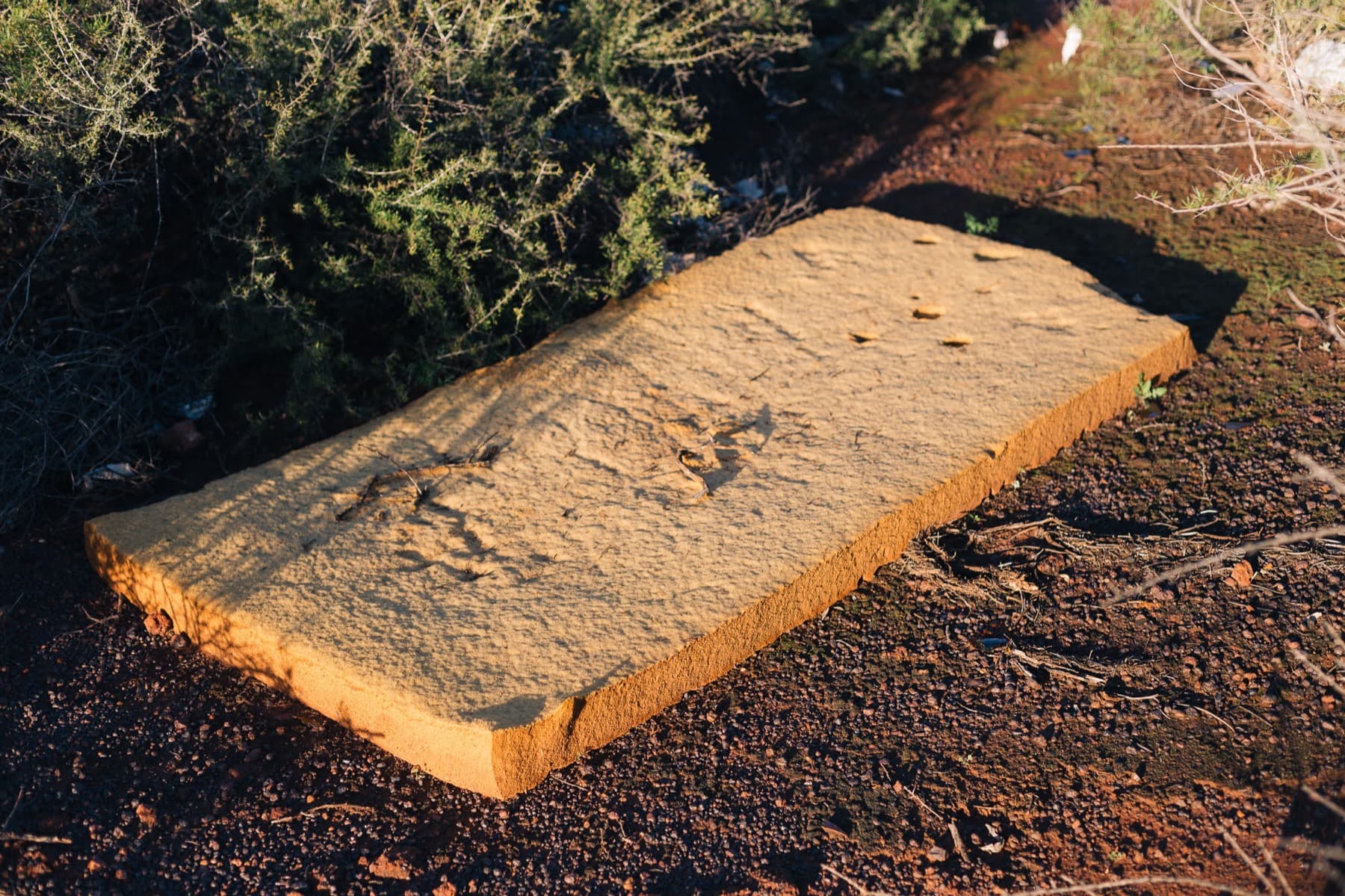
I sleep in the tent but look, there's my house or the rubbish house ... No mattress. Look, the bed was mine. Just for chucking us blanket, that's all, that's all I was sleeping.
 Margaret LloydUtopia homelands community member, ~30 years on her homeland · Utopia homelandsBefore the delivery: sleeping in a tent beside an uninhabitable house
Since receiving their new beds, they are no longer experiencing back pains.
- 147
- beds in the Utopia pathway
- verified
Stop 6 · The Queensland facility and Maningrida
The first production run
The Goods on Country facility in Queensland, and Maningrida homelands, NT · July 2026
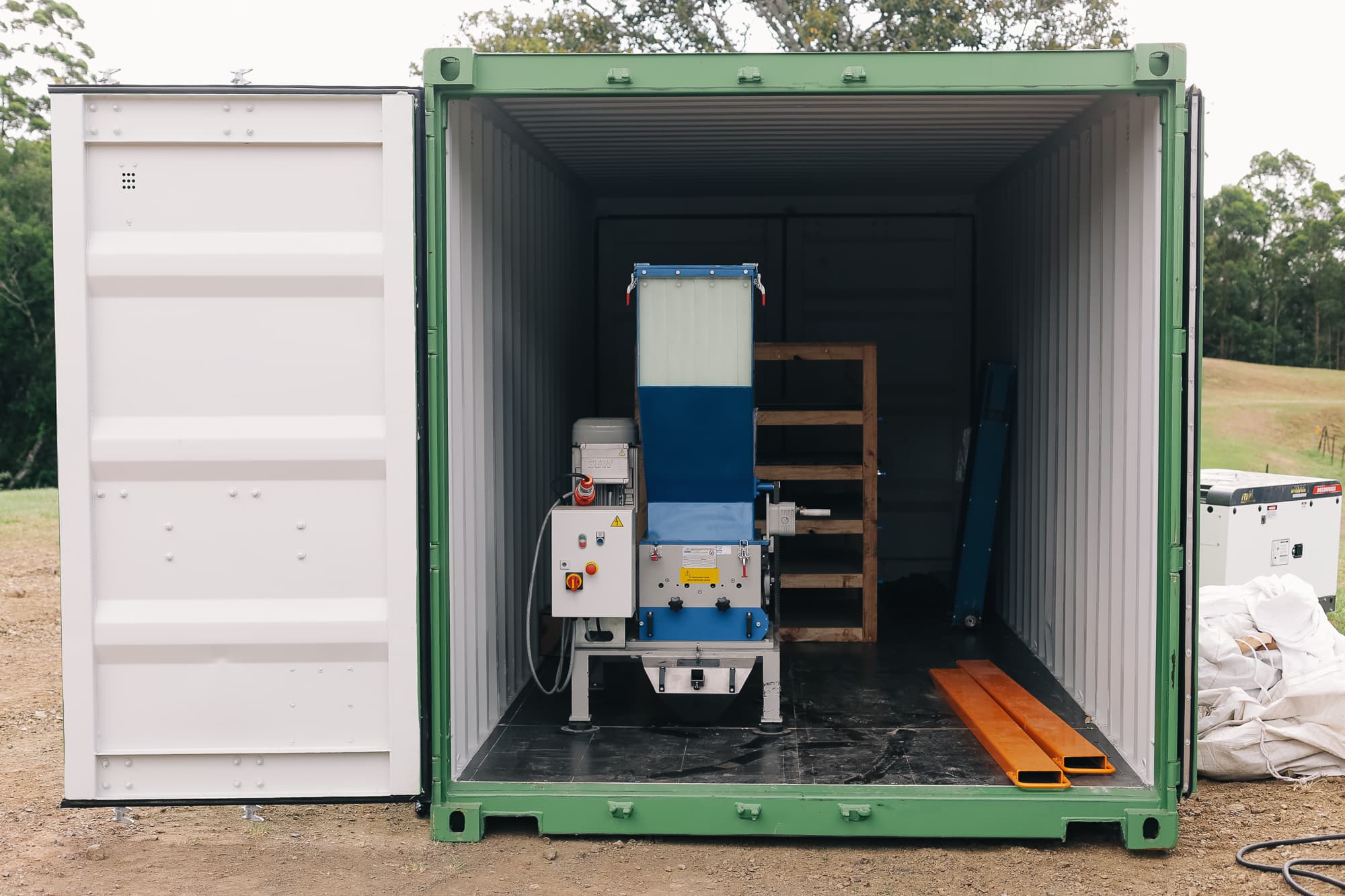
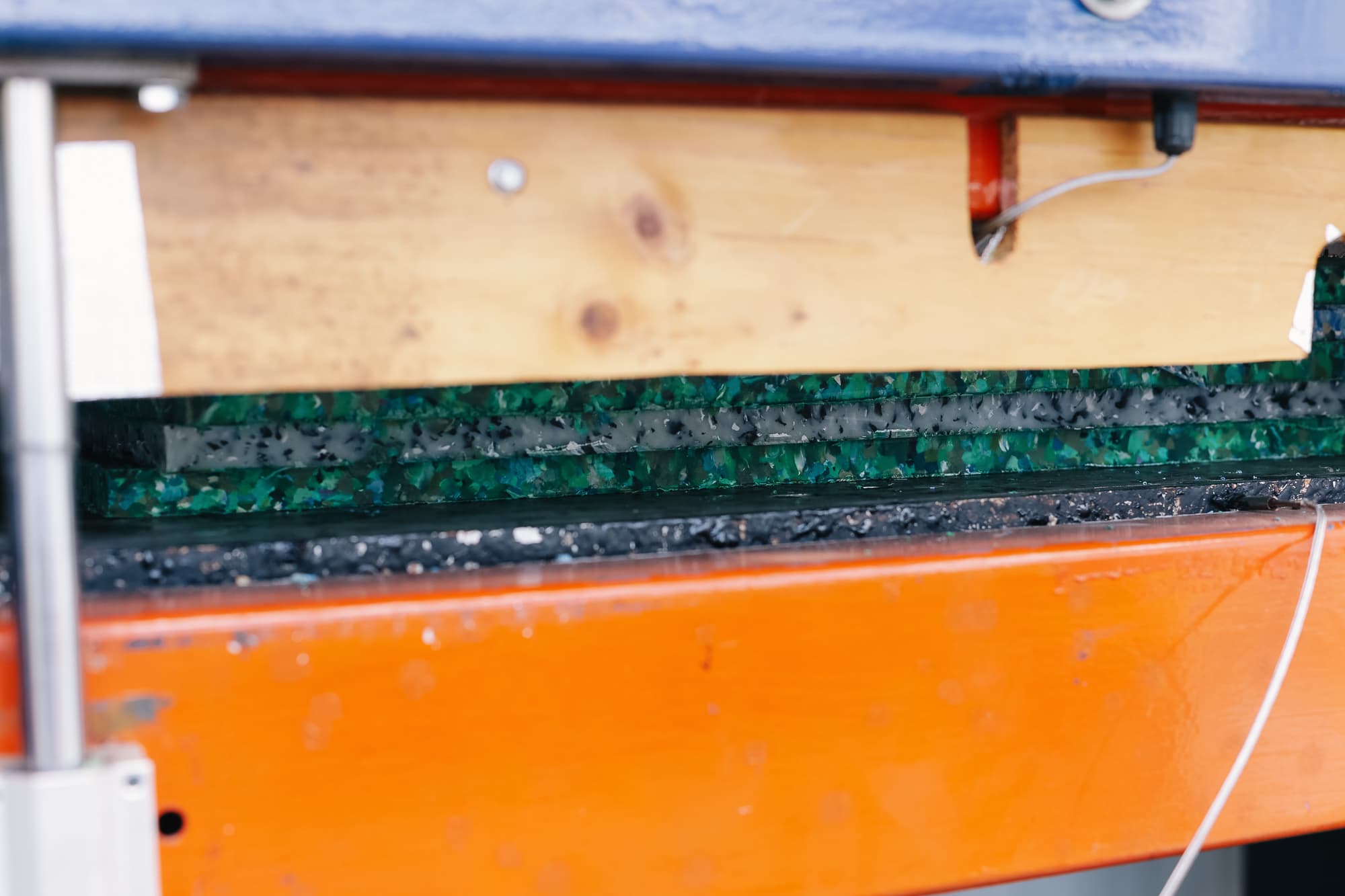
The next proof arrived at the Goods on Country facility in Queensland. Goods had invested in a containerised recycled-plastic production facility: shredding, heating and pressing material into sheets, cutting components, preparing the frame and canvas, assembling, checking and packing the finished bed.
The facility turned the production story from a diagram into work. The July 2026 Maningrida homelands batch was made there: 40 Stretch Beds, accompanied by two washing machines, delivered with Homeland School Company.
This moment changes the investment case. The next proof is no longer whether Goods can make beds through its own production facility. It has. The next proof is what those 40 beds actually cost to make, and whether the line can repeat the result safely, reliably and at a cost that supports local wages and future transfer.
The current cost model remains a model until the Maningrida run ledger is closed. The materials, labour hours, electricity, yield, rejected components, maintenance, packaging, freight and support cost need to be reconciled against the 40 finished beds. A real production run is proof of capability. A closed run ledger is proof of economics.
The Maningrida story also shows the model's two-sided demand. Homeland School Company did not ask for an abstract circular-economy demonstration. It needed beds and machines across homelands. The production facility did not make a showcase object. It made a batch with a destination.
- 40
- Stretch Beds in the first in-house run
- verified
- pending
- run ledger closed
- target
Stop 7 · Alice Springs
When the hands changed
Alice Springs, NT
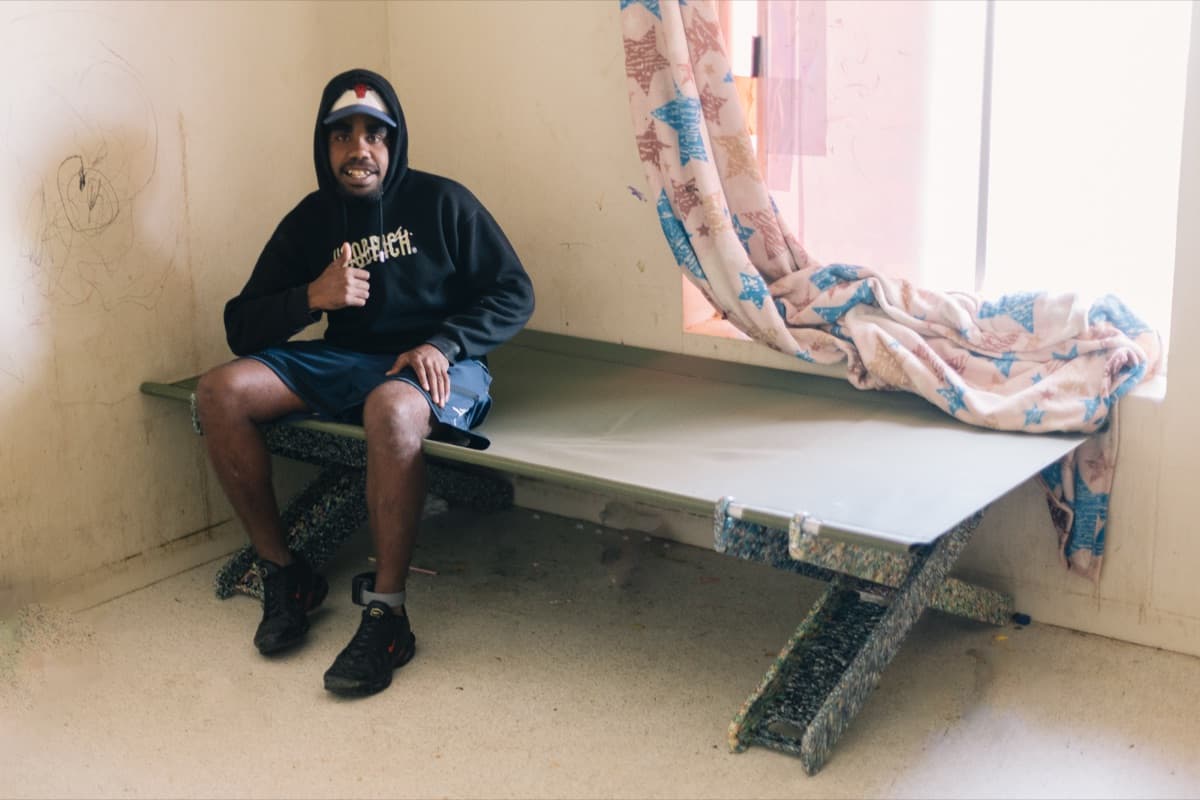
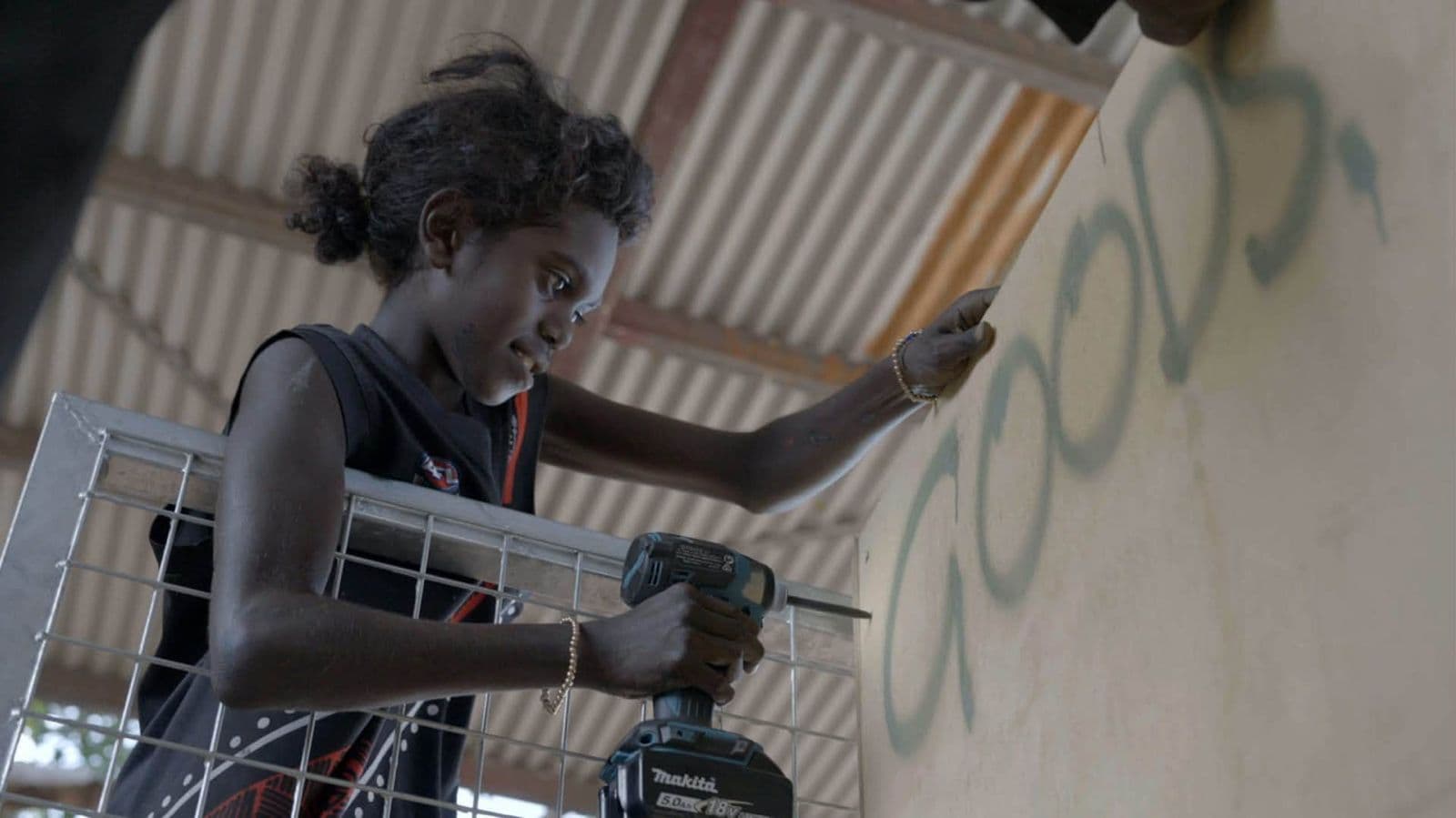
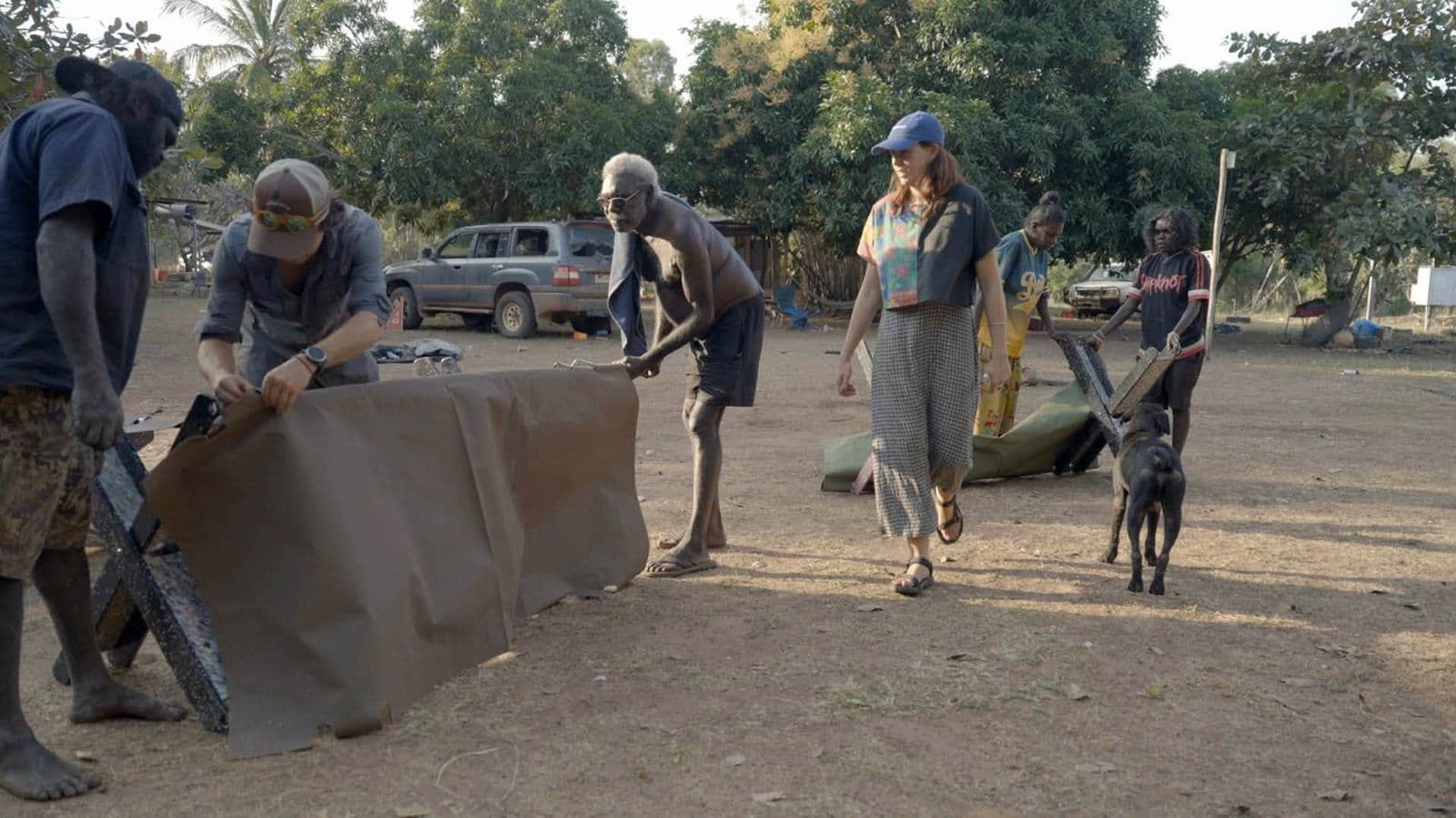
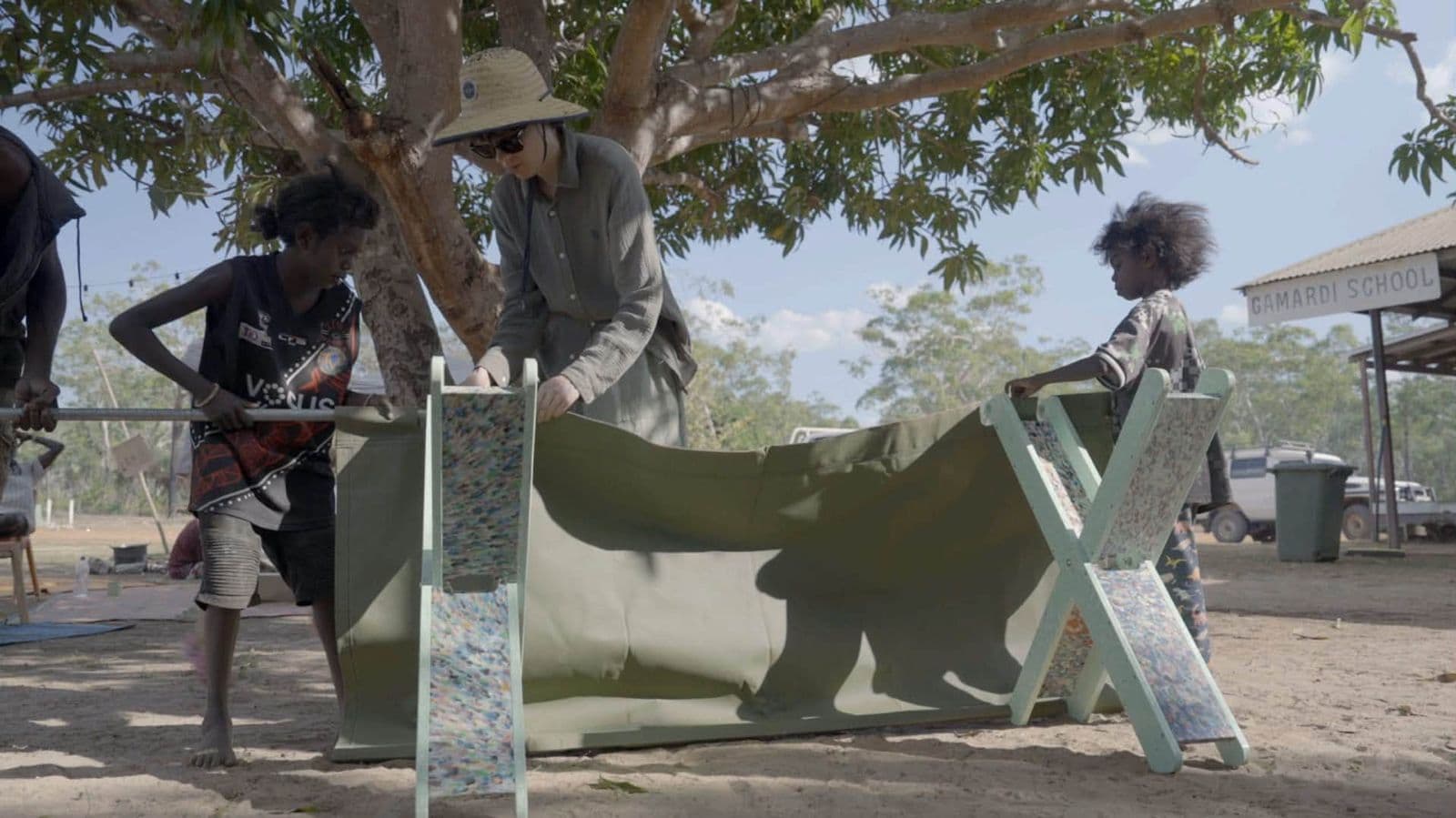
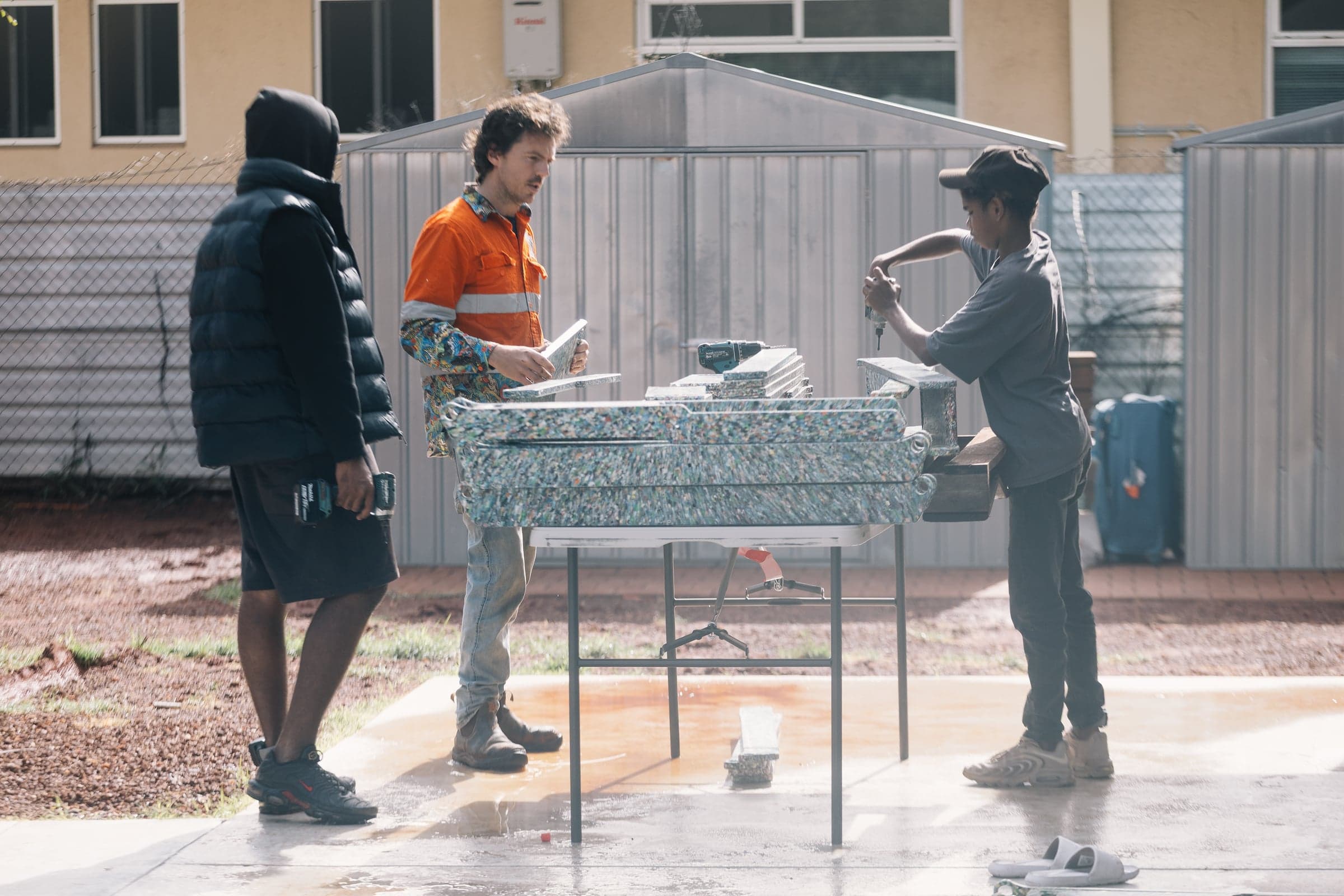
The decisive turn came when the bed was no longer only carried into community. People in community began making it.
Oonchiumpa Consultancy in Alice Springs became the cultural and relational backbone of this phase. The Bloomfield and Liddle families held the relationships. Young people assembled beds. Families watched. Elders judged the result. The object became evidence that the people in the room could make, not merely proof that Goods could deliver.
Oonchiumpa works with young people who have often been rejected by ordinary employment pathways. The work begins before a shift starts: transport, family, court, trust, mentoring, Country, the pace of the young person and the rule that the door stays open.
Fred Campbell carries Xavier's story. Fred describes a young person who understood the pattern, put the bed together, took it back to family and showed them what he could build.
Then there is Mykel. The material begins as discarded plastic. It is shredded and pressed. Steel poles pass through canvas. Legs click into place. Mykel tests the finished bed in the plain language of use. An Elder watches him work and speaks about the possibility of employment. Asked whether he would turn up every day if a place existed to make the beds, he answers without theatre.
That is not a claim that a factory job already exists. It is a door a young person can see himself walking through.
Oonchiumpa is the clearest first partner for the full transfer model. The proposed pathway is concrete: Oonchiumpa leads the young-person and community work, Goods brings the production engine, quality system, buyers, product support and capital pathway. Young people move from short tasters into supervised rotations, paid production and ongoing roles at award rates.
Never would have thought it would have come out like that.
 MykelYoung maker · UtopiaBuild day, May 2026 Utopia trip
We want to create a safe space for our young people. There's a lack of housing, which leads to a lack of sleep, which leads to low school attendance.
 Kristy BloomfieldOonchiumpa co-founder, Traditional Owner · Alice Springs / UtopiaYouth and housing
To see kids' faces with joy after making a bed, it just really hits you.
 Karen LiddleOonchiumpa board member · Utopia (Oonchiumpa)Young people and making
He knew what he was doing. He had the pattern of how everything was all coming together. He loved it. We took him back to the family and he just was so proud showing them that he can build it.
 Fred CampbellYouth Case Worker, Oonchiumpa · Alice SpringsXavier, proud building his Stretch Bed
- 45 to 60
- young people over three years
- proposed
- 30 beds/week
- mature facility
- proposed
The gap
The product had proof. The transfer still needed one.
Between the Basket Bed and the current Stretch Bed came intermediate woven and frame trials. Community feedback made the same request in different ways: the next bed had to be desirable as well as functional, washable, easier to rise from, flat-packable, repairable and strong enough for real household use. The bed was becoming a small country of corrections.
The Basket Bed was the project's first field instrument, and the register holds 363 of them. It was simple enough to make, move and test. It got the team out of the studio and into the harder intelligence of use. People sat on it. Children jumped on it. Families carried it outside. Older people tested the height.
It also revealed its limits. A mattress topper that cannot be fully washed carries a problem into the next night. Cable ties and crate connections raise questions about safety and durability. A prototype that can be distributed quickly is not the same as a product that can be supported for years.
The Basket Bed is therefore part of the achievement and part of the correction. It should not be erased from the history, and it should not be presented as the current Stretch Bed. It has been archived and open-sourced, and it is not counted in the recycled-HDPE claim.
As the bed moved beyond the Basket prototype, Goods formed a partnership with Defy Design in Sydney. The relationship mattered because Defy did not remain in Sydney. The designers came into community, listened directly and worked on the product with the people who would test it. Canvas could be removed and washed. Steel poles could be replaced. Recycled-HDPE legs could be pressed from material otherwise headed toward waste. The parts could travel flat. Assembly could happen without a toolbox. The height could be kinder to older knees.
Good for me and comfy, easy to put together.
These two boys just picked it up straight away. The most important thing is it's actually comfortable.
 Heather MundoCommunity member · KatherineOn the Stretch Bed
- 363
- Basket Beds, archived and open-sourced
- verified
- 20kg
- recycled HDPE per Stretch Bed
- workpaper
What the road produced
Goods is not one product and it is not one program.
It is a connected operating model with five movements. Each one is the residue of a place, not a frame imposed on the road.
Listen. Community names the need, the conditions and the test. This includes the need for the object and the larger conditions around it: family, heat, dust, freight, movement, language, repair, safety and the role of older people and young people.
Shape. The product is designed in community. Feedback changes specifications, not just messaging. The bed becomes lower, washable, flat-packable and repairable. The machine becomes simpler to operate and easier to service. A person in community can name the object.
Make. The making moves into visible, teachable work: collect and sort plastic, shred, press, cut, route components, assemble, check quality and pack. The task is designed around real jobs and fair wages, not volunteer labour hidden inside a social-enterprise margin.
Deliver, track and learn. Each item has an identity. QR-linked records support delivery, condition checks, repair, movement, replacement and feedback. The register is care infrastructure, not a surveillance system. Household data and story-linked records remain governed by consent and access rules.
Transfer and support. The plant, production capability, local employment, repair pathway, contracts, margin and decisions move toward Aboriginal-controlled or locally owned community enterprises. Goods remains useful as a shared support layer for design, quality, sales, evidence, capital, procurement and learning across places.
The model must travel. The decisions must stay.
- 540
- beds deployed
- verified
- 177
- Stretch Beds
- verified
- 11
- communities
- verified
- 3,540kg
- recycled HDPE diverted
- verified
The hard arithmetic
The numbers become useful when their status stays attached.
The Goods model can be read as three linked shifts, and the economic one is the least understood.
A material shift. Remote communities carry a high cost for imported goods and a high cost when those goods fail. Plastic and broken products accumulate locally while value leaves through freight and replacement. Goods turns one part of that waste stream into durable product components. The purpose is not only diversion. It is to create a local input that can become a paid collection stream, a production skill and a useful product. The supply is not in question: the NT recycled 4,933 tonnes of plastic in 2023-24 and sent far more to landfill, while one bed's legs take about 20kg. Feedstock will never be the constraint. The making is.
An economic shift. Today, Goods can buy completed recycled-plastic components from an external supplier and assemble the bed. That keeps production simple, but it captures very little contribution at the current price. Pressing components through the Goods facility is expected to reduce marginal cost materially. In a community-production path, free local feedstock and a fair local wage are designed into the economics. The wage is not a trade-off against viability: in the model it fits inside a lower total cost, because the city-factory markup and duplicated freight fall away.
A story and authority shift. The old story says an outside organisation designed a product and delivered it to people in need. The Goods story says something more precise: people named the need, changed the product, tested it, built it, ordered it and now have the opportunity to hold the productive asset.
The model identifies a particular cost leak. A finished recycled-plastic leg kit costs about $344 bought from a city factory. The raw shredded-plastic input is about $40. Labour, energy, yield and processing still have to be paid, but bringing the process in-house removes a large markup and a freight loop.
The capital case in one sentence: the first facility has produced a real 40-bed batch. The next job is to close the run ledger, prove the cost-down, and build enough purchase-backed volume to support transfer.
- $750
- Stretch Bed price
- verified
- $684.79
- marginal cost, bought-in kit
- workpaper
- $425.74
- marginal cost, central production
- modelled
- $420.74
- marginal cost, community production
- modelled
- $109,500
- annual fixed production block
- modelled
- 4,933 tonnes
- plastic recycled in the NT, 2023-24 (WRINT material flow)
- verified
- 2,761 — 51.3%
- very remote NT households short at least a bedroom (ABS 2021)
- verified
The money that carried the work here
Seven funders. Snow went first, in October 2023.
The Goods-only revenue figure to date is $713,827. It is a management figure and a project carve-out, prepared with the accountant. It is not an audited set of accounts and it is not accountant-signed.
The funding mix tells the truth about the stage of the venture. Grants and philanthropy have brought in $772,788 across seven funders, tied to the books on 16 September 2026. Paid bed trade has brought in $247,770 net of GST. On those two reconciled figures, about three quarters of the money in has been philanthropic. Direct online shop revenue in the historical record is only $90, from three orders. Institutional purchases and partner-funded deployments sit between those two categories, and that is the channel that now needs to become repeatable.
Grant funding paid for work a young product business could not responsibly place on community buyers: listening, design, failed prototypes, repeated travel, community participation, first-batch risk, evidence systems and the cost of learning how ownership might transfer.
The order matters more than the amounts. Snow Foundation was backing this work from October 2023, before there was a product, a register, a charity, a board or a customer, and committed to Goods itself in October 2024 with the words "initial seed funding for your entrepreneurial remote mattress project". They have paid ten invoices, the most recent in May 2026. AMP Tomorrow Makers Spark followed in 2024, then QIC, then Vincent Fairfax with FRRR, whose Backing the Future grant funded the Palm Island deployment and was acquitted in March 2026. The Funding Network's Healthy People, Healthy Planet event banked $144,558 toward the On-Country production facility across two receipts in November and December 2025. The John Villiers Trust and the QBE Foundation are the most recent. Georgina Byron, who runs the Snow Foundation, puts the job this way: "We can do our bit. And we can catalyse others to do their bit as well."
Goods has also invested about $110,046 in verified facility and press capital. That is the cleanest skin-in-the-game figure in the record.
The next capital should not be described as money to scale impact. That phrase hides the work. The money has jobs: close the economics on the 40-bed run, make the facility repeatable, carry purchase-backed working capital, build the first transfer with Oonchiumpa, and build the shared support layer.
You are not funding another prototype. You are funding the bridge between a working product and a community-held production enterprise: the measured cost, the first order book, the first paid roles, the first transfer agreement and the first set of keys.
- $713,827
- Goods-only revenue to date
- workpaper
- $110,046
- facility and press capital invested
- verified
- $772,788
- grants and philanthropy received, seven funders
- verified
The road ahead
The goal was never a bigger Goods.
It is a community that can collect the plastic, make the goods, and come to own the making.
The long-term model is a network of place-based production facilities, not one central factory serving every community forever. A facility has to earn its right to move. It needs a buyer base, a local operating partner, material supply, safe work, maintenance, reliable power, quality control and a pathway to ownership. A container by itself is not an enterprise.
The current model suggests a facility can repay its capital cost within a year at sufficient volume, then help finance the next. That remains a model. It is the replication hypothesis, not a realised result, until the Maningrida run cost and a year of orders prove it.
Three different jobs require three different forms: the trading company that sells useful products, the charitable home for the public-good work, and the community production enterprise that makes, repairs and sells the goods and over time holds the machinery and the local decisions.
The model must travel. The decisions must stay.