Plans for a community facility
What an on-Country production facility takes
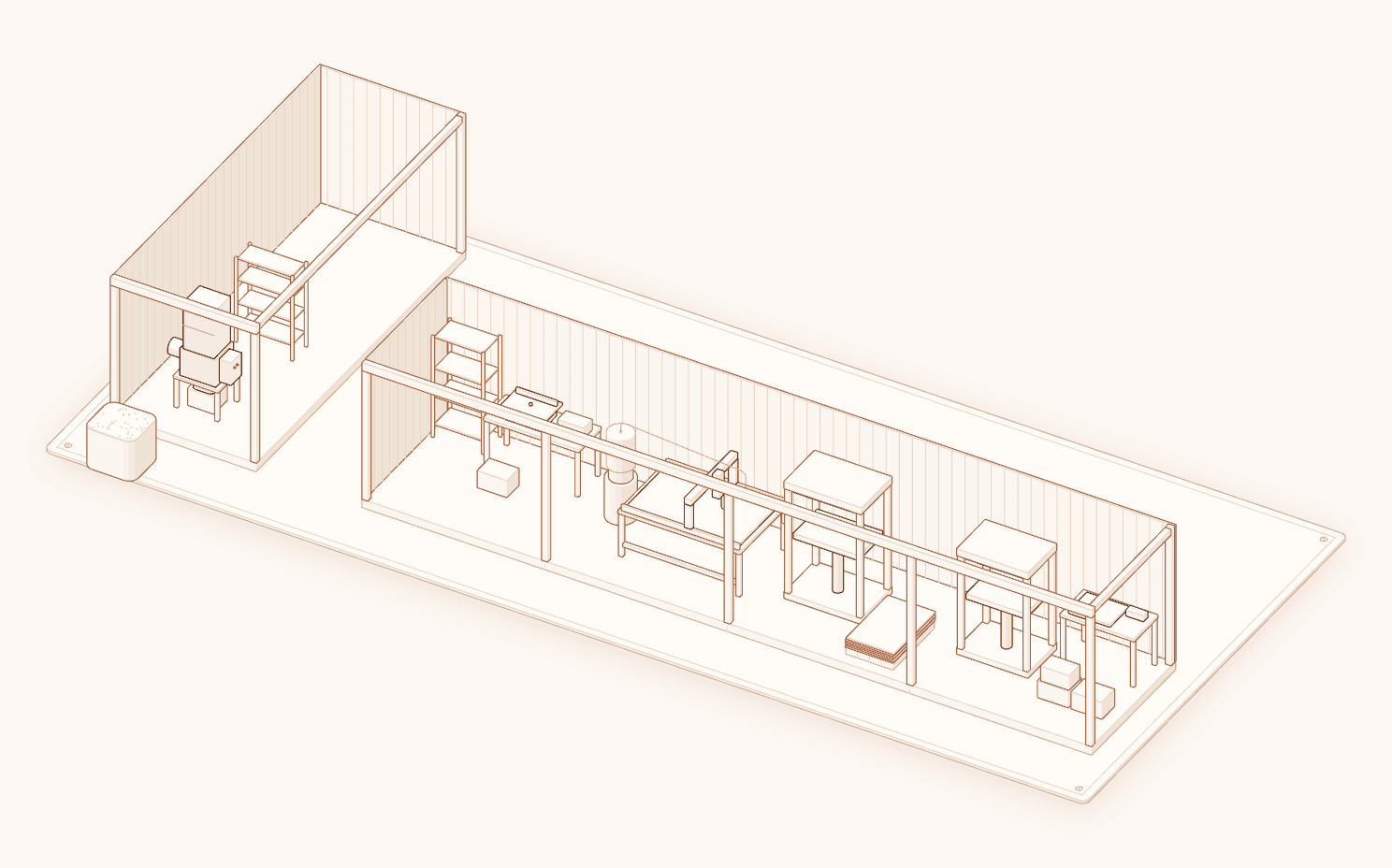
Two shipping containers that turn plastic collected in community into Stretch Beds, run by local people. What it costs to set up and to run, how the line works, who runs it, and what it means for a community thinking about one.
- Makes
- Stretch Beds, from plastic collected in community
- Output
- About 5 beds a day with one operator; about 450 a year at full pace, modelled
- Plastic
- 20 kg a bed, about 9 tonnes a year at full pace
- Footprint
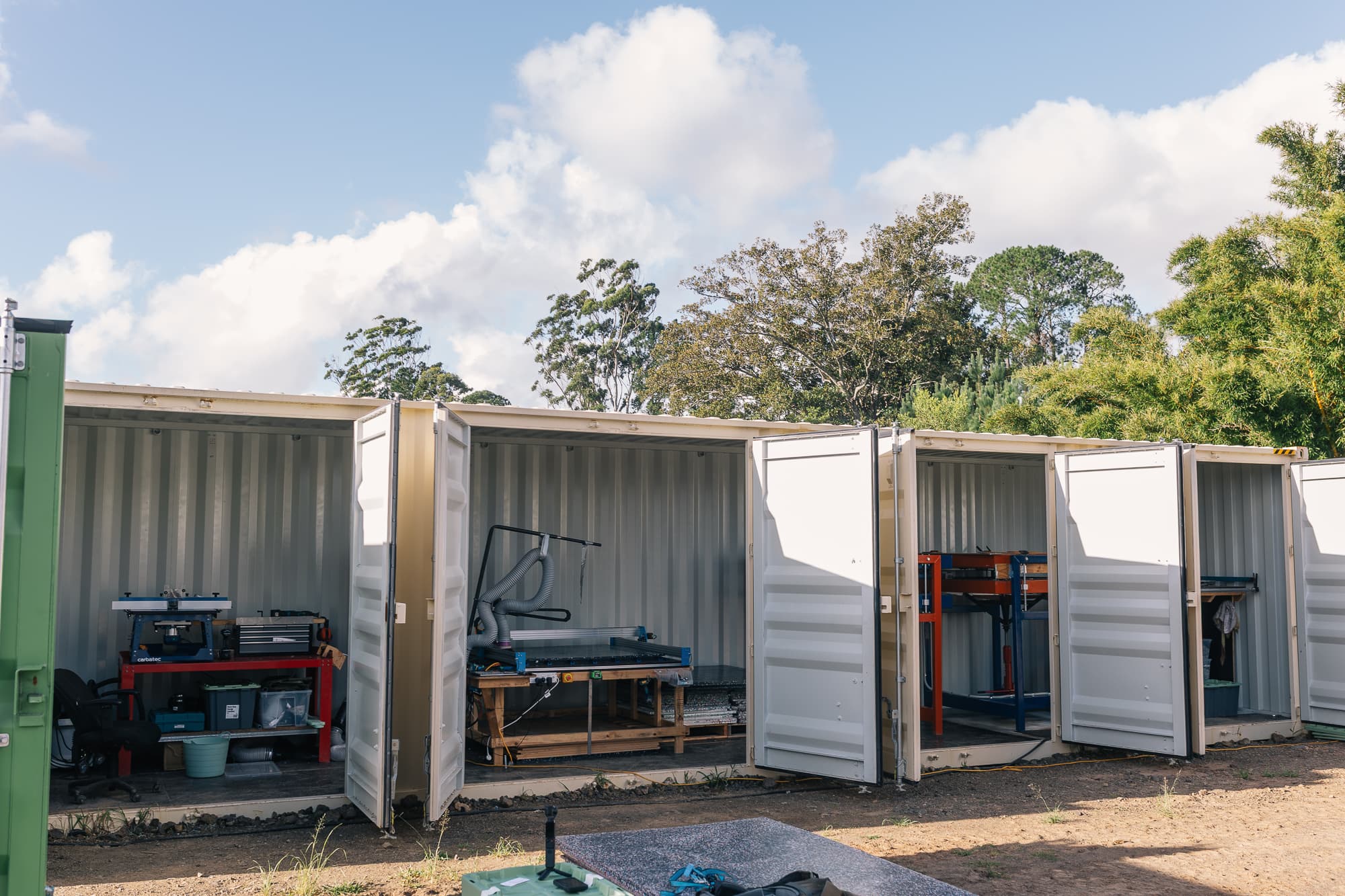
- A 40 ft and a 20 ft shipping container
- Power
- Three-phase: the grid, or a diesel generator sized for the press
- Set up
- About $134,068 to $180,768
- Running
- About $79,333 a year before wages, modelled
What it takes to set up
Everything on the list, and what it costs.
Planning figures, never a quote. Each says how sure it is: what Goods paid for its own line, Goods’ figure at market rates, or an estimate. A facility is costed in one quote for its own site before anything is bought.
The site
$31,800 to $64,000
Two shipping containers, power and a level pad. A shed, a slab or a yard a partner already has makes this smaller.
40 ft shipping container
Goods’ figure at market rates
$13,000 to $16,000
20 ft shipping container
Goods’ figure at market rates
$6,000 to $10,000
Diesel generator, sized for the press
Goods’ figure at market rates
$6,600 to $20,000
Crane and transport to place the containers
what Goods paid
$1,200 to $2,500
Electrical fit-out: a switchboard and three-phase power
estimate
$3,000 to $8,000
Ventilation and fume extraction
estimate
$1,000 to $3,000
Site preparation: a level pad
estimate
$500 to $3,000
Safety gear and start-up supplies
estimate
$500 to $1,500
The machines
$97,268
The line Goods runs today, priced at what Goods paid for it.
Shredder
A Telford Smith granulator, in the 20 ft container: offcuts and collected plastic to flake.
what Goods paid
$19,800
Heat press, cooling press and the first CNC router
Bought as one bundle from Circularity Group. The cooling press has since been converted into a second heat press, and the Multicam below replaced the first router. The bill has no breakdown, so the whole bundle stays here.
what Goods paid
$32,780
Plates for the second heat press
Two aluminium plates, 6 mm and 16 mm, for turning the old cooling press into a heat press. Its heaters, controls and hoses are still to be added up.
what Goods paid
$2,789
Aluminium moulds
Seven made-to-measure trays the shred is pressed in, from September 2026: six for the standard sheet, one for a 1200 × 840 sheet.
what Goods paid
$4,344
Multicam CNC router
The line’s cutter since June 2026, replacing the first router.
what Goods paid
$18,000
Multicam set-up and training
A day of installation, commissioning and training, and a year of the Enroute cut software.
what Goods paid
$4,227
Hydraulic lift for cooling
Bought in September 2026 to take over cooling from the old cooling press: it holds each hot sheet pressed flat while it sets.
what Goods paid
$8,941
Workshop machines
Router table, drill press, bandsaw and dust collector, from Carbatec.
what Goods paid
$6,387
Collecting plastic
$5,000 to $19,500
Bins, bags, scales and a sorting bench. A baler is for film and PET; rigid plastic like crates and drums is caged and shredded, so many sites will not need one.
Six cages or bins for community drop-off
estimate
$1,200 to $3,600
Bulk bags
estimate
$250 to $600
Baler, only if you need one
estimate
$2,850 to $12,000
Platform scales
estimate
$400 to $1,500
Sorting bench
estimate
$300 to $1,000
Signs and set-up for the drop-off points
estimate
$0 to $800
- The site and the line
- $129,068 to $161,268
- With collecting plastic
- $134,068 to $180,768
How it works
From plastic to a bed, station by station.
- 1
Collect and sort
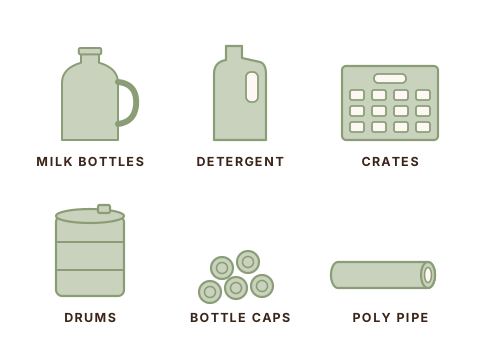
The line uses one plastic: HDPE, the hard plastic in milk bottles, crates and drums. It is picked out from everything else, cleaned and kept dry.
How it works
Look for the 2 in the recycling triangle, usually moulded into the bottom. That is HDPE, the only plastic the line uses.
Soft drink and water bottles (1), PVC pipe (3) and foam (6) stay out. One wrong plastic spoils a sheet, and PVC must never be heated.
Labels and any metal come off, dirty pieces are rinsed and dried, and the clean plastic waits in tubs for the shredder.
- Time
- Ongoing, alongside everything else
- The skill
- Telling HDPE from the plastics that spoil a sheet, and keeping it clean and dry.
- Safety
- Gloves, closed shoes. Never heat PVC.
- 2
Shred
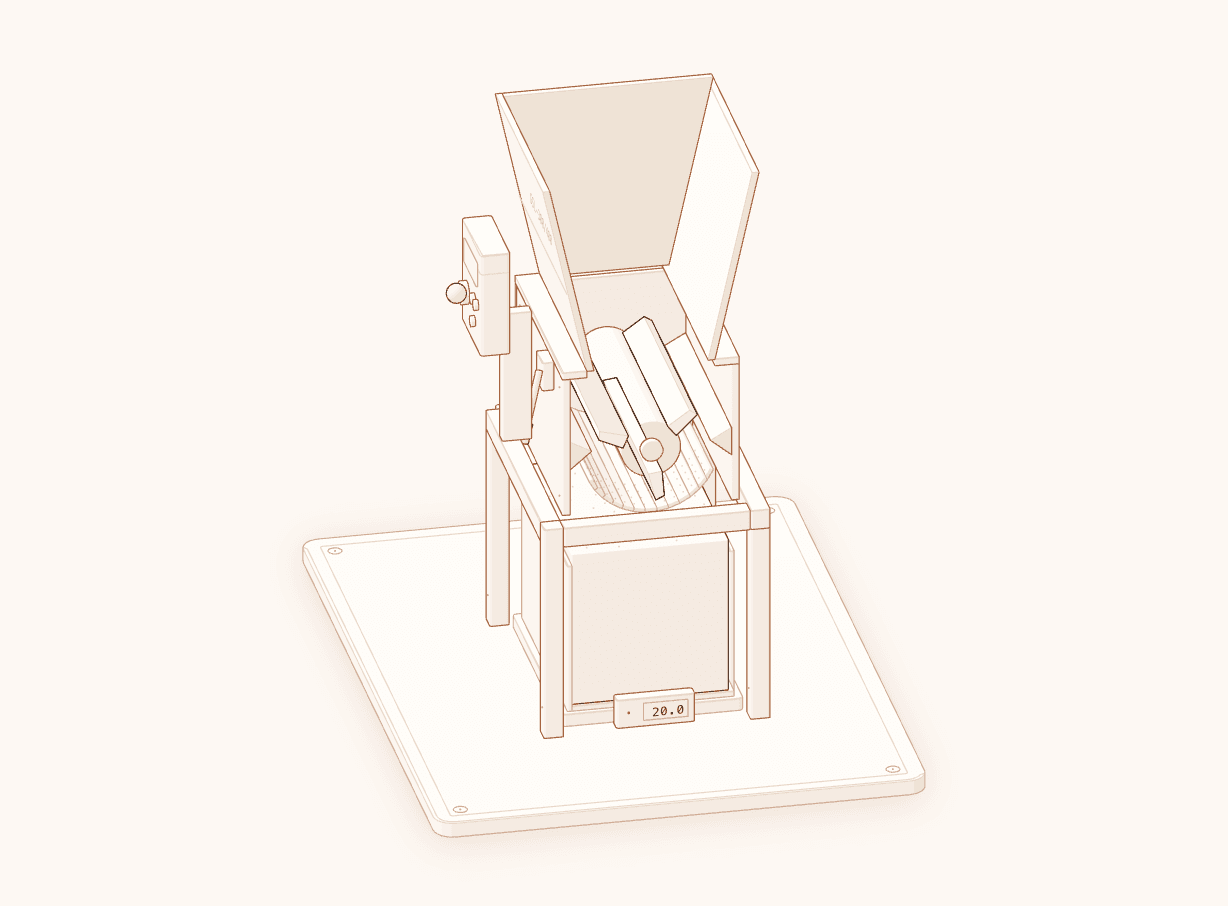
The granulator turns sorted plastic and the line’s own offcuts into flake, weighed into tubs.
How it works
Pieces too big for the hopper are cut down first with a jigsaw or the bandsaw.
Plastic goes into the hopper a handful at a time. Inside, a rotor carrying knives spins past knives fixed to the chamber wall, and every pass chops the pieces smaller.
Under the rotor is a screen, a steel plate full of holes. A piece only falls through once it is smaller than the holes, so every chip that comes out is about the same size.
The chips drop into the bin and are weighed into tubs.
The router’s offcuts go back in too, so nothing the line cuts is wasted.
A jam means power off and locked before anyone clears it. It happens, and can take forty minutes.
- Time
- Batches as needed
- The skill
- Feeding at a steady rate, and clearing jams only with the power locked off.
- Safety
- Hearing protection, safety glasses, gloves. Hands never in the hopper.
- 3
Weigh and press
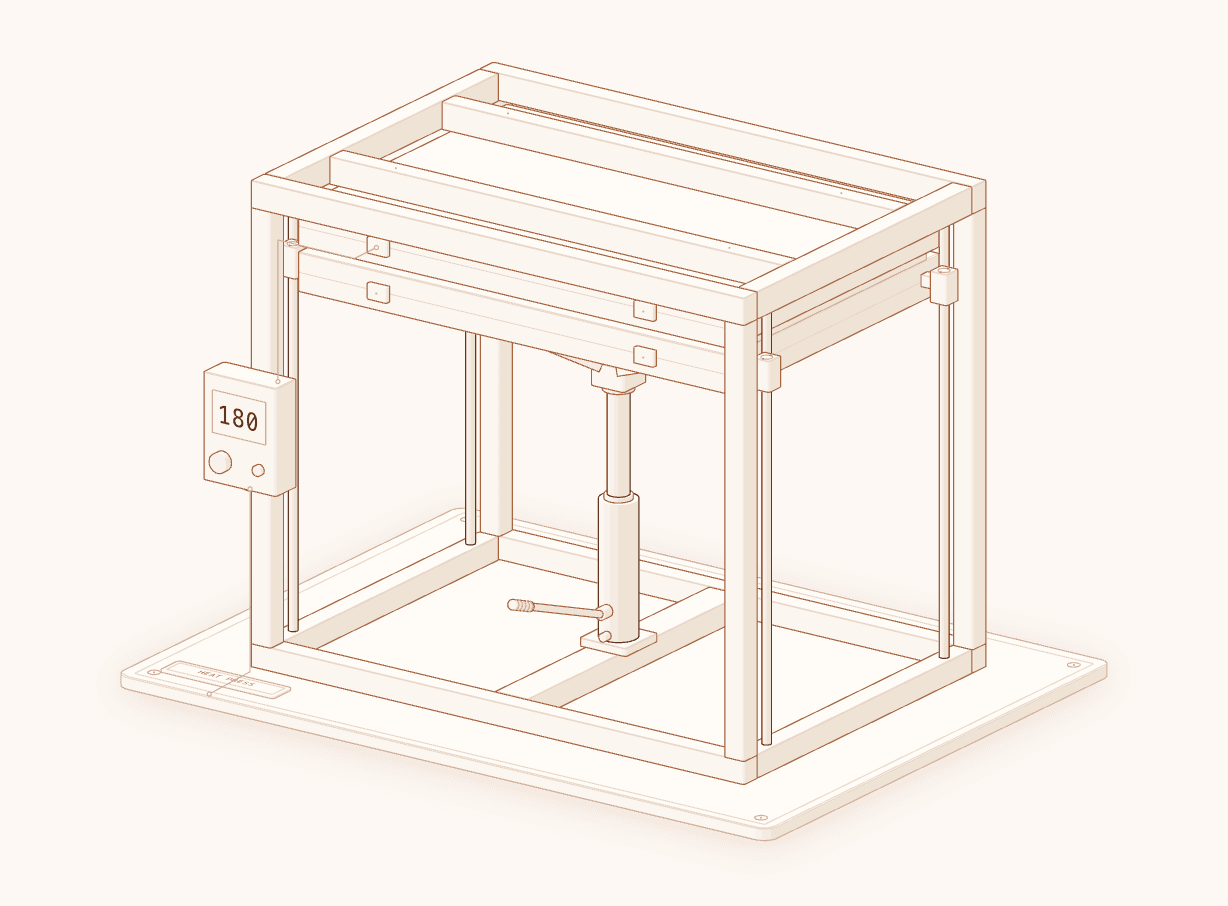
One bed’s weight of flake goes into the tray and into a heat press at 180 °C. It comes out as one solid sheet. The line has two heat presses: the old cooling press was converted into the second.
How it works
One bed’s weight of chips, 20 kg, is spread into an aluminium mould: level, with no peaks and no gaps, because a thin patch comes out weak.
A flat aluminium sheet goes on top as a lid, and the mould slides in between the press’s two plates, already hot at 180 °C.
The jack lifts the lower plate until the mould is squeezed tight between the two.
Heat soaks in from both faces. The chips soften, melt and run into each other, and the air between them is pressed out.
As the plastic melts it settles and the squeeze eases, so the operator jacks it up again through the cycle to keep the pressure on.
After about 90 minutes the chips are one solid sheet. It comes out on a paddle, slid rather than gripped, and goes straight to cooling.
- Time
- About 90 minutes a sheet; the press sets the pace of the day
- The skill
- Weighing the charge, loading the mould evenly, reading when a sheet is done.
- Safety
- Heat gloves and long sleeves. The platens stay hot for hours after shutdown.
- 4
Cool flat
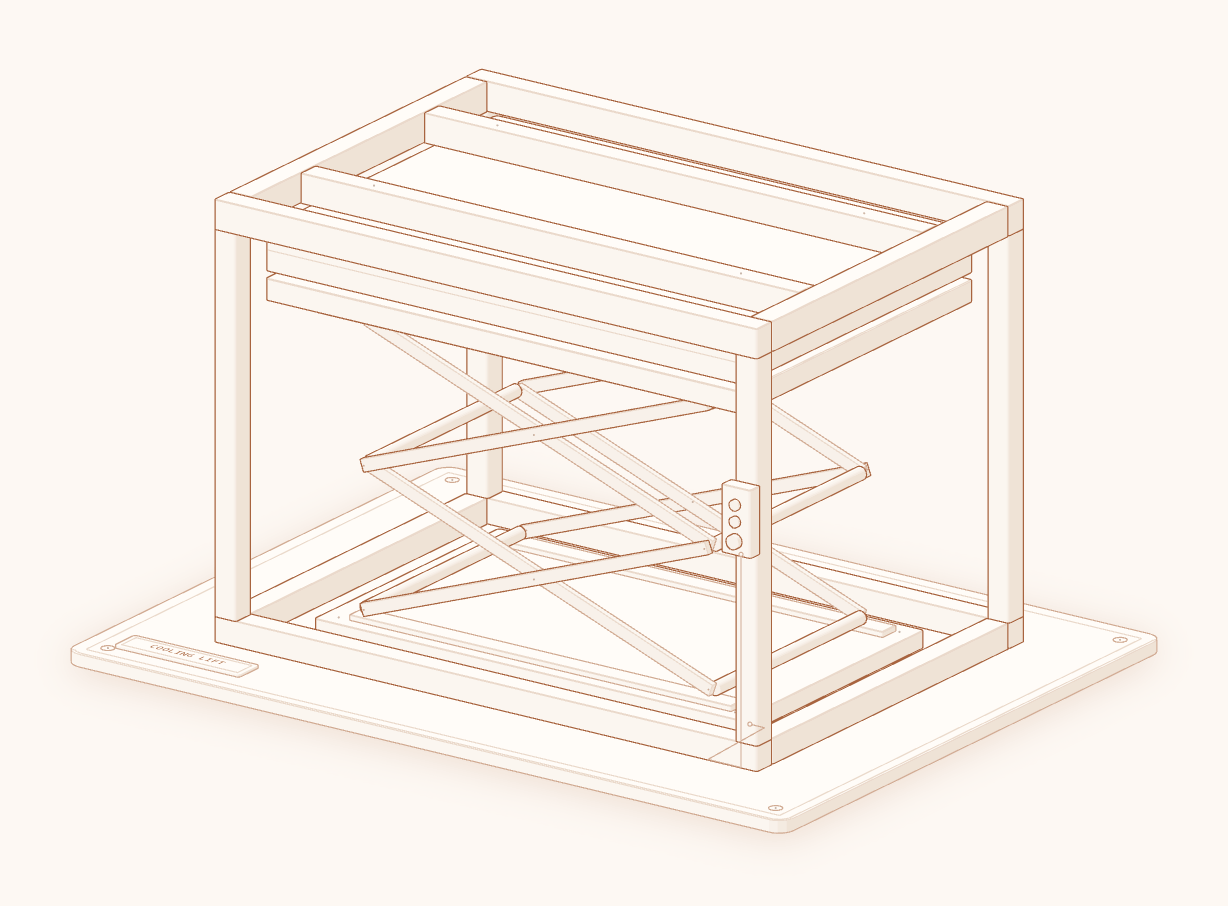
The hot sheet goes straight onto the hydraulic lift, which holds it pressed flat while it sets.
How it works
The hot sheet goes onto the lift, and the lift rises until the sheet is pressed flat against a cool top plate.
Plastic shrinks as it cools. A sheet left loose cools faster on one face than the other, and the uneven shrinking pulls it into a bow.
Held flat, it has to shrink flat, so it sets straight. A bowed sheet cuts legs that are out of true.
It stays under the plate until it is cool right through, then it is ready to cut.
- Time
- Overnight was the rule on the old cooling press; the lift’s time is being measured
- The skill
- Moving a hot sheet quickly and squarely, and leaving it until it is cool through: pulling one early warps it.
- Safety
- Sheet edges stay hot well after they look cool.
- 5
Cut
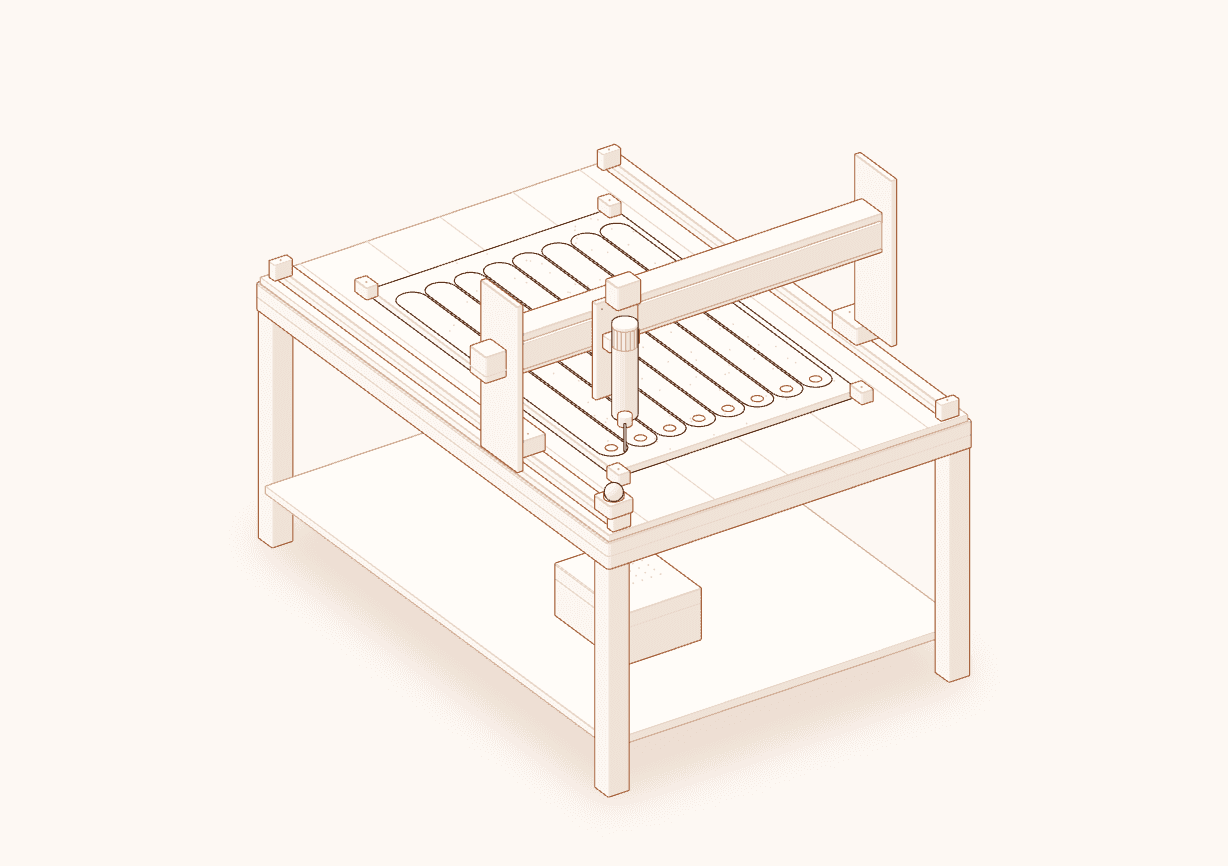
The Multicam CNC router follows the cut file and cuts every leg board and tab for a bed from the sheet.
How it works
The cut file lays out the bed’s parts on the sheet. Enroute, the router’s software, turns it into the path the cutter follows.
The sheet goes on the router’s bed and a vacuum pump draws the air out from under it. The air above then presses down on the whole sheet, tonnes of it on a sheet this size, so it cannot shift while it is cut.
The operator sets the cutter’s starting height on the sheet’s top face and starts the file. The spindle spins the cutter thousands of times a minute and the gantry carries it along the path, taking the sheet down in passes.
A brush skirt around the cutter and a hose to the dust extractor carry the chips away as they are cut.
Once the first pass looks right the router runs on its own, and the operator goes back to the press and the bench.
The parts lift out, and the frame of offcuts left behind goes back to the shredder.
- Time
- About 45 minutes a sheet, running on its own once started
- The skill
- Loading the sheet and the cut file in Enroute, setting the tool, watching the first pass. Multicam trains the operator when the router goes in.
- Safety
- Safety glasses and hearing protection, the dust extractor on, the emergency stop in reach.
- 6
Finish and build
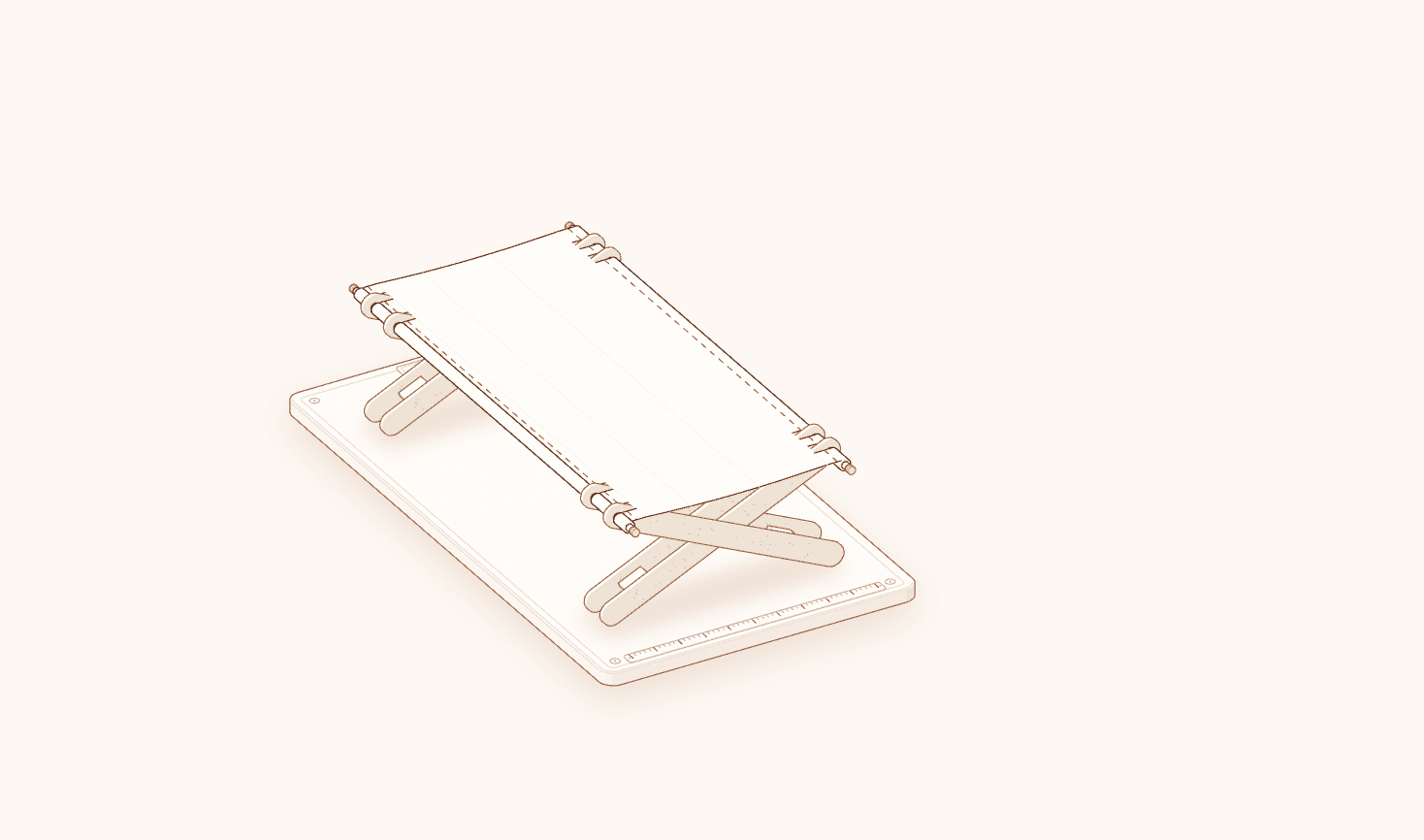
Edges are rounded on the router table, holes drilled, and the bed is put together and checked: legs, poles and canvas.
How it works
Every edge goes over the bull nose bit on the router table, which rounds it so nothing on the bed is sharp.
Holes are drilled through a jig so each lands in the same place, then countersunk so the screw heads sit flush. The jig is swapped out as its holes wear wider.
A side is four long legs and four tabs, screwed together on a jig into two crossed X-frames.
The two poles thread through the sleeves along the canvas’s long edges, and the legs go onto the poles.
Pulled tight, the canvas holds the whole bed rigid: the frame splays without it. Every bed is checked for wobble before it leaves.
- Time
- About 15 minutes a bed
- The skill
- Hand tools, a careful eye for sharp edges, and checking every bed before it leaves.
- Safety
- Safety glasses on the router table; keep hands clear of the bit.
A day on the line
One operator keeps the presses full and works the other stations while a sheet is in them: cutting, finishing, drilling and building. With one heat press that is about 5 beds a day. With the second press the line has now, the same day makes about 9.
One heat press
1 of 5 beds built
Two heat presses, as built
1 of 9 beds built
2 h 50 · one press: 1 bed · two presses: 1 bed
Both days use the times in the Tennant Creek production notes. The converted press is taken at the first press's 90 minutes and the router at 45 minutes a sheet; the Multicam's own time per sheet has not been timed yet. With two presses a sheet comes off every 45 minutes, the router's own pace, so the router is busy almost all day: a slower router would set the day, and a faster one leaves the presses setting it. How long a sheet cools before it is cut is not counted. How the day works →
People and skills
Who runs it, and how they learn.
The line operator
Runs the press, the router and the bench. Learns it on the job with Goods, from the facility manual and from people who already run a line.
Collection and sorting
Keeps the drop-off points going and the plastic sorted and clean.
Delivery and setting up beds
Takes beds to homes, sets them up and hears what people think of them.
Goods trains local makers on the line, and every station has its steps written down: read the facility manual, the safety briefing and the machine specs.
Running it
$79,333
a year to run the site, before wages, modelled. Makers are paid out of the beds the line makes. Run at full pace, a facility’s beds bring in about $337,500 a year, also modelled.
- Administration, accounting, IT$15,000
- Insurance$8,000
- Rent for the yard and storage$12,000
- Shredding: upkeep and floor space$12,443
- Pressing and CNC: upkeep and floor space$20,038
- Workshop: upkeep and floor space$6,452
- Collection: yard and storage$3,600
- Dispatch and staging$1,800
What it means for a community
More than beds.
Paid local work
Making, collecting and delivering are jobs in community, paid out of the beds the line makes.
Plastic put to use
Every bed holds 20 kg of plastic collected in community: about 9 tonnes a year at full pace.
Beds made where they are needed
Beds made in community, by people who know the homes they go to.
Money that stays
When a council, a health service or a housing provider buys beds made here, it pays the community organisation.
A pathway to ownership
The community organisation and Goods agree who owns what from the start. Ownership of the making is a pathway the community decides how fast to walk.
Getting one
Four gates, each settled before the next.
Gate 01
Agree with each community
The community organisation and Goods on Country agree who owns the beds, who is paid and who decides.
Gate 02
Cost each facility
Site, power, shed and freight, costed in one quote. The community and the funder say yes before anything is bought.
Gate 03
Confirm beds and buyers
Who buys the beds and who gets them is agreed before the line starts.
Gate 04
Build, run, review
Facilities open. Six months of making. We publish the numbers and decide with each community whether to add the next.
Start with a conversation.
Ask about a facility